




The development of police radio communications has played a key role in shaping modern policing practices, including operations affecting inner-city areas such as Fortitude Valley, as Queensland moved from station-based reporting to portable, real-time systems.
From Station Reporting to Radio Contact
Prior to 1935, police officers across Queensland operated without radio communication and had limited access to vehicles. Officers were assigned duties while at the station and were required to return later to report on incidents. This process limited the speed at which information could be shared during patrols.

In 1935, a temporary one-way radio system was introduced. Police Headquarters could transmit information directly to officers on the beat, whether on foot, in cars or on motorbikes. Despite this advancement, officers still needed to return to their station to complete reports.
World War II Drives Two-Way Radio
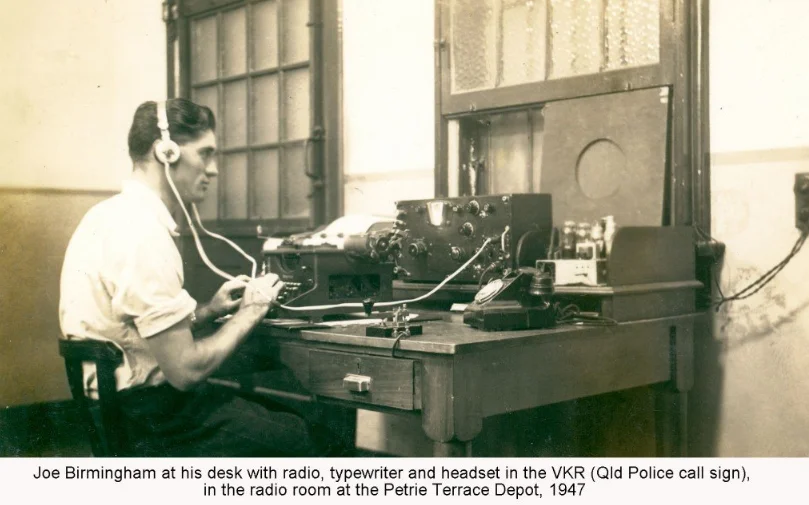
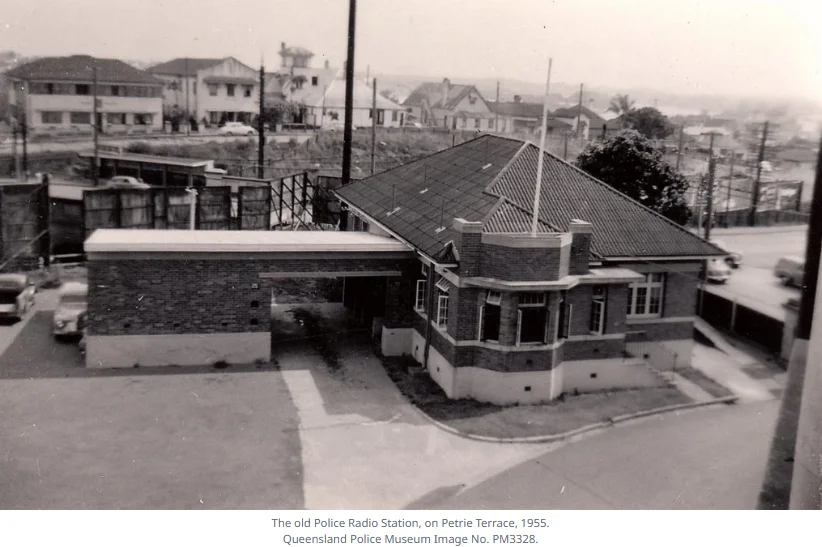
The outbreak of World War II highlighted the need for more efficient communication. In 1941, a permanent two-way radio station was established at the Police Depot on Petrie Terrace. This allowed officers to both receive and send information while on duty, improving coordination across Queensland.

The former radio station building still exists today and has since been repurposed for commercial use.

Expanding Communication Tools
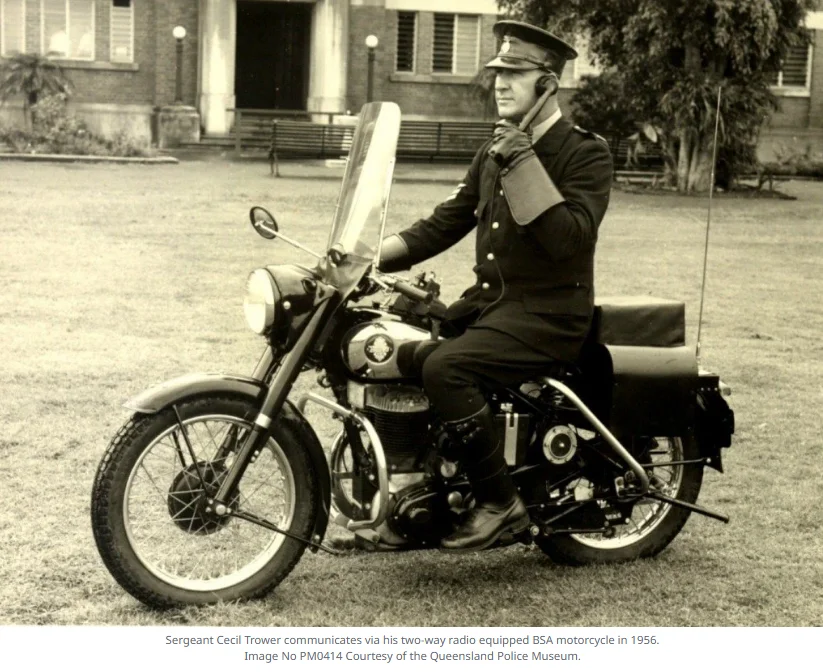
By the 1950s, police motorcycles were fitted with two-way radios, allowing communication while on patrol. Further improvements followed in 1975 with the introduction of helmet-mounted radio equipment, enabling hands-free operation for motorcycle officers.
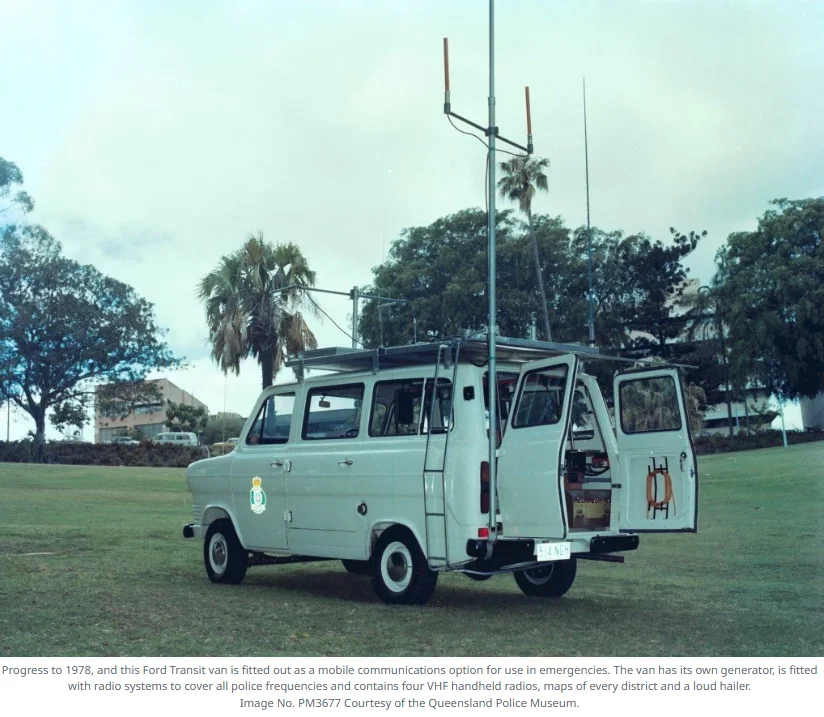
In 1978, a Ford Transit van was converted into a mobile communications unit for emergency use. The vehicle was equipped with its own generator, multiple radio systems, handheld radios, district maps and a loud hailer.
Digital Technology and Modern Policing
In October 2013, police officers were issued personally assigned iPads and iPhones, providing quicker access to information systems such as vehicle registrations and checks for persons of interest.


Today, police radio systems are fully portable and carried by individual officers, ensuring constant contact with Police Communications Centres and stations across Queensland.
Outlook
The progression of police radio technology reflects changing operational needs and advancements in communication. From one-way broadcasts to digital devices, these developments continue to support policing activities in high-demand areas, including Fortitude Valley.
Published 6-Jan-2026