



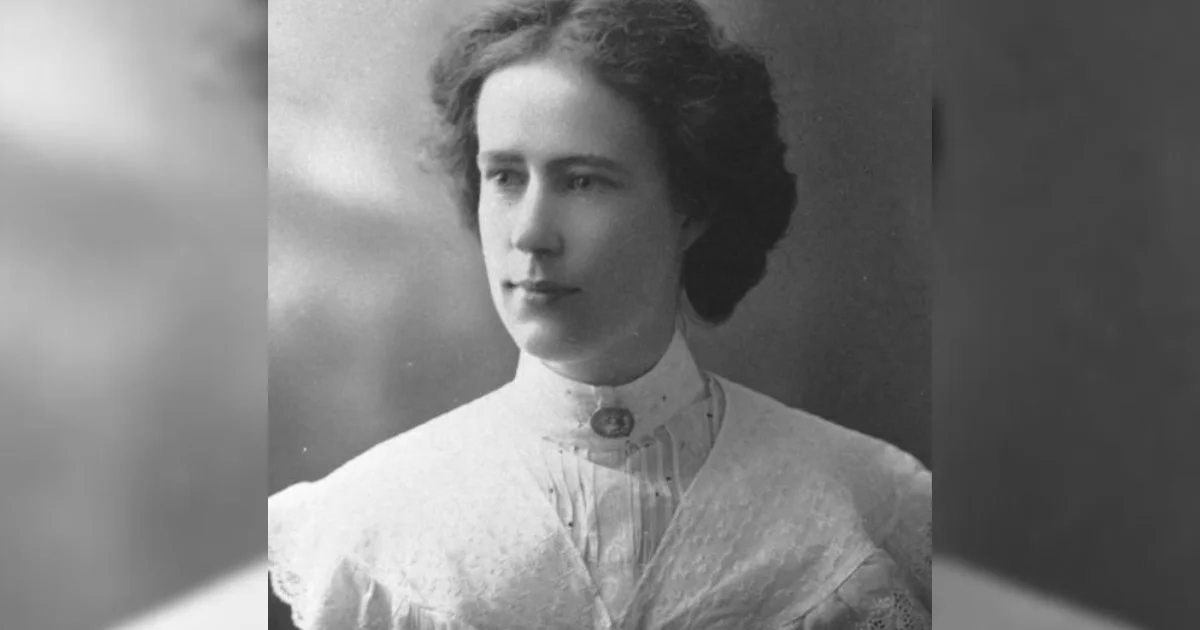
Long before women were widely accepted in medicine, a Brisbane Girls Grammar student was determined to become a doctor—no matter the barriers. Eleanor Bourne went so far as to transfer to Brisbane Grammar School (Boys) to access the subjects she needed for university, eventually becoming the first woman from Queensland to study medicine. During World War I, she was also one of only 15 Australian women doctors to volunteer for active service.

Queensland’s First Woman in Medicine
Eleanor Bourne was born on 4 December 1878 in South Brisbane, the eldest child of John Sumner Pears Bourne and Jane Elizabeth Hockings. A high-achieving student, she topped the state scholarship exam in 1891 and began secondary school at Brisbane Girls’ Grammar in 1892.

Read: Brisbane Girls Grammar Makes History with First Primary Students in 151 Years

Determined to study medicine—an uncommon ambition for women at the time—she transferred to Brisbane Grammar School (Boys) in 1896 to access the subjects needed for university entry. That same year, she earned the Sydney University Exhibition, a scholarship that enabled her to become the first Queensland woman to study medicine.
Breaking Barriers in Medical Practice


After graduating, Dr Bourne quickly made her mark in the medical field. In 1903, she became the first woman resident at Brisbane General Hospital. She also held positions at the Women’s Hospital in Sydney and the Hospital for Sick Children in Brisbane, before entering private practice in 1907.


In 1911, she was appointed the first Medical Inspector of Schools in Queensland’s Department of Public Instruction. In this role, she travelled widely through regional Queensland, introducing systematic medical examinations for schoolchildren and setting up early public health practices.
But her determination didn’t stop at breaking barriers in Australia.
Stepping Forward in Wartime
When World War I broke out, Eleanor’s dedication to service led her to London in 1916, where she enlisted as a lieutenant in the Royal Army Medical Corps. She was one of only 15 Australian women doctors to volunteer for active service during the war.


Promoted to major in 1917, she served as medical officer to Queen Mary’s Army Auxiliary Corps and later became Medical Controller for the Northern Command. Her leadership in these roles helped care for the thousands of women supporting the war effort.
Leadership in Public Health
After the war, Dr Bourne remained in Britain and completed a Diploma of Public Health in 1920. She was appointed assistant medical officer to the city of Carlisle, where she oversaw child and maternal welfare services and helped establish a new maternity hospital.
She retired in 1937 and returned to Queensland, having spent her career at the forefront of medical service, education, and public health.
Read: ANZAC Day: The Resilience of Cecily Lydia Fearnley, Brisbane Girls’ Grammar Alumna
A Quiet but Powerful Legacy
Dr Bourne never married and died on 23 May 1957 at Nundah Private Hospital. She was buried at South Brisbane Cemetery. Her legacy lived on through her family as well—her sister Florence was principal of Maryborough Girls’ High School, and her brother George served with distinction in World War I.
This ANZAC Day, as we honour the soldiers who gave their lives for Australia and New Zealand, let us also remember the pioneers who changed lives in other ways. Dr Eleanor Bourne’s life was a series of bold steps forward—steps that made it easier for those who followed. Lest we forget.
Published 7-April-2025
Updated 15-April-2026