



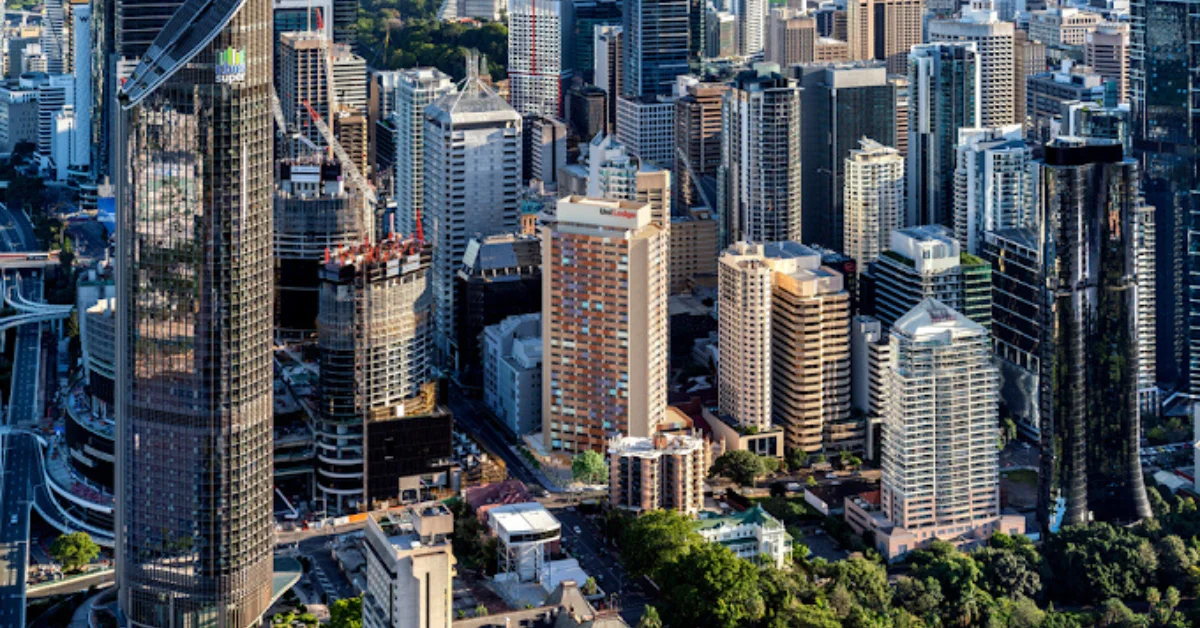
The opening of UniLodge Brisbane City at 41 George Street is being highlighted by industry figures as an example of how adaptive reuse and modular construction could help Brisbane deliver accommodation more efficiently as the city prepares for the 2032 Olympic and Paralympic Games.
Read: Singaporean Group Acquires George Williams Hotel in Brisbane CBD
Originally completed in 1979, the building served as office accommodation for more than four decades before Dexus acquired the vacant property in 2024. The redevelopment has converted the tower into a 1,180-bed UniLodge student accommodation complex within the Queen’s Wharf precinct. According to Dexus, the project demonstrates the potential for adaptive reuse to accelerate project delivery while reducing environmental impacts.

Delivered by Dexus and Marquette Properties, the redevelopment was completed about five months ahead of schedule, according to Dexus. The project has attracted attention as Brisbane faces increasing pressure to expand housing and accommodation capacity ahead of the Games.
Modular Construction Helps Speed Delivery
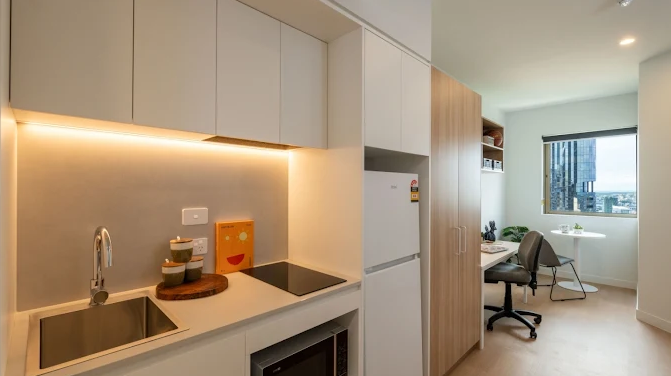
Project leaders have credited a combination of adaptive reuse and modular construction techniques for helping shorten the construction program. Rather than relying solely on conventional building methods, the redevelopment incorporated hundreds of prefabricated bathroom pods manufactured off site and transported to Brisbane for installation.

The project also benefited from converting an existing office tower instead of constructing a new building from the ground up. Its layout, including dual lift cores, allowed demolition and construction teams to work across different levels simultaneously, helping maintain construction momentum.

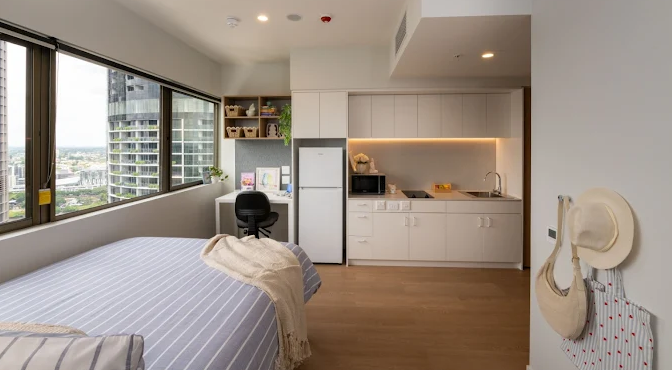
The George Street redevelopment has also renewed discussion about the role modular construction could play in Queensland’s building sector.
Researchers said prefabrication has the potential to reduce construction time, improve efficiency and reduce the number of workers required on site. They also note that modular construction requires much more planning during the early design stage because components must be carefully coordinated before work begins.
Experts said this additional upfront planning can present challenges but believe modular construction will become increasingly important as Brisbane works to deliver major accommodation projects within tight timeframes.


Some developers remain selective about where modular construction is most effective. While transport and installation costs can reduce its financial advantages on some residential developments, projects featuring large numbers of similar rooms, including student accommodation and hotels, are considered better suited to prefabricated building components.
Meeting The Olympic Accommodation Challenge
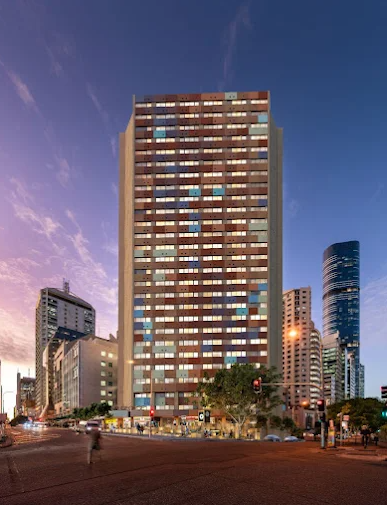
The redevelopment comes as Brisbane faces significant accommodation demands leading into the 2032 Olympic and Paralympic Games.
Industry forecasts indicate the city needs to deliver around 8,000 apartments each year through to 2031 and more than 7,100 annually after that to keep pace with demand. However, apartment construction has consistently fallen well below those levels in recent years.
Against that backdrop, the George Street redevelopment has attracted attention as an example of adaptive reuse. Project leaders and industry experts say it illustrates how existing commercial buildings can be repurposed while incorporating construction methods that may help deliver accommodation more quickly.
Read: Waterfront Brisbane: Dexus’ New Retail and Office Development Approved
Project leaders also believe future developments are likely to combine traditional building techniques with modular elements rather than relying exclusively on one approach. The George Street redevelopment has added to industry discussion about how Brisbane could deliver the homes, student accommodation and hotel rooms needed before 2032.
Published 8-July-2026