Vicinity Centres Takes Full Ownership of Uptown, Paving the Way for a $300 Million Brisbane CBD Revamp

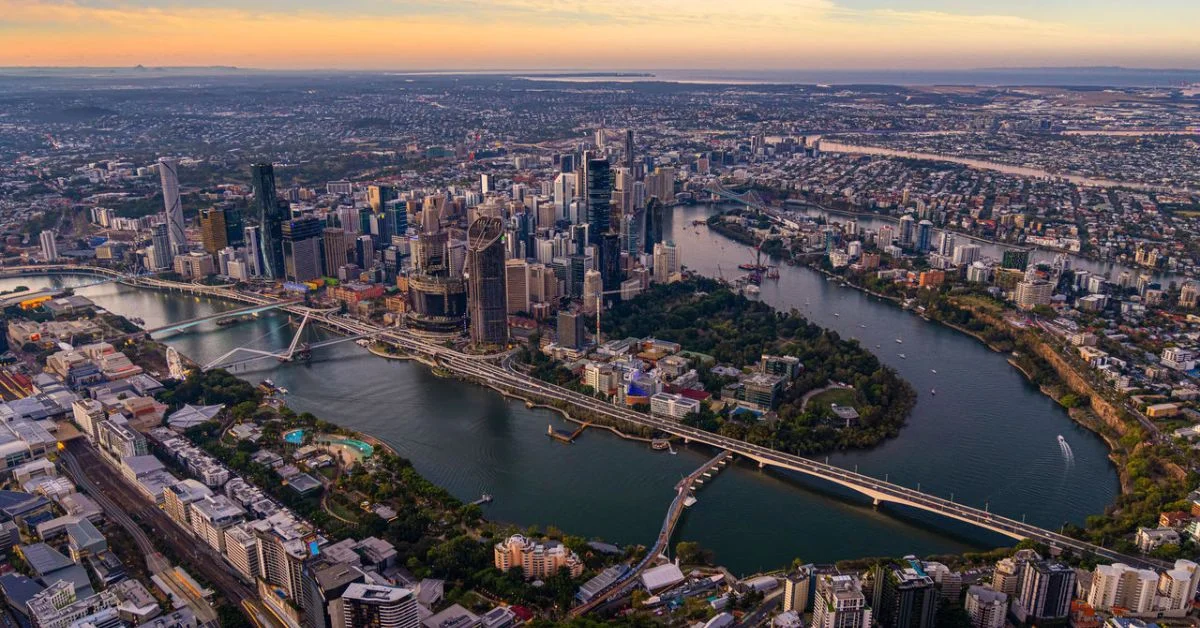
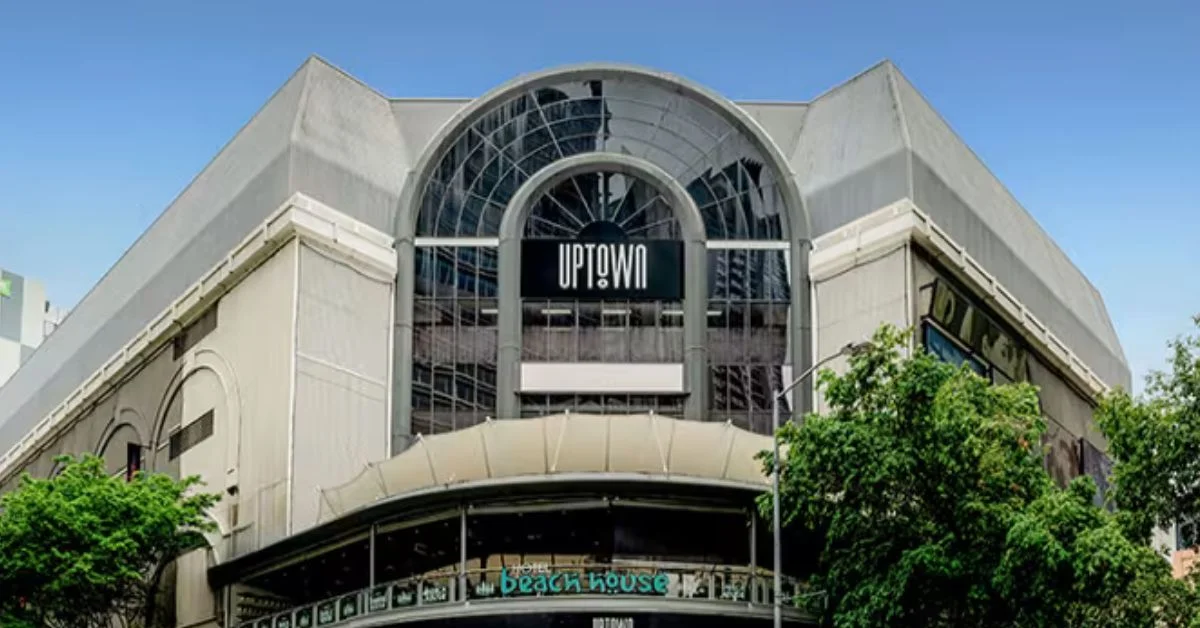
Vicinity Centres is set to transform the George Street end of Queen Street Mall after moving to secure full ownership of Uptown in a $212 million deal.


Contracts are expected to be exchanged with co-owner IFM Investors by April, with settlement anticipated in June 2026, pending consent in relation to certain ancillary land rights. Vicinity, which has managed the site and held a 25 per cent stake since 2012, will then own the full 1.27-hectare site outright, spanning 63,025 square metres across six levels at the George Street end of Queen Street Mall.

The deal ends years of partial ownership and stalled planning that have left the centre hollowed out since its anchor tenant, Myer, closed its five-level flagship store in July 2023 after 35 years in the building. With sole ownership now within reach, Vicinity has laid out the most detailed vision yet for Uptown’s future, and Brisbane CBD residents and shoppers will be watching closely.

From the Myer Centre to Uptown: A Long Road

The centre opened on 28 March 1988, just ahead of Brisbane’s World Expo ’88, built on a block previously occupied by Hotel Carlton, Newspaper House and the Barry and Roberts department store. At its peak it housed 180 stores and a five-level Myer department store, the largest in Queensland, and also featured a Hoyts cinema complex and multiple food courts.

For many Brisbanites, the building also holds a particular memory: the Dragon Coaster, an indoor rollercoaster that sat at the upper levels of what was then known simply as the Tops theme park, before it closed in the late 1990s. The building has been renamed, reconfigured and partly redeveloped several times since, but it has never fully replaced what it lost when Myer departed.

The centre has been struggling since Myer closed, which the retailer attributed to failed lease negotiations. In the wake of that departure, early plans floated by Vicinity and its then co-owner included an aquarium, escape room, arcade, laser tag arena and indoor ski-field as possible components of a $400 million to $500 million redevelopment.

Those plans were never formalised, and the building has traded in a state of uncertainty ever since. Listed investment manager HMC Capital entered due diligence to purchase the property but ultimately did not make an offer, leaving Vicinity to exercise its right to acquire the remaining stake outright.

An Emporium-Style Vision for Brisbane

Vicinity’s blueprint for the redeveloped Uptown draws directly on its experience transforming Emporium Melbourne, the Lonsdale Street centre that has become one of the most successful CBD retail destinations in the country, home to premium Australian and international fashion brands including Zimmermann, Camilla and Marc, Oroton and Ralph Lauren.

Vicinity CEO Peter Huddle has described the vision as curating an Emporium-style destination in Brisbane’s CBD, combining fashion, dining, entertainment, leisure and technology in a highly productive multi-level format. This move goes beyond adding floor space; it aims to give Brisbane residents a more accessible, high-quality social hub that makes shopping and dining in the city centre simpler and more convenient.
The redevelopment is expected to cost between $300 million and $350 million, funded through a combination of debt and the sale of other assets within Vicinity’s portfolio. Completion is targeted for 2029. Vicinity notes the CBD currently lacks a large-scale, full-price retail offer of the kind the revitalised Uptown would provide, a gap that has become more acute as surrounding areas, particularly Fortitude Valley’s James Street precinct, have captured much of Brisbane’s premium spending.

Some industry observers have noted that Emporium Melbourne’s transformation involved significantly larger capital investment, and have suggested Brisbane temper expectations of a billion-dollar-style rebirth, with a more curated and refreshed Uptown the more likely outcome. The comparison is worth keeping in mind, though Vicinity’s track record in repositioning CBD retail assets gives the project genuine credibility.

What It Means for Queen Street Mall

For residents and workers in Brisbane’s inner city, the Vicinity acquisition represents the clearest signal yet that Uptown’s long period of drift is ending. The Queen Street Mall precinct as a whole has faced growing pressure from online retail and from inner-city dining and entertainment destinations, and a revitalised Uptown anchoring the George Street end of the mall would materially change the experience of Brisbane’s most trafficked retail corridor.

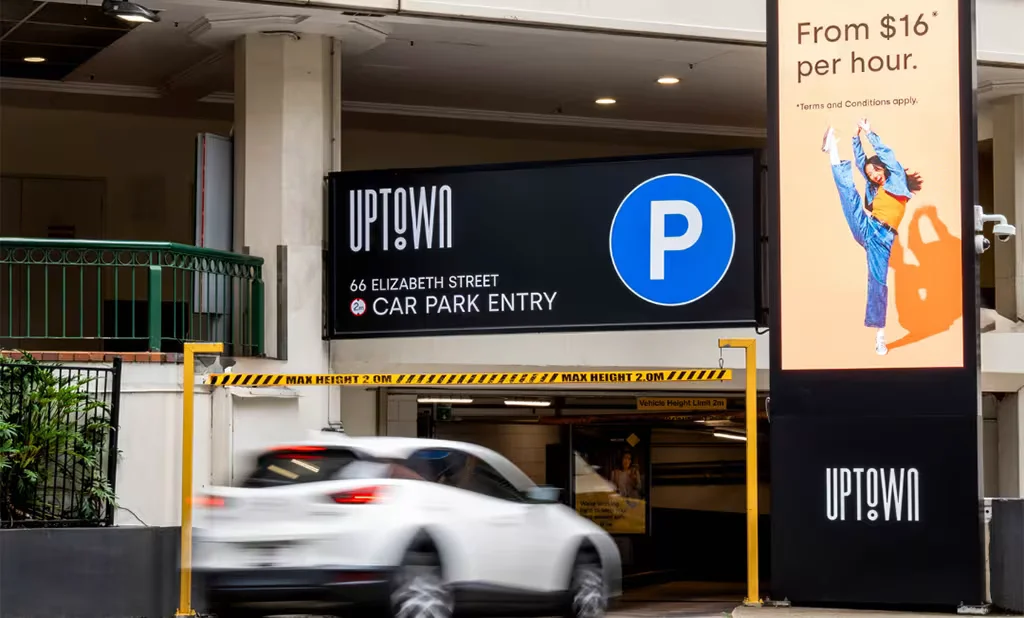
Upcoming transport upgrades ahead of the 2032 Games will further boost accessibility, linking locals more seamlessly to the site’s 1,450 underground car park spaces.

Vicinity expects to exchange contracts by the end of April 2026, with settlement in June. The company’s website at vicinity.com.au carries further information about the Uptown redevelopment plans as they are released.


Published 23-February-2026.
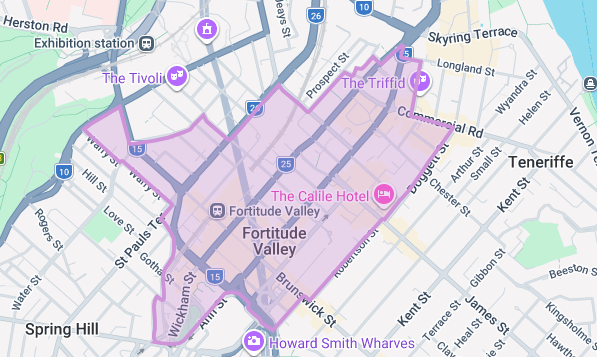
Plans to Revitalise Fortitude Valley Take Shape Ahead of Brisbane 2032

Fortitude Valley is the subject of a new long-term precinct plan that aims to boost housing, improve public spaces, strengthen transport connections and grow the local economy before the Brisbane 2032 Olympic and Paralympic Games, while protecting the suburb’s existing heritage and character.


Read: Prime Fortitude Valley Development Site Hits Market With 40-Storey Potential Near Olympic Precinct


The Fortitude Valley Sustainable Growth Precinct Plan, developed by Brisbane with input from state officials, will be adopted into Brisbane City Plan 2014 to guide and assess development across the precinct.

The first round of community consultation ran from December 2025 through to 15 February 2026, inviting residents and stakeholders to share their ideas for revitalising the precinct. That feedback, alongside technical investigations and input from state officials, will be used to shape the draft plan. Residents who missed the first round can still view ideas submitted during the engagement period via the Your City Your Say interactive mapping platform.

What the plan covers

Precinct map (Photo credit: BCC)

According to Brisbane’s local officials, the plan will aim to:

  • facilitate housing choice and diversity
  • improve connections to places and destinations
  • leverage opportunities in the lead up to Brisbane 2032 and beyond
  • enhance cultural and creative experiences
  • support Fortitude Valley’s rich character and heritage
  • support vibrant streets, laneways and public spaces
  • boost the 24/7 economy
  • create thriving precincts and mixed-use communities.

What residents raised

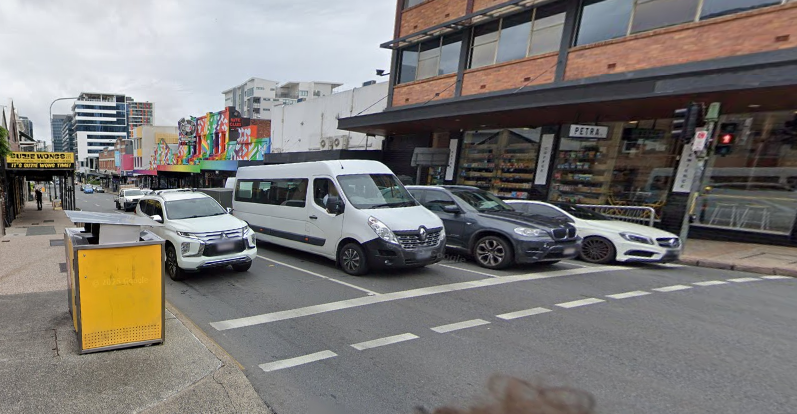
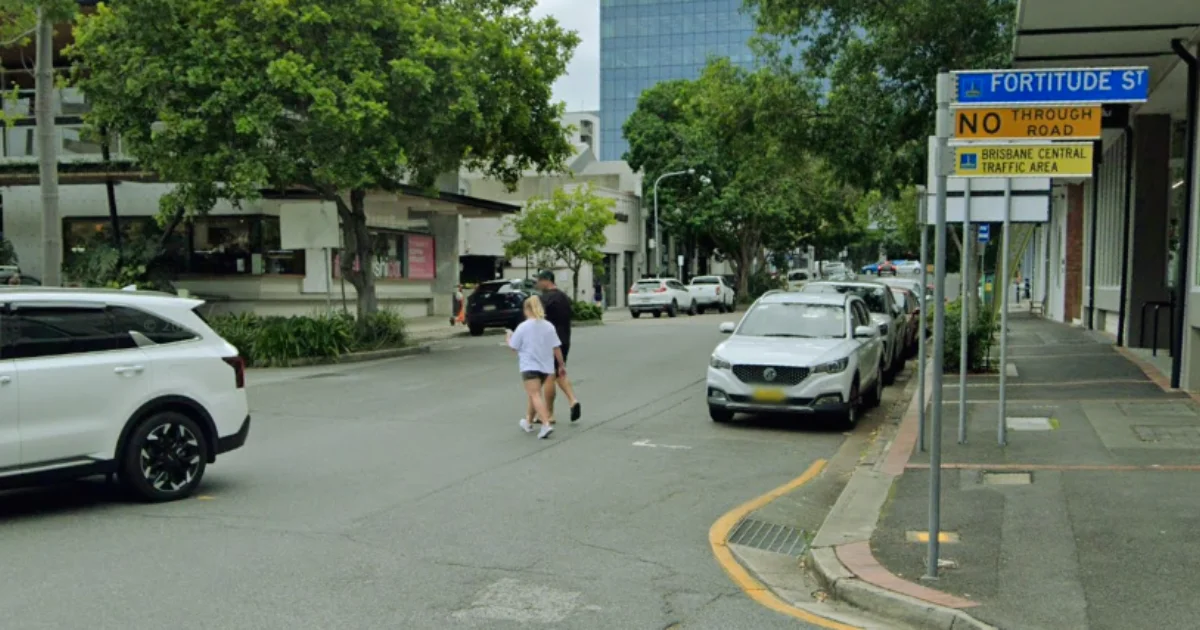
Photo credit: Google Street View

Among the feedback gathered during the initial consultation period, cycling infrastructure and laneway connectivity featured as notable concerns.

One resident raised concerns about northbound cycling access from Brunswick Street, noting the absence of a safe and comfortable route for cyclists continuing north. The resident indicated that while Wickham Street serves as an alternative, it is neither safe nor comfortable for cyclists or for pedestrians sharing the footpath.

McLachlan Lane was flagged by some respondents. One resident called for the lane to be reactivated and for improved connectivity to Ivory Street Park. A separate submission described walkability in the McLachlan Lane vicinity as poor, citing limited shade, high motor vehicle traffic and proximity to an emergency services station. The same respondent noted that connections to the Howard Smith Wharves precinct could be improved.

Cycling group proposes Valley bikeway

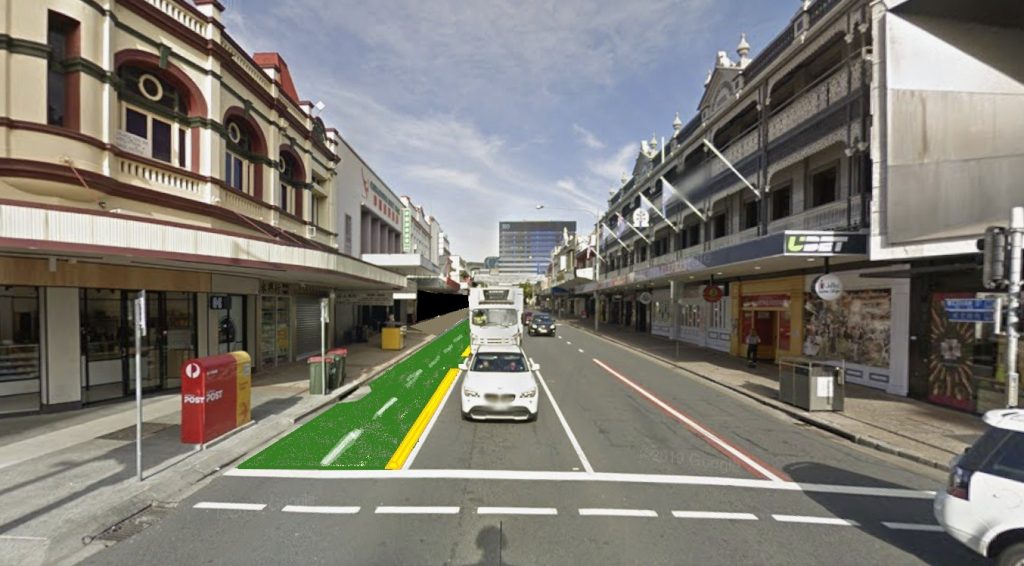
Photo credit: Facebook/Brisbane CBD BUG

The cycling advocacy group Brisbane CBD BUG (Bicycle User Group) has put forward a proposal for a physically separated bi-directional bikeway through Fortitude Valley, connecting the Breakfast Creek pedestrian and cyclist bridge in Newstead with the CityLink Cycleway on Elizabeth Street. The group has identified two possible corridors — Wickham Street, which it considers the preferred route due to its less steep gradient, or Ann Street as an alternative.

The group argues the infrastructure would have direct economic benefits for the precinct. “We know that bike lanes boost business and it is hard to think of a more sustainable way to grow a precinct than with people riding in, out and through it,” the group posted on Facebook.

Brisbane CBD BUG also pointed to safety concerns as a key driver of the proposal. “Currently the Valley is very much a no go zone for many people on bikes as they fear for their safety, due to the hostile road environment. It is time this changed for the better!”

The proposal received support in the comments, with some respondents noting it would be an opportunity to better connect Brisbane’s high-density districts by bike. However, not all were in agreement on priorities, with one commenter expressing a preference for dedicated bus lanes along the full length of Ann and Wickham streets before bikeway investment, while also acknowledging the need for improved cross-valley cycling access, suggesting the southern side of Gipps Street as a potential route to the Story Bridge.


Read: Behind Queensland’s Growth: The Infrastructure Race to Keep the Lights On


What comes next

A draft precinct plan is expected to be released for a further round of public consultation in late 2026, at which point local officials will also engage with businesses and state officials on the draft plan. 

Feedback from that round will be reviewed and incorporated before the plan is finalised. Approval from both local and state officials is expected in 2027, after which the plan will be formally gazetted into Brisbane City Plan 2014.

Published 20-February-2026

Final Salute for Steve Gollschewski After Decades of Service to Queensland

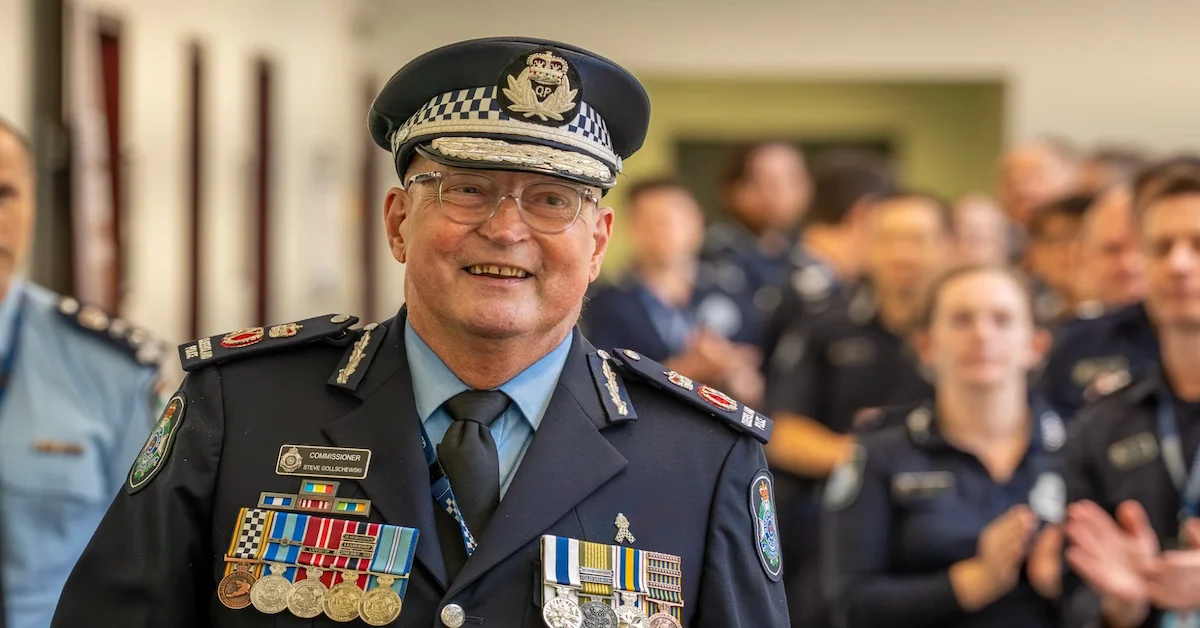
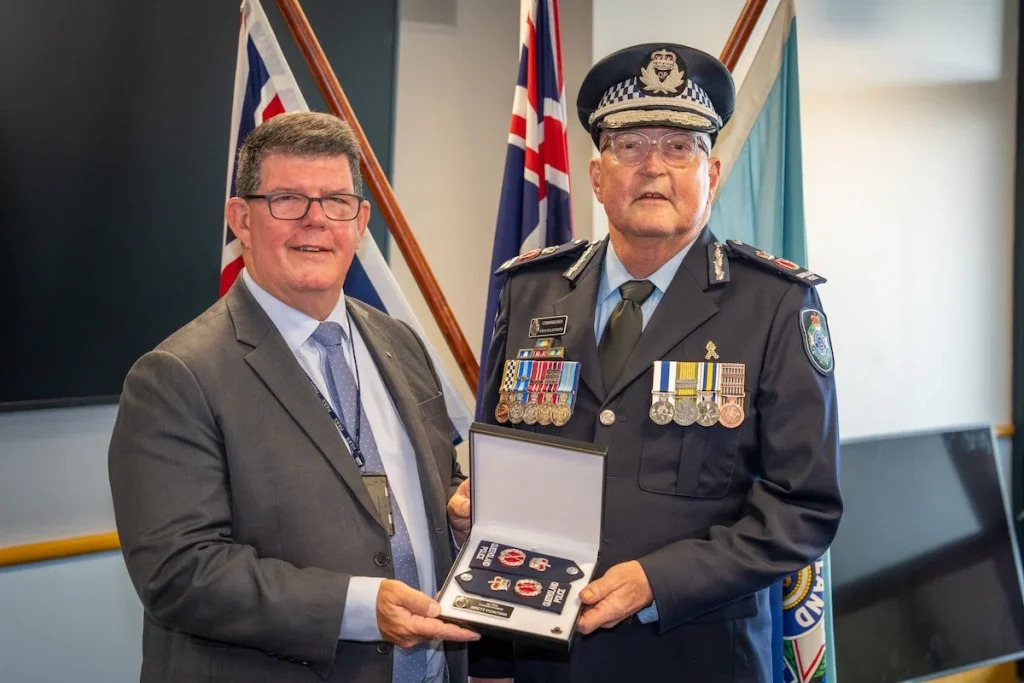
Queensland Police Service Commissioner Steve Gollschewski formally retired on 20 February 2026, marking the end of a career that began in 1980 and saw him rise from a fresh-faced recruit with modest ambitions to become the state’s 21st police commissioner. His departure from Brisbane’s police headquarters was marked by a guard of honour, applause from colleagues and loved ones, and a final salute.


The 66-year-old said he is stepping away to focus on his health and family after a stage-four lung cancer diagnosis that he has described as lifelong and manageable. Despite the personal challenge, he continued to serve, returning to the job after treatment to help position the organisation for the future.

Reflecting on his long career, Gollschewski said the people he worked alongside remained his greatest source of pride.

What began as an ambition to become a detective sergeant evolved into a lifetime of service spanning organised crime, intelligence, anti-corruption, counterterrorism and disaster management.

He joined the then Queensland Police Force in 1980, following in the footsteps of his father and brother.

Over the decades, he gained wider recognition for his role in Queensland’s COVID-19 response. As commissioner, he focused on organisational improvement after the 100-day review and during a period of heightened public concern about youth crime, domestic violence, recruitment pressures and unrest within the ranks.

Gollschewski took on the role of commissioner in 2024 following the retirement of his predecessor, Katarina Carroll, first taking the reins in the interim before being officially appointed as the state’s 21st top cop. He said his mission was to make the community safer and to properly equip, lead and support the workforce.

During his time as commissioner, he pointed to progress including an 11 per cent reduction in complaints against police and a drop in staff attrition as signs the service was heading in the right direction.

His final walk out of police headquarters was described as a heavy tread, more of a shuffle, as he farewelled colleagues and supporters and performed his last official duty — a final salute with Deputy Cheryl Scanlon.

Queensland Police Minister Dan Purdie said Queensland owed him a debt “we could probably never repay”, noting his decades of frontline service and leadership roles over many years.

His retirement closes a 46-year career marked by leadership roles and organisational reform that, as colleagues have said, leaves an enduring legacy for the service and the community.

Photo Credit: QPS

Following Commissioner Gollschewski’s retirement, Brett Pointing has been appointed Queensland Police Commissioner, taking over the role from 21 February 2026 for a 12-month term.


With more than 40 years of policing experience, including senior leadership roles within the Queensland Police Service and the Australian Federal Police, Mr Pointing has previously served as Deputy Commissioner, Gold Coast District Officer and disaster recovery coordinator, and contributed to major reforms including domestic and family violence responses and efforts to combat criminal motorcycle gangs. The Queensland Government said his appointment aims to strengthen frontline policing and continue efforts to reduce crime across the state. 

Published 20-Feb-2026

Japanese Metal Sensation BABYMETAL Brings Arena Tour to Fortitude Valley’s Riverstage in March

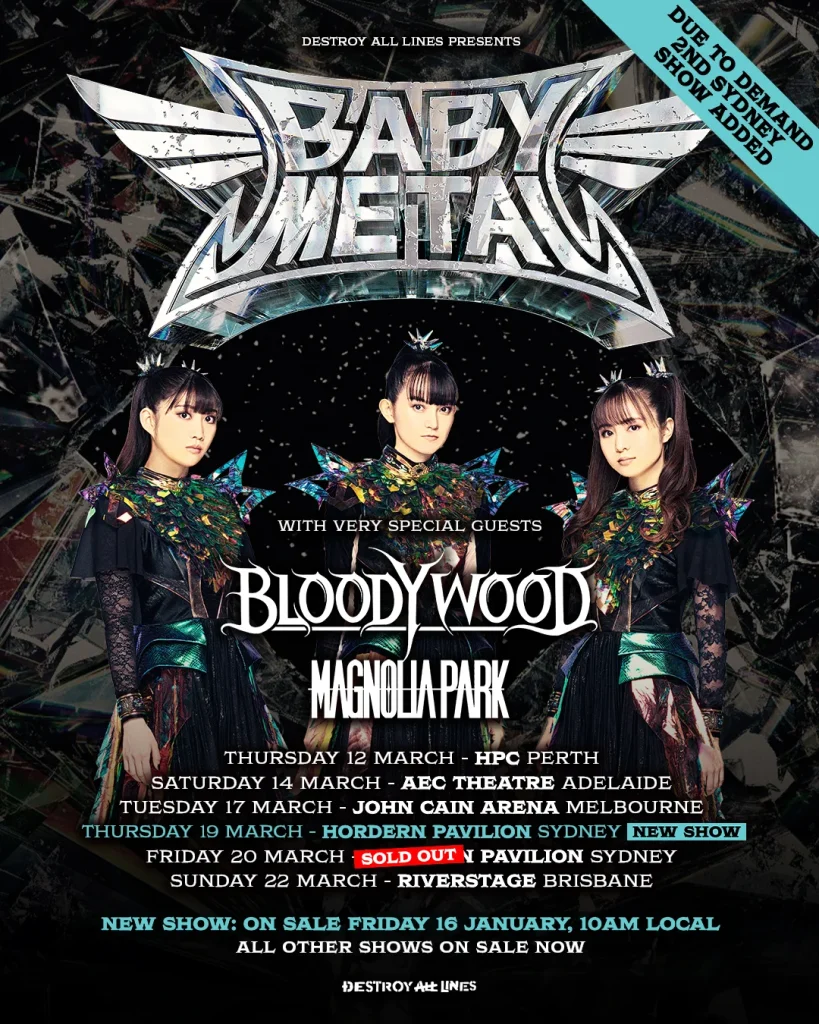
BABYMETAL will conclude their 2026 Australian arena tour at Riverstage in Fortitude Valley on Sunday, March 22, bringing their fusion of heavy metal and Japanese idol culture to Brisbane alongside Indian metal band Bloodywood.


The Tokyo-based trio will perform at the riverside venue on Gardens Point Road after shows in Perth, Adelaide, Melbourne and Sydney, marking their largest Australian headline run to date. Since making their Australian debut at Good Things Festival in 2018, BABYMETAL have built a devoted following through subsequent appearances at Knotfest earlier this year and a 2023 headline tour.

The Riverstage performance follows the release of METAL FORTH in 2025, which saw BABYMETAL become the first all-Japanese act to reach the top 10 of the Billboard 200. The album features collaborations with artists including Bloodywood on the track “Kon! Kon!” and showcases the band’s genre-defying approach that has earned them millions of global followers since forming in 2010.

Indian Metal Force Bloodywood Makes Australian Debut

New Delhi band Bloodywood will make their long-awaited Australian debut on the tour after years of visa issues prevented previous visits. The group balances guttural metal, Indian folk elements and hip-hop influences with lyrics sung in Hindi, Punjabi and English, creating a sound unlike any other act in heavy music.

Bloodywood released their album Nu Delhi earlier this year, which included a collaboration with BABYMETAL on the track “Bekhauf.” The band has sold out tours and performed at major European festivals including Hellfest and Download Festival, becoming India’s first metal act to chart on Billboard.

High-Octane Performance Expected

Previous BABYMETAL performances in Brisbane have drawn praise for their meticulous choreography, infectious energy and ability to blend explosive metal with precision Japanese idol traditions. Everblack Media described their Brisbane headlining show as a meticulously crafted spectacle that captivated audiences throughout.

The combination of BABYMETAL’s theatrical stage presence and Bloodywood’s ferocious live set promises a unique evening of heavy music at Riverstage. Both bands have collaborated before, raising the possibility of joint performances of songs like “Bekhauf” or “Kon! Kon!” during the Australian tour.

Five-City Australian Run

The tour kicks off on Thursday, March 12, at HPC Perth before heading to the AEC Theatre in Adelaide on Saturday, March 14, and Melbourne’s John Cain Arena on Tuesday, March 17. The East Coast leg hits a fever pitch at Sydney’s Hordern Pavilion where a second show has been added for Thursday, March 19, to keep up with the demand for the original Friday night slot. Everything then culminates in a massive tour finale at Brisbane’s Riverstage on Sunday, March 22, marking the end of the band’s most ambitious Australian run yet.

BABYMETAL's tour schedule
Photo Credit: BABYMETAL

BABYMETAL have spent much of 2025 on the road, performing in Europe, the UK, North America and Mexico, with their relentless global touring schedule establishing them as one of the most unique forces in modern metal. Their five studio albums, countless awards and collaborations with artists including Tom Morello, Spiritbox and Electric Callboy have cemented their reputation for reinventing what it means to be a heavy band.

Tickets for the Riverstage show are available through Ticketmaster, with the 5:30pm doors promising an evening of genre-bending metal that showcases both Japanese and Indian influences on the heavy music landscape.


Published 16-February-2026.

Literary Magazine Meanjin Returns to Brisbane After 80 Years Under QUT Custodianship

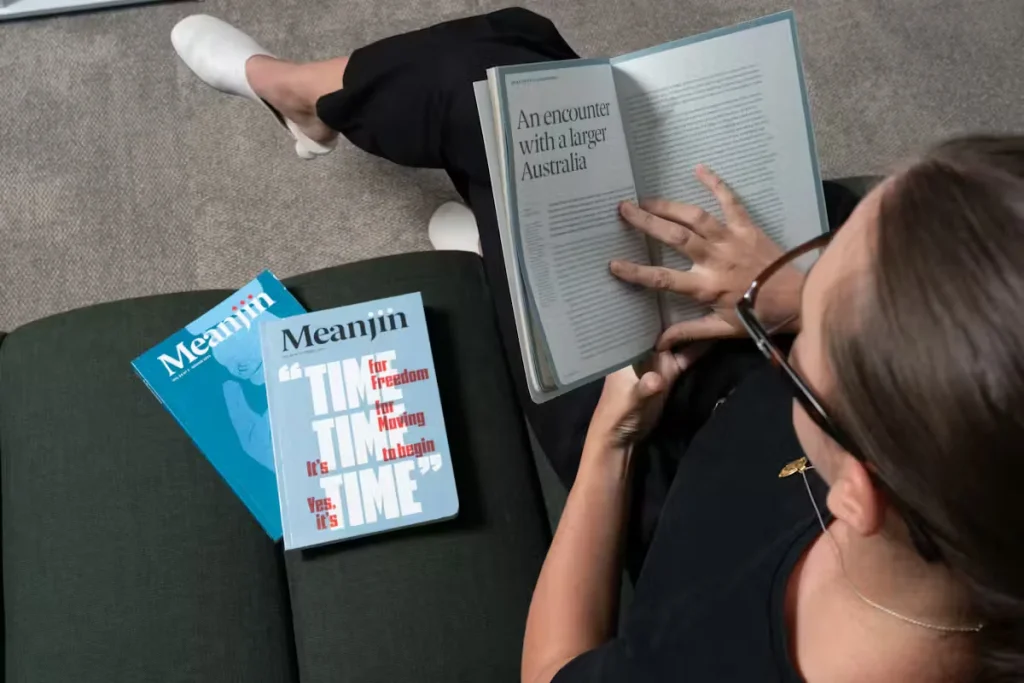
Queensland University of Technology at Gardens Point will become the new custodian of Meanjin, bringing Australia’s second-oldest literary magazine back to Brisbane 80 years after it relocated to Melbourne.


The 85-year-old journal is heading back to the city that gave it its name. While Clem Christesen first pulled the inaugural Meanjin Papers together in suburban Greenslopes in 1940, bringing the masthead to QUT’s Gardens Point campus marks a massive symbolic return to the heart of the river city. After 80 years in Melbourne, the journal is finally back on the Turrbal and Yugara lands where its story began.

Melbourne University Press announced in September 2025 that Meanjin would close due to financial pressures, with editor Esther Anatolitis and deputy editor Eli McLean made redundant and the final issue released in December. The announcement triggered immediate backlash from Australia’s literary community, including authors Jennifer Mills, Anna Krien, Claire G Coleman and former editors Sophie Cunningham and Jonathan Green.

Gardens Point Campus to Host National Literary Icon

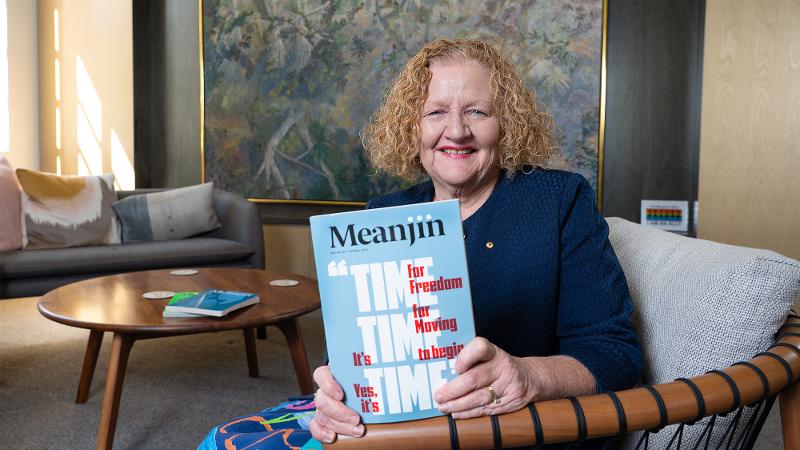
QUT Vice-Chancellor Professor Margaret Sheil said the university is delighted to bring Meanjin home to Meanjin/Magandjin, the Turrbal and Yugara word for the lands where Gardens Point campus now stands. Since its foundation, the literary magazine has been instrumental in shaping Australian literary and intellectual culture, providing a vital platform for critical discussion and a showcase for emerging writers.

Professor Margaret Sheil
Photo Credit: QUT

The university will appoint an editorial board to ensure the journal’s independence, values and standards are maintained, and will recruit an editor through a national competitive search. QUT will take time to thoughtfully re-establish the journal in Queensland and consider how to most effectively reinvigorate Meanjin while respecting its founding vision and literary legacy.

Complementing Creative Writing Programs

Professor of Creative Writing Kári Gíslason said QUT has a distinguished group of alumni writers who have gone on to become renowned Australian authors. The partnership affirms how creativity, literature and excellence in writing allow people to think deeply and connect ideas in imaginative ways to the world around them.

The journal will complement the focused, high-quality creative writing program within the QUT School of Creative Arts at Gardens Point. Meanjin’s move to QUT sends a message to students that this connection between creative excellence and intellectual engagement remains as true now as it ever was.

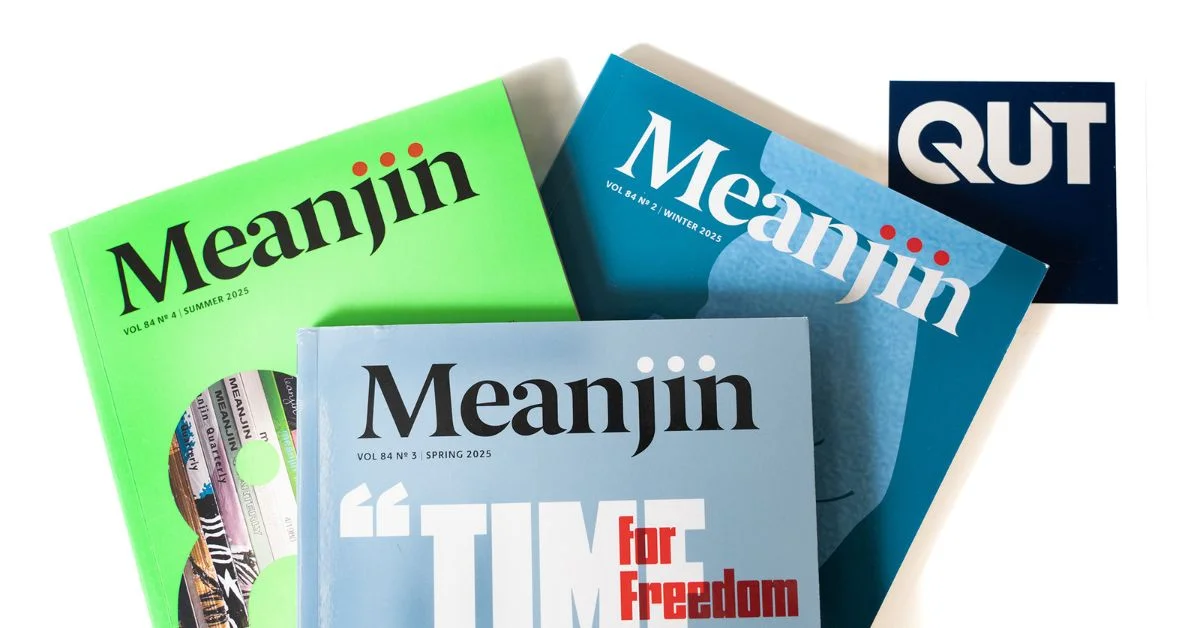
Literary magazine Meanjin
Photo Credit: QUT

Timeline for Revival Remains Open

Principal policy adviser John Byron, a published author and former executive director of the Australian Academy of the Humanities, said rehoming the journal will take considerable work and QUT will take the time to do it properly. The university is a long way off releasing the next issue, as it has no editor, production staff or editorial board yet, but will get there.

The transfer is already underway and work now begins in earnest. QUT understands the scale of the privilege it has been afforded and will take good care of Meanjin, Byron said.

Literary Community Response

Former Meanjin editor Jonathan Green said the news of the journal’s return was a delightful surprise and it is lovely to think the literary magazine will be journeying back to Brisbane where its adventure began. Academic Ben Eltham, a long-running contributor, called the return a victory for everyone who fought to save this vital masthead for the future of Australian literature.

The timing aligns with Queensland’s plans to elevate the creative economy, support local talent and showcase the state’s unique stories and culture to a global audience ahead of the Brisbane 2032 Olympic and Paralympic Games. Melbourne University Press Chair Warren Bebbington said QUT’s understanding of the journal’s legacy surpassed those of other expressions of interest received from organizations wanting to take over the publication.


Published 16-February-2026.
Prime Fortitude Valley Development Site Hits Market With 40-Storey Potential Near Olympic Precinct

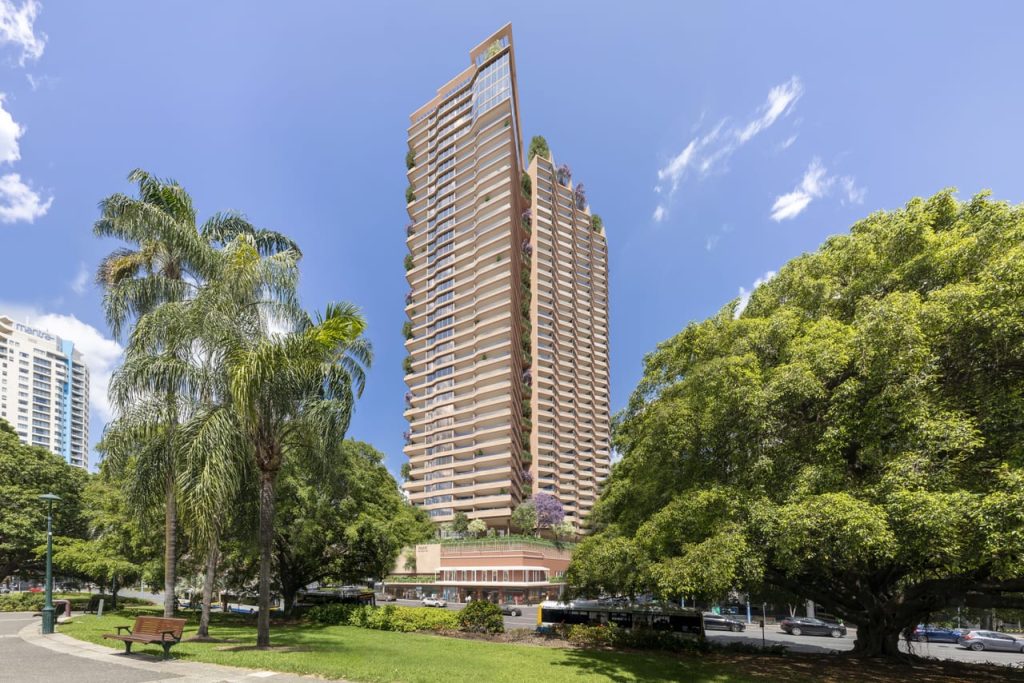
A prominent development site at 70-82 Wickham Street in Fortitude Valley has launched to market with concept plans for towers up to 40 storeys, positioning developers to meet Brisbane’s growing need for apartments ahead of the 2032 Olympic and Paralympic Games.


Colliers Queensland‘s Brendan Hogan and Troy Linnane have been appointed to sell the site known as Landmark Brisbane, spanning 2,416 square metres across three street frontages. The property sits at the convergence of Brisbane CBD, Fortitude Valley and New Farm, placing it at the heart of the city’s most dynamic lifestyle, employment and growth corridors.

Concept plans prepared by architects Cottee Parker outline development scenarios of 25 and 40 storeys, delivering more than 350 apartments under both build-to-sell and build-to-rent scenarios, subject to approval. The site currently hosts a two-storey retail and commercial complex.

Gateway Location Near Howard Smith Wharves

Hogan said the development site is positioned close to Howard Smith Wharves, Brisbane’s premier riverfront dining and entertainment precinct, and only a 15-minute walk to the Victoria Park Olympic precinct. This proximity to Olympic infrastructure adds appeal for developers looking to capitalise on the Games-driven demand for accommodation.

Brisbane's development site
Photo Credit: Louise Fitzgerald-Baker / Instagram

Inner-city Brisbane is experiencing acute undersupply of apartments, with vacancy rates below one percent and prestige developments in the inner-city are setting new benchmarks, with some luxury projects now commanding upwards of $20,000 per square metre. Market analysts currently rank Brisbane’s growth fundamentals as the strongest among eastern seaboard capitals, driven by persistent undersupply and interstate migration.

360-Degree Views and Strategic Position

The proposed tower heights unlock potential for 360-degree views, offering future residents uninterrupted outlooks over the CBD, Story Bridge, and Brisbane River. The surrounding Fortitude Valley precinct is undergoing rapid gentrification, underpinned by premium residential developments, lifestyle-driven demand and strong population growth.

Linnane said South East Queensland’s population growth is driving unprecedented demand for inner-city apartments, making high-quality development sites in prime locations increasingly scarce. The site’s gateway positioning, river and skyline views, and proximity to the Olympic precinct create a once-in-a-generation opportunity to develop a world-class project.

Strong Market Interest Expected

Colliers has already seen strong market interest from a range of local, interstate and offshore developers, as well as institutional investors and high net worth individuals. The expressions of interest campaign for the Fortitude Valley development site closes March 19, with multiple parties expected to compete for the opportunity.

The site joins other major Fortitude Valley development sites currently on the market, including a Barry Parade property with approval for dual towers of 27 and 37 storeys comprising 490 apartments. The cluster of development opportunities reflects Fortitude Valley’s position as a key growth area for Brisbane’s residential market ahead of the 2032 Games.


Published 16-February-2026.

AgTech Leadership Bursary Awarded To Associate At Fortitude Valley Firm

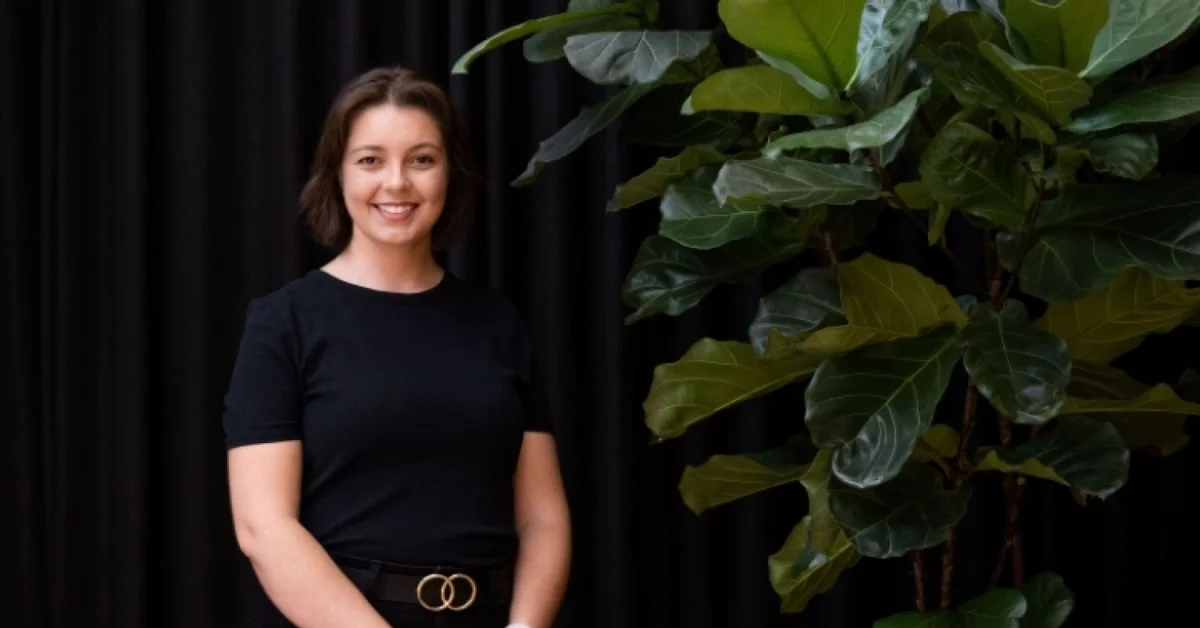
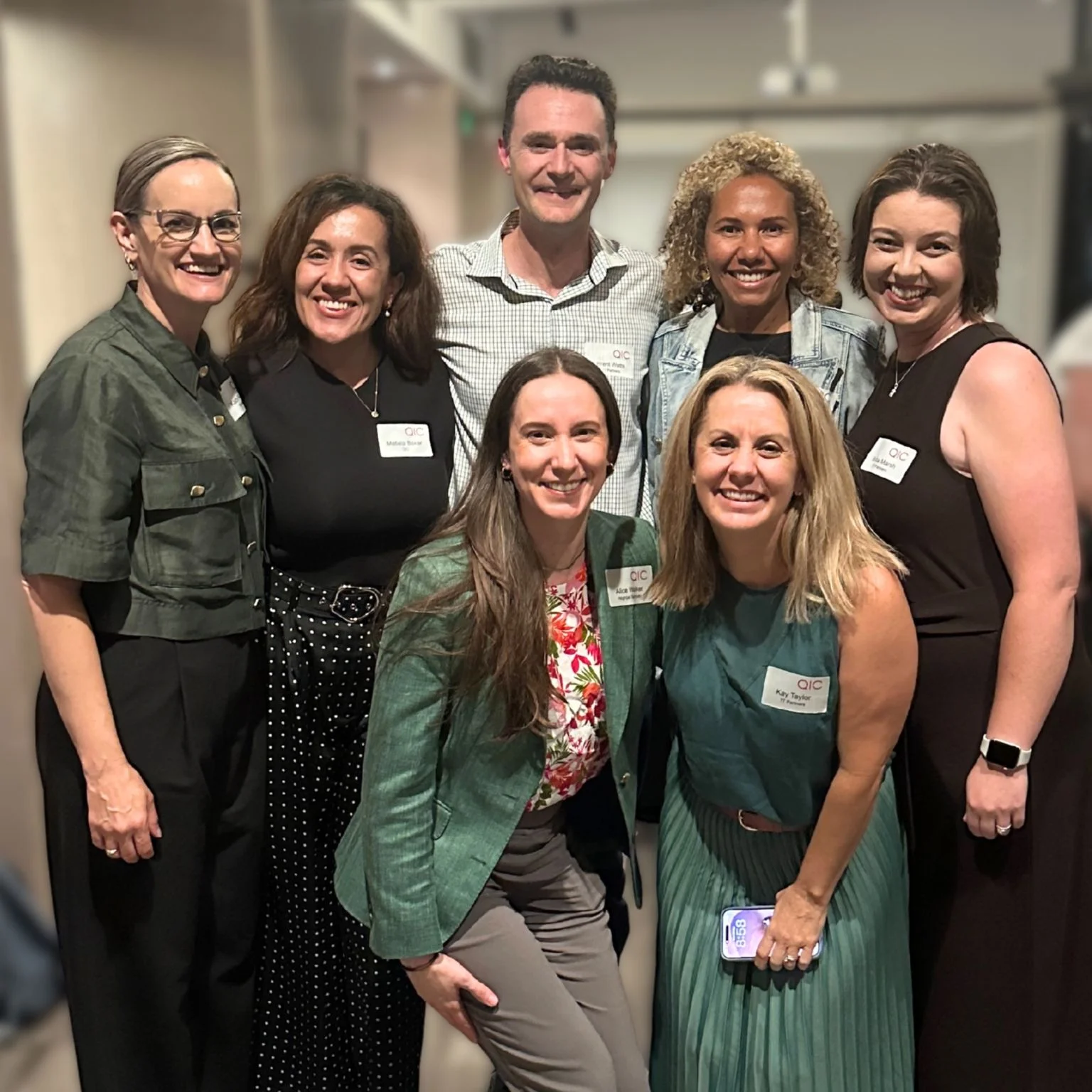
Brisbane-based AgTech consultant Britta Marsh, an associate at Fortitude Valley venture capital firm 77 Partners, has been awarded the Liz Alexander Bursary for Leadership in AgTech and Innovation.


Professional Background In AgTech And Investment

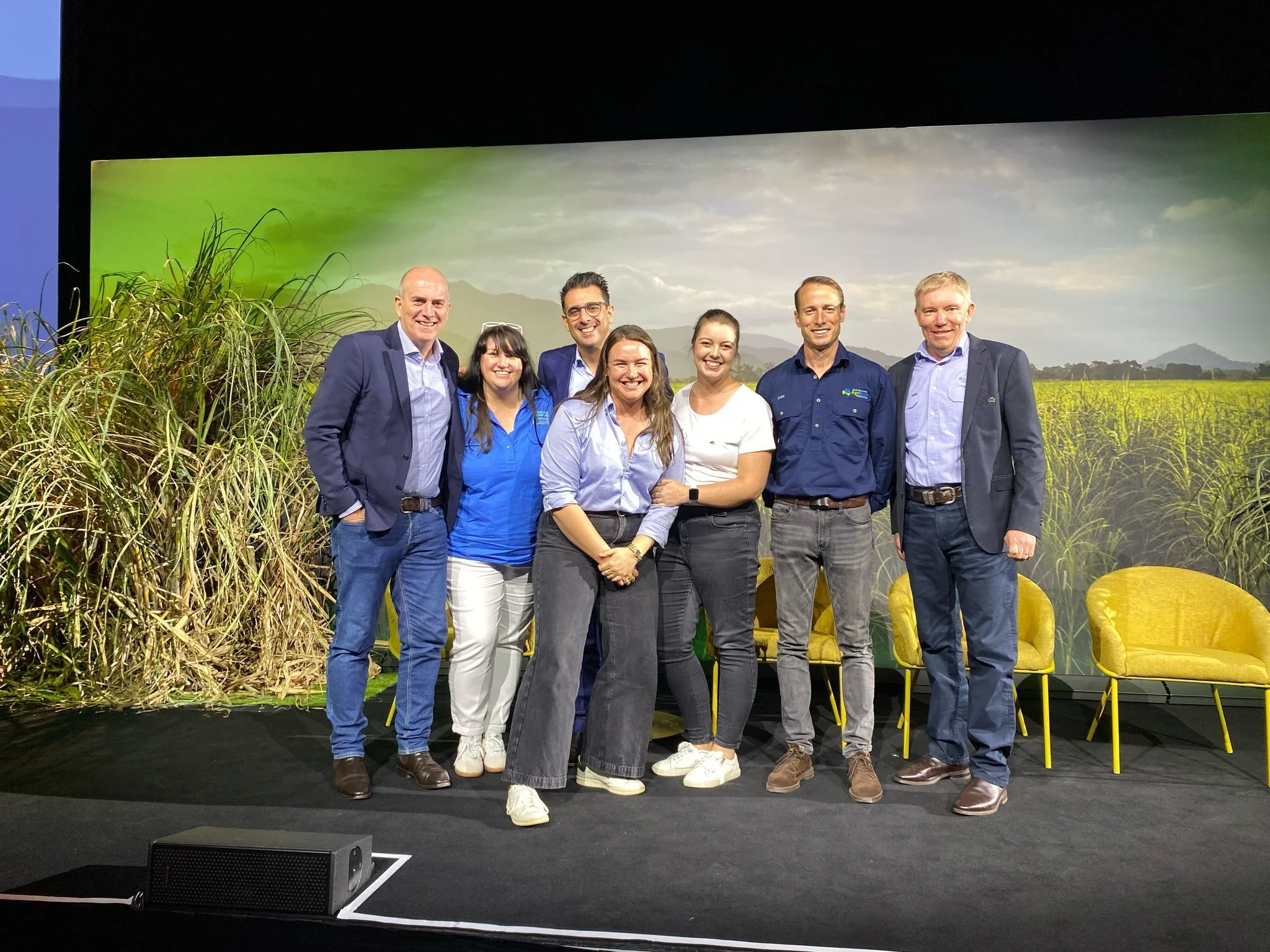
Britta Marsh secured the bursary, which provides $3,000 to support her attendance at evokeAG 2026 in Melbourne as part of Team Queensland. The event is recognised as a leading agrifood innovation gathering in the Asia Pacific region.

Ms Marsh is an associate at 77 Partners. The firm is described as Queensland-based and focused on venture capital investment.

Fortitude Valley AgTech
Photo Credit: Britta Marsh/LinkedIn

She has worked with more than 200 AgTech startups nationally, including more than 50 based in Queensland. Her work supports founders in validating markets, connecting with producers and progressing towards commercialisation and early-stage investment readiness.

In addition to her investment role, Ms Marsh serves on the Australian Agritech Association’s National Committee and is involved in program design and ecosystem development across Queensland’s agricultural sector.

Britta Marsh
Photo Credit: Britta Marsh/LinkedIn

Recognition Of Industry Contribution

The Liz Alexander Bursary recognises emerging leaders contributing to AgTech innovation in Queensland. Managed by the Department of Primary Industries, it is delivered annually and provides funding for attendance at evokeAG to facilitate industry engagement and knowledge exchange.

Ms Marsh was recognised for her contribution to strengthening regional, producer-led innovation pathways within the state’s AgTech landscape.

Liz Alexander bursary
Photo Credit: Britta Marsh/LinkedIn

Legacy Of Liz Alexander

The bursary honours the legacy of Liz Alexander, an AgTech advocate from Emerald in Central Queensland who played a key role in shaping the state’s agricultural innovation ecosystem. Her work included involvement in initiatives such as AgFrontier and i4Connect, along with board roles including Cotton Australia, Plant Health Australia and QRIDA.

Liz Alexander passed away in July 2024 at age 51 following complications related to cancer treatment.


The bursary continues her focus on collaboration, leadership and innovation within Queensland’s primary industries, with broader industry goals including lifting primary production output to $30 billion by 2030.

Published 13-Feb-2026

Behind Queensland’s Growth: The Infrastructure Race to Keep the Lights On

Queensland is building at speed. New estates are opening, infill projects are moving through approvals and cranes continue to reshape inner-city skylines.

But not every new home can simply be switched on.

Behind the construction surge is a quieter pressure point that directly affects housing supply: access to electricity and water. Without confirmed utility connections, dwellings cannot be completed, settled or occupied — regardless of demand.

According to Energy Queensland Annual Report 2024–25, more than 55,000 applications for new electricity connections were lodged in a single financial year. While most are delivered through existing infrastructure, around 12 per cent require major network upgrades — new transformers, substations or power lines — adding time and cost to projects already under pressure.


Why Connections Matter to Buyers and Developers

For developers, network augmentation can shift feasibility calculations. Extended connection timelines may affect staging, holding costs and settlement schedules. For smaller builders and infill projects, uncertainty around capacity can complicate construction programs and financing.

In a market grappling with housing shortages and strong subdivision activity, those delays ripple outward. If a project cannot secure timely utility access, new supply is effectively paused — even if planning approvals are in place and buyers are ready.

For purchasers, the implications are less visible but no less significant. Delayed settlements, extended build times and rising infrastructure costs ultimately feed into pricing and availability.

Compounding Pressures: Labour and Supply Chains

The challenge is not purely technical. Queensland is simultaneously managing workforce shortages across engineering, electrical and construction trades, while preparing for major infrastructure commitments in the lead-up to the 2032 Olympic and Paralympic Games.

Global supply chain disruptions add further complexity. Industry reporting has highlighted extended manufacturing lead times for large power transformers, with some equipment taking years to produce and deliver. Projects requiring network upgrades can therefore face materially longer timelines than standard connections.


Industry Response and Market Implications

Utilities have introduced improved mapping tools to help developers identify available network capacity earlier in the planning phase, alongside efforts to reduce application backlogs and streamline approvals.

Industry groups are increasingly focused on early collaboration between developers, planners and network operators to identify potential bottlenecks before projects reach construction.

The issue will be examined at the upcoming Pipes and Wires: Connecting Queensland’s Utilities event hosted by the Property Council of Australia on 25 March in Eagle Street, where infrastructure capacity and housing delivery will be central themes.

While power connections rarely attract the attention given to towers or transport corridors, they sit at the core of housing supply. Without reliable electricity and water, homes cannot settle, tenants cannot move in and new communities cannot function.

In a market defined by undersupply and population growth, Queensland’s property pipeline depends not only on approvals and construction — but on whether the lights can come on.

Published 13-Feb-2026

Choose-Your-Own Valentine’s: A Vibe-Based Guide to February 14 in Brisbane


Valentine’s Day doesn’t have to follow one script. In 2026, plenty of locals are treating February 14 as a choose-your-own night out, whether that’s a proper date, a Galentine’s catch-up with an activity built in, a mixed-group dinner that can turn into a singalong, or a full-send party where singles can actually have fun.

To keep it simple, pick the vibe first and then pick the venue that matches it.

Vibe 1: Low-key romance with a view

If your ideal Valentine’s involves good food, a little scenery, and minimal effort (the best kind), go for a waterside setting or a backdrop that does the heavy lifting.

The Boatshed at the Regatta (Toowong)

A cosy choice for couples who want a relaxed lunch or dinner overlooking the river — intimate without being overly formal, and perfect for a proper chat that isn’t competing with a dancefloor.

Riverland (Brisbane City)

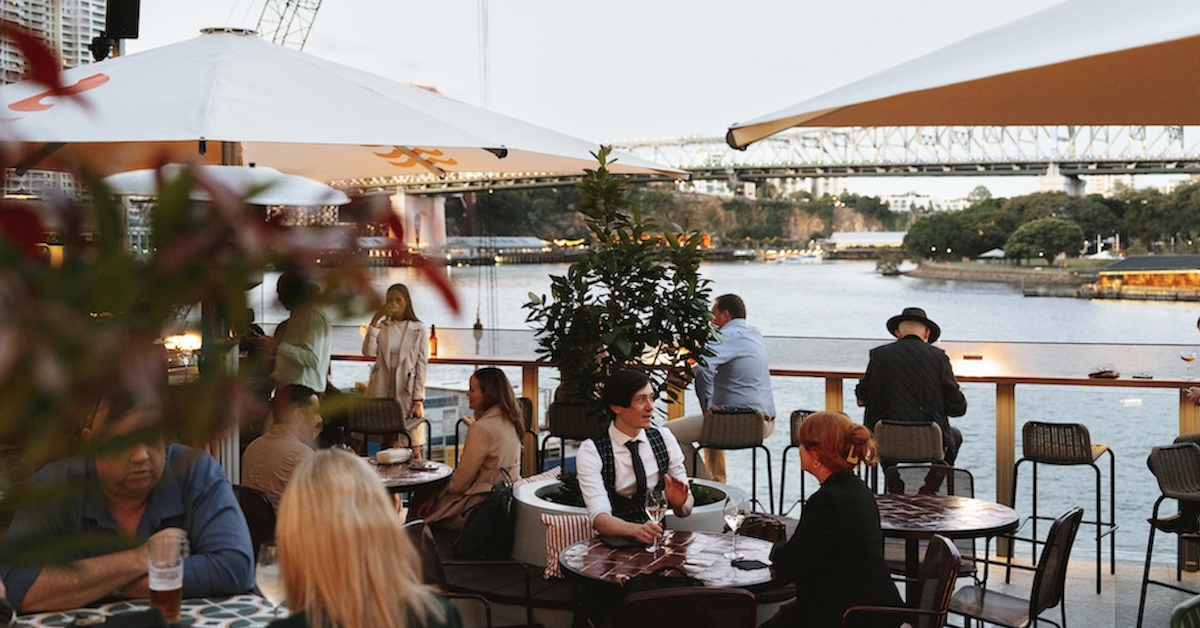
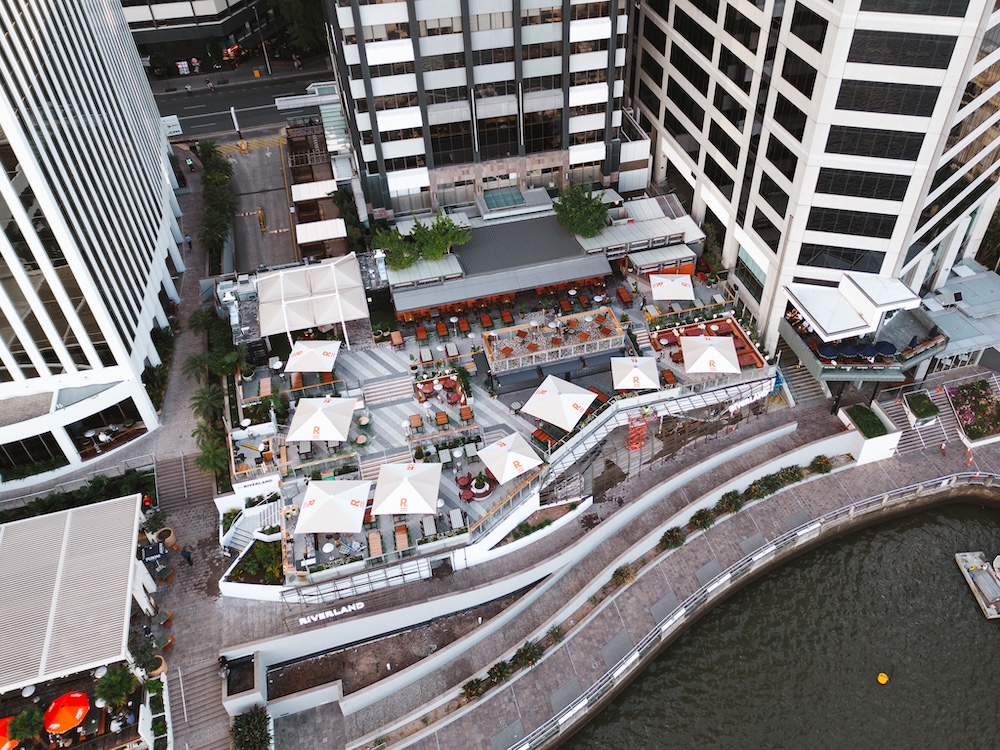
If you’re after “special occasion” energy, this one leans into the setting, with the Brisbane River and Story Bridge as your backdrop. Expect cocktails, shared chef’s specials, and live music from 6:00 p.m. — ideal for a date night that feels like a night out, not just a booking.

Best for: couples, first dates, and anyone who wants something classic without feeling locked into clichés.


Vibe 2: Galentine’s with an activity built in

If your group chat loves a plan that’s more than “we should catch up soon,” choose something hands-on. An activity gives the night momentum, keeps conversation flowing, and (bonus) you leave with a memento.

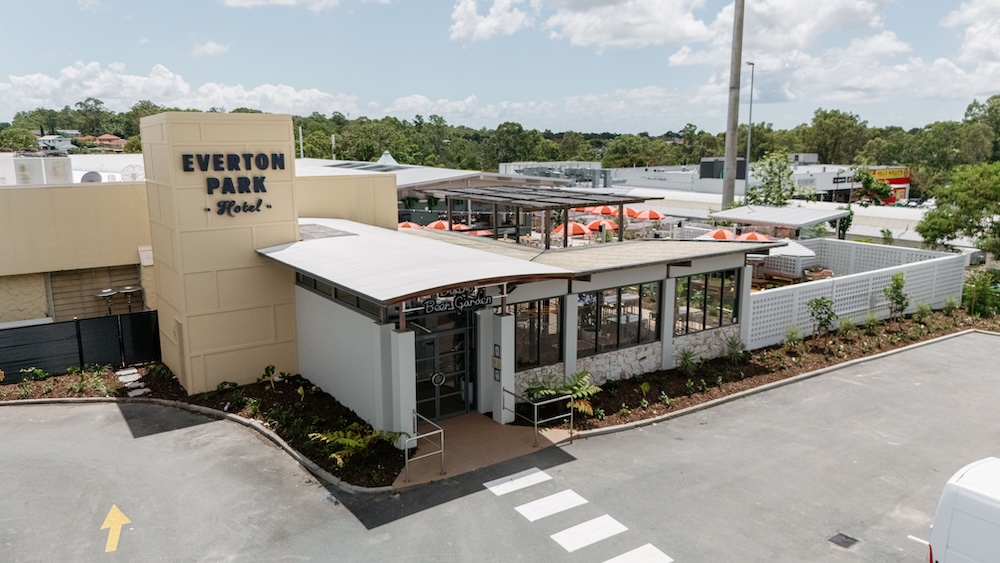
Everton Park Hotel (Everton Park)

A friendship-forward session with candle-making, bubbly and charcuterie. It’s equal parts wholesome and fun — the kind of afternoon that feels like a treat without requiring anyone to dress up like it’s a formal.

Bonny View Hotel (Bald Hills)

Paint-and-sip is a proven recipe: wine, laughs, and an art result that’s either surprisingly good or proudly chaotic. This one’s a great pick for friends, low-pressure dates, or anyone who wants a social plan that isn’t “sit and stare at each other across a table.” Dinner-only bookings are also available if you’d rather keep it simple.

Best for: besties, workmates, small groups, and people who prefer doing something over “just going out.


Vibe 3: Dates or mates — the flexible night out

This is the category for mixed groups (couples plus singles), double dates, or anyone who wants a night that can shift gears as it goes — from dinner to entertainment without having to relocate three times.

Cannon Hill Tavern (Cannon Hill)

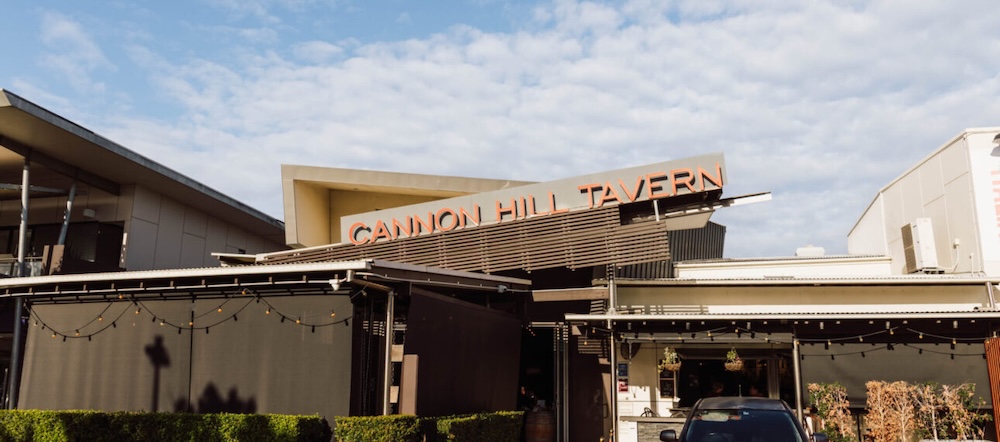
A full-night format that starts with shared plates, rolls into live jazz from 5:30 p.m., then turns playful with Valentine’s karaoke from 8:00 p.m. It’s the easiest option if you want something that can be romantic, friendly, or both — depending on who turns up and how the night unfolds.

Best for: mixed crews, “let’s keep it open-ended” plans, and anyone who wants dinner and a story afterwards.


Vibe 4: Singles and after-dark energy

If you’re not doing dinner-and-dessert, lean into venues that are unapologetically built for meeting people, dancing, and staying out late. Themes help. Loud music helps. A crowd that’s in on it helps most.

Fridays (Brisbane City)

A Traffic Light Party (plus DJs and glow sticks) makes the whole night feel more social and less awkward — especially if you’re heading out with single friends and want an excuse to talk to strangers without pretending it’s accidental.

Retro’s (Fortitude Valley)

For anyone chasing late-night, dress-up, “main character” energy, Cupid’s Playground is the kind of party where committing to the bit is half the fun. Think bold outfits, big beats, and a dancefloor-first plan.

Best for: singles, party crews, and anyone whose Valentine’s vibe is “no small talk, just music.”


A quick way to choose

  • Want calm + scenic? Pick Vibe 1.
  • Want something cute + social? Pick Vibe 2.
  • Want flexibility for a mixed crew? Pick Vibe 3.
  • Want loud + late? Pick Vibe 4.

Whatever you’re celebrating on February 14 — romance, friendship, or simply having a great night — the best plan is the one that matches your mood (and your group chat’s energy).

Flood-damaged QUT Art Museum Returns with Three Decades of Jemima Wyman’s Work

After 13 months of repairs, QUT Art Museum is ready to welcome back visitors on Monday, 16 February, with an exhibition that showcases three decades of work by Australian artist and Palawa woman Jemima Wyman.


Read: Brisbane Artist Renee Kire Brings Colour and Movement to Museum of Brisbane Entryway


The basement-level gallery at Queensland University of Technology’s Gardens Point campus has been closed since late 2024, leaving Brisbane without access to one of the state’s premier visual arts institutions. Now, the museum is launching its return with Jemima Wyman: Deep Surface, a major survey exhibition by the Los Angeles-based artist.

The extended closure came after flash flooding struck south-east Queensland during wild storms in November and December 2024. The George Street building was flooded, damaging the gallery’s flooring at basement level.

A QUT spokesperson confirmed that no artworks were damaged during the flooding. The university has been working with insurers on the recovery.

The closure affected the institution significantly. QUT had already cancelled its 2025 exhibition program due to funding shortfalls before the flood damage occurred. The combination of financial constraints and storm damage affected several planned exhibitions, including a show by Bigambul artist Leah King-Smith that had been scheduled to run until March, as well as exhibitions featuring ceramicists Vipoo Srivilasa and the late Gwyn Hanssen Pigott.

A powerful return

For its reopening, the museum has chosen an exhibition that matches the significance of the moment. Jemima Wyman: Deep Surface brings together an extensive body of work spanning from the mid-1990s to today, offering visitors a comprehensive look at the artist’s evolution and ongoing investigations.

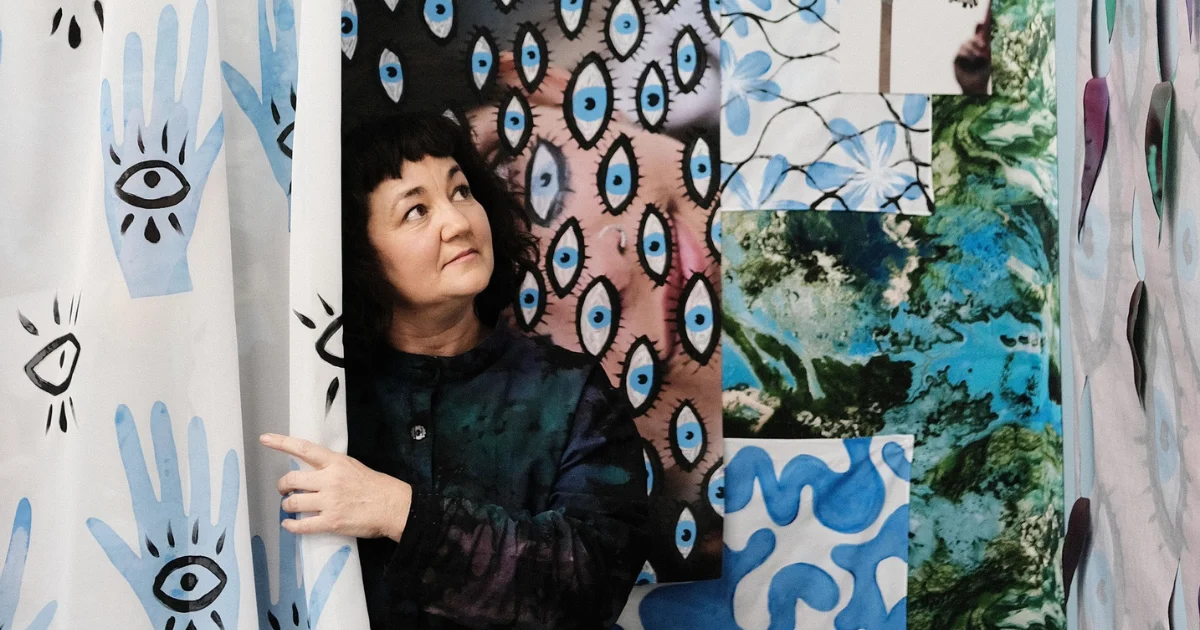
The exhibition pulls together diverse media including installation, video, performance, photography, collage and painting. According to information from QUT Galleries and Museums, Wyman’s practice explores politically charged themes including protest, camouflage, identity and collective action.

Visitors can expect explosive colour and intricate patterning throughout the show, with recurring motifs of smoke, masks and protest imagery woven through the works. These elements reflect Wyman’s ongoing investigations into collective organising, democracy and dissent.

The exhibition is accompanied by a newly released 200-page hardcover monograph, providing deeper context for Wyman’s practice. The publication features essays by curator Katherine Dionysius, Dr Chari Larsson and Dr Hanna Rose Shell, as well as a conversation between Wyman and Dr Yuval Etgar.

To complement the exhibition, an artist talk has been scheduled where Wyman will appear in conversation with curator Katherine Dionysius. The discussion will delve into the themes explored in Deep Surface, tracing how Wyman’s investigations into camouflage, democracy and dissent have developed over three decades.

Broader context

Photo credit: Facebook/QUT Galleries and Museums

The museum’s struggles reflect wider challenges facing arts programs at QUT. The university is currently undertaking a broad review of its performing arts courses, citing ongoing declines in enrolments. This review has already resulted in QUT halting its dance student intake for 2025 as it determines the future of the well-regarded degree program.

Despite these institutional pressures, QUT Art Museum is reopening with a major exhibition surveying Wyman’s three-decade career. The timing also coincides with other QUT venues returning after the summer break, including Old Government House Museum and the William Robinson Gallery, both located in the grounds of the Gardens Point campus adjacent to the Brisbane City Botanic Gardens.


Read: World Premiere: New Banksy Exhibition Transforms Brisbane CBD into Global Art Hub


The free-to-visit museum has been closed for over a year, but its return offers Brisbane’s arts community and the broader public renewed access to one of Queensland’s premier cultural institutions.

Jemima Wyman: Deep Surface opens Monday, 16 February at QUT Art Museum, U Block basement level, 2 George Street, Brisbane.

Published 10-February-2026