


Rare James Street Precinct Landholding Listed for Sale at Robertson Street

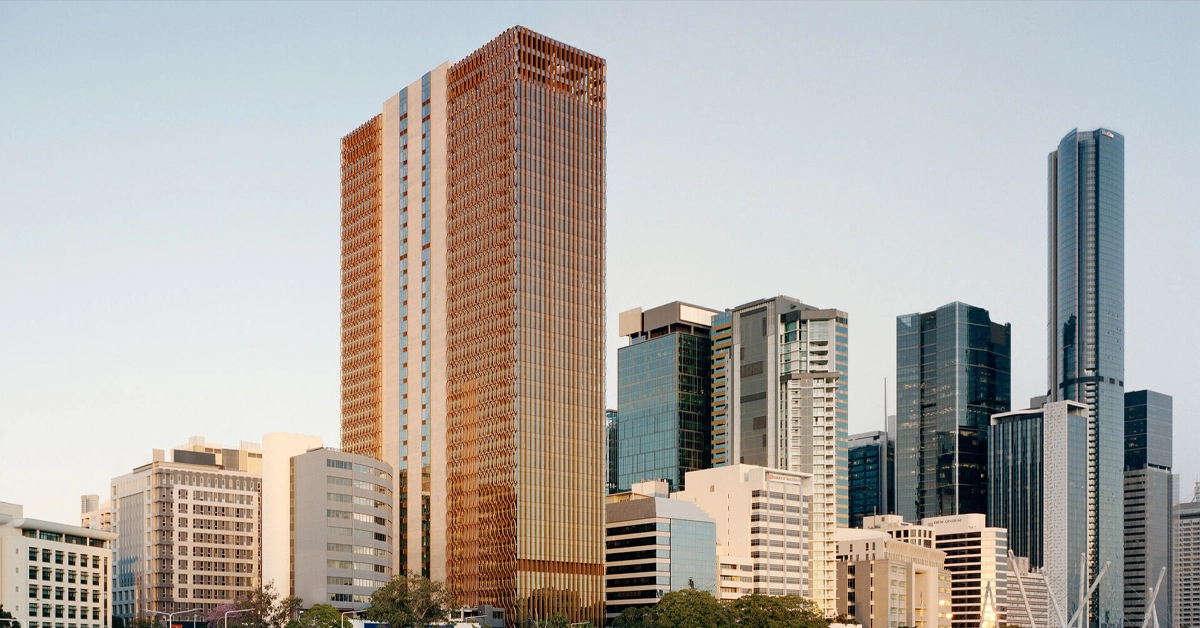
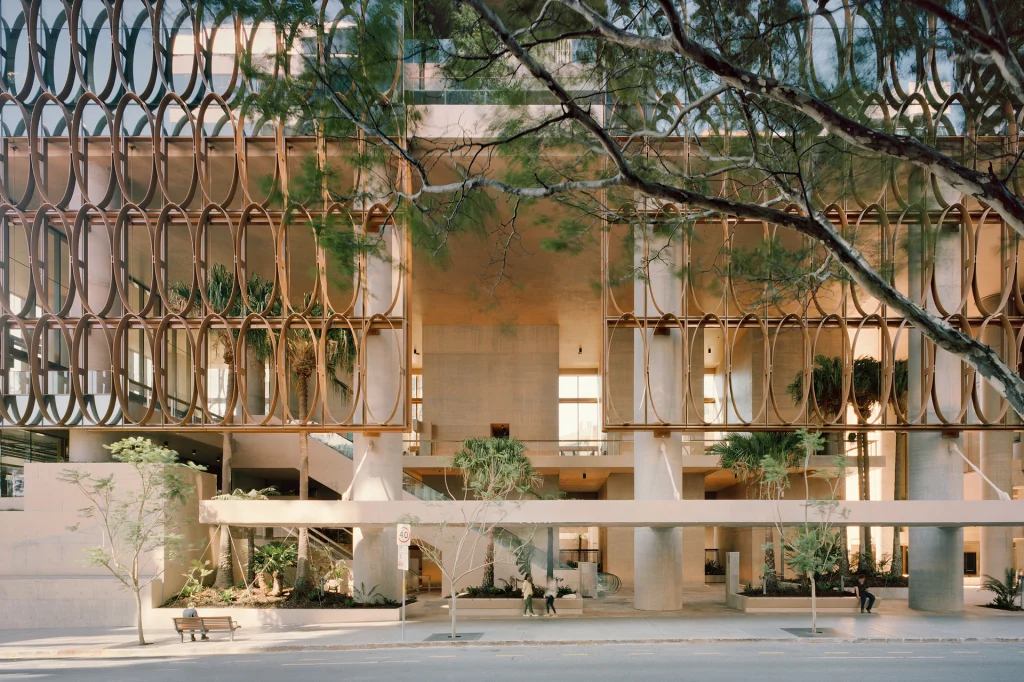
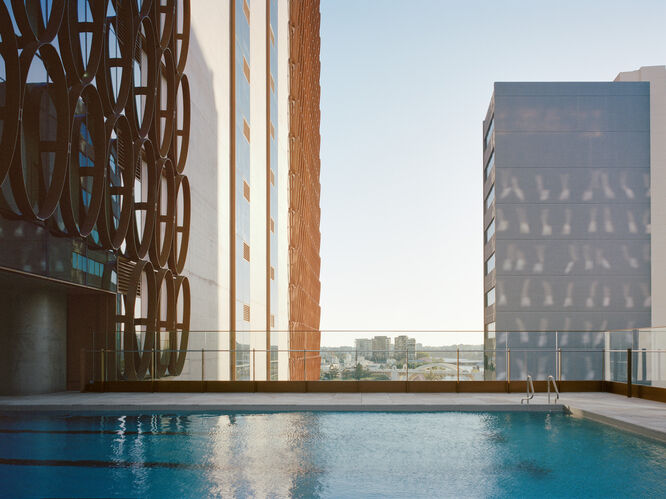
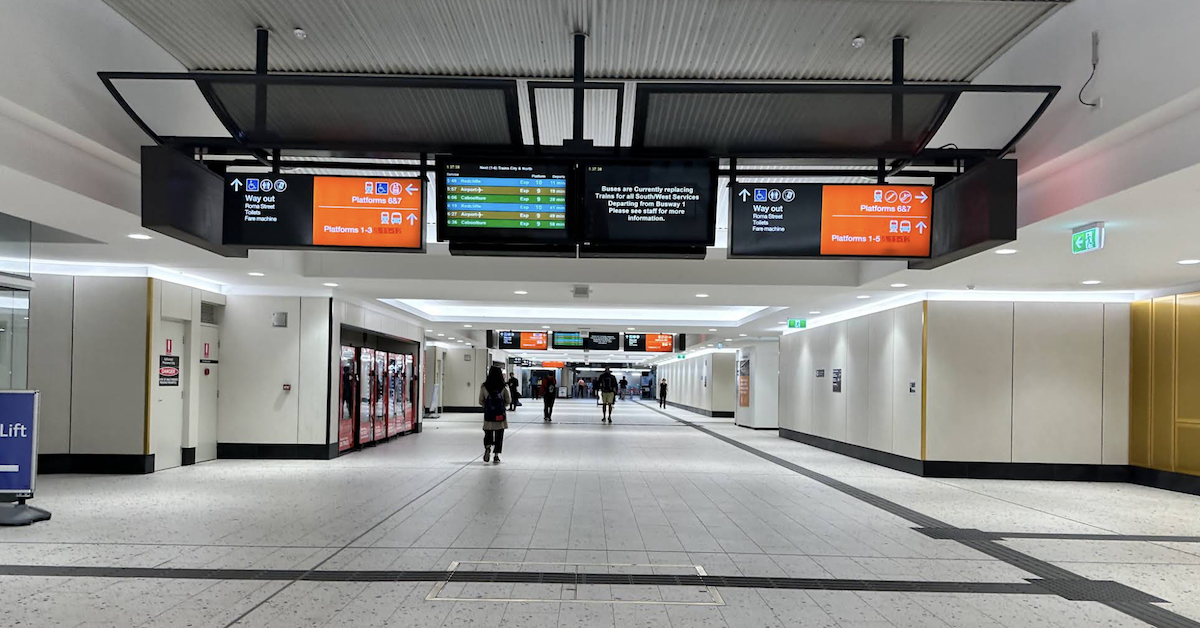
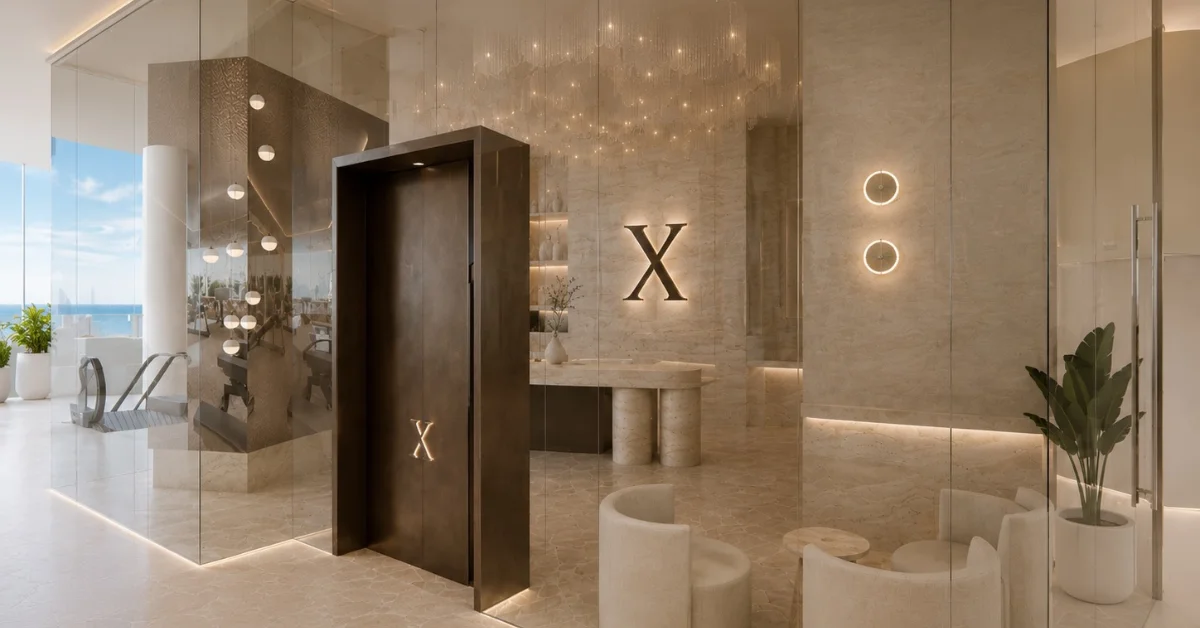
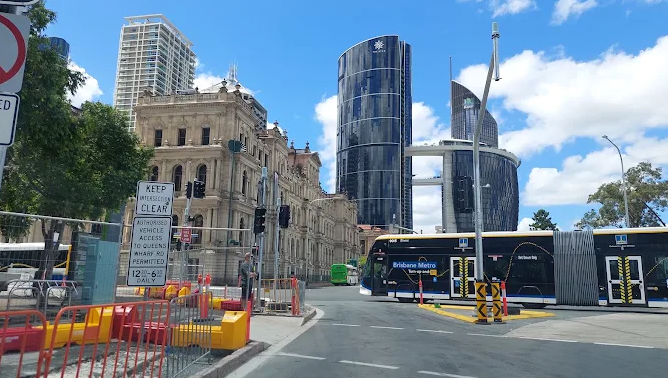
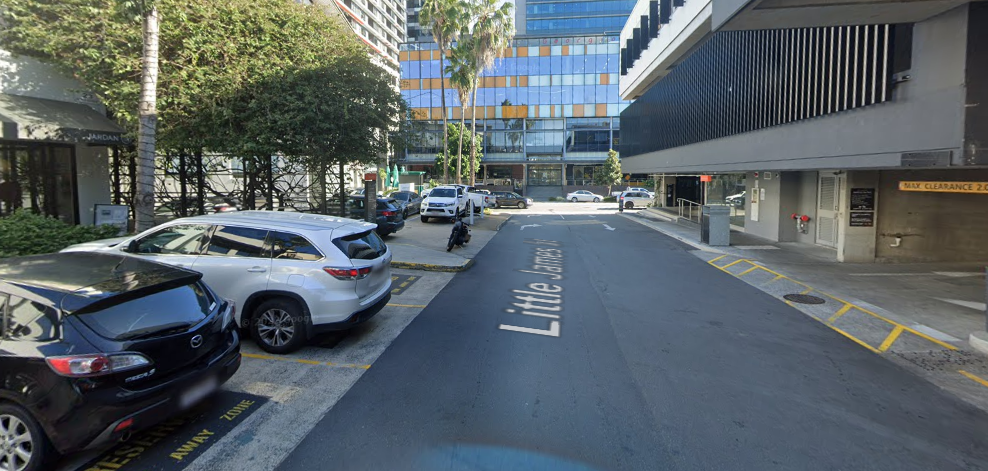
A rare development opportunity has emerged in the heart of Fortitude Valley’s James Street precinct, with a prime Robertson Street landholding — long held by the man widely credited with shaping the area into one of Brisbane’s most coveted lifestyle destinations — now available for the first time in decades.


The site, known as Robertson on James, spans 1,651 square metres across two addresses — 171 and 181 Robertson Street — and is being offered through an expression-of-interest campaign run by Ray White Commercial Queensland, closing 14 May. Sources have speculated the site could command a price north of $80 million.

Photo Credit: RWC Queensland

Both properties are owned through the company Ralph Lauren 57, with ASIC records listing Robert John James — known as John — of Hamilton as director. Now 62, James built his name and fortune developing the James Street precinct from the late 1990s, transforming what had been a light-industrial corridor into the upscale retail and lifestyle destination Fortitude Valley locals know today. He remains one of the precinct’s largest landholders.

Photo Credit: RWC Queensland

Property records show he picked up 171 Robertson Street in August 1997 for $540,000, and added 181 Robertson Street to his portfolio in July 2006 for $1.65 million.

Photo Credit: RWC Queensland

The two fully tenanted commercial buildings currently generate around $1.18 million in net annual income, giving any incoming buyer a solid foundation of holding income while longer-term plans take shape. The site carries MU1 Inner City mixed-use zoning and offers 34.8 metres of street frontage with a depth of 47.3 metres — dimensions that the selling agents say lend themselves to a range of possible outcomes, including luxury residential, boutique hotel or mixed-use development.

The site’s position directly opposite The Calile Hotel at 48 James Street is considered one of its strongest selling points. The Calile is widely regarded as one of Australia’s premier lifestyle hotels, with its James Street address providing guests direct access to the precinct’s mix of fashion, design and dining.

Photo Credit: RWC Queensland

The James Street precinct has grown from its inner-city industrial roots into a high-energy urban retail hub featuring more than 110 specialty stores, award-winning restaurants and cafés, art galleries, design showrooms and grooming emporiums. The precinct sits roughly one kilometre from the Brisbane CBD.

The listing arrives at a moment of heightened interest in Brisbane’s long-term property outlook. Almost 28,000 people currently work in Fortitude Valley, with about 11,500 residents already calling it home. Brisbane City Council has also flagged its own plans for the area, with a Sustainable Growth Precinct Plan in progress that is focused on “growing up, not out,” and which points to the Valley’s proximity to the 2032 Olympic Games venues as a key driver of future housing and mixed-use demand.


The agents noted interest is anticipated from both Australian and international buyers. The expression-of-interest campaign closes on 14 May.

Published 19-April-2026

From Brisbane Girls Grammar to the Front: The Woman Who Pioneered Medicine in Queensland

Long before women were widely accepted in medicine, a Brisbane Girls Grammar student was determined to become a doctor—no matter the barriers. Eleanor Bourne went so far as to transfer to Brisbane Grammar School (Boys) to access the subjects she needed for university, eventually becoming the first woman from Queensland to study medicine. During World War I, she was also one of only 15 Australian women doctors to volunteer for active service.

Queensland’s First Woman in Medicine

Eleanor Bourne was born on 4 December 1878 in South Brisbane, the eldest child of John Sumner Pears Bourne and Jane Elizabeth Hockings. A high-achieving student, she topped the state scholarship exam in 1891 and began secondary school at Brisbane Girls’ Grammar in 1892.

Brisbane Girls’ Grammar School (Photo credit: bggs.qld.edu.au)

Read: Brisbane Girls Grammar Makes History with First Primary Students in 151 Years


Determined to study medicine—an uncommon ambition for women at the time—she transferred to Brisbane Grammar School (Boys) in 1896 to access the subjects needed for university entry. That same year, she earned the Sydney University Exhibition, a scholarship that enabled her to become the first Queensland woman to study medicine.

Breaking Barriers in Medical Practice

Eleanor Bourne
Photo credit: John Oxley Library, State Library of Queensland

After graduating, Dr Bourne quickly made her mark in the medical field. In 1903, she became the first woman resident at Brisbane General Hospital. She also held positions at the Women’s Hospital in Sydney and the Hospital for Sick Children in Brisbane, before entering private practice in 1907.

Dr Bourne giving an eye test in 1915 (Photo credit: State Library of Queensland)

In 1911, she was appointed the first Medical Inspector of Schools in Queensland’s Department of Public Instruction. In this role, she travelled widely through regional Queensland, introducing systematic medical examinations for schoolchildren and setting up early public health practices.

But her determination didn’t stop at breaking barriers in Australia.

Stepping Forward in Wartime

When World War I broke out, Eleanor’s dedication to service led her to London in 1916, where she enlisted as a lieutenant in the Royal Army Medical Corps. She was one of only 15 Australian women doctors to volunteer for active service during the war.

Eleanor Bourne
Page from Eleanor Elizabeth Bourne personal papers describing her time at the Endell Street Military Hospital in 1916 (Photo credit: State Library of Queensland)

Promoted to major in 1917, she served as medical officer to Queen Mary’s Army Auxiliary Corps and later became Medical Controller for the Northern Command. Her leadership in these roles helped care for the thousands of women supporting the war effort.

Leadership in Public Health

After the war, Dr Bourne remained in Britain and completed a Diploma of Public Health in 1920. She was appointed assistant medical officer to the city of Carlisle, where she oversaw child and maternal welfare services and helped establish a new maternity hospital.

She retired in 1937 and returned to Queensland, having spent her career at the forefront of medical service, education, and public health.


Read: ANZAC Day: The Resilience of Cecily Lydia Fearnley, Brisbane Girls’ Grammar Alumna


A Quiet but Powerful Legacy

Dr Bourne never married and died on 23 May 1957 at Nundah Private Hospital. She was buried at South Brisbane Cemetery. Her legacy lived on through her family as well—her sister Florence was principal of Maryborough Girls’ High School, and her brother George served with distinction in World War I.

This ANZAC Day, as we honour the soldiers who gave their lives for Australia and New Zealand, let us also remember the pioneers who changed lives in other ways. Dr Eleanor Bourne’s life was a series of bold steps forward—steps that made it easier for those who followed. Lest we forget.

Published 7-April-2025
Updated 15-April-2026

Treasury Building Brisbane to Become Griffith University’s New CBD Campus by 2027

One of Brisbane’s most recognisable landmarks is about to begin a new chapter. The Treasury Building Brisbane — a sandstone icon that has watched over the CBD for well over a century — is being transformed into a university campus, with Griffith University set to open its doors there in 2027.


The project brings together COX Architecture, builder FDC Construction and Fitout, and heritage specialists Lovell Chen, working alongside Griffith University to deliver what will become the heart of a new cross-river Brisbane City campus. When combined with the university’s existing creative and performing arts precinct at South Bank, the two locations will form a connected campus straddling the river.

Photo Credit: COX

The new campus will cater to undergraduate and postgraduate students in business, IT, and law, and is expected to accommodate around 6,000 students and 200 staff by 2028.

The building itself carries a layered history. Constructed in stages between 1886 and 1928, it originally served as home to various government departments. The site holds deeper significance still — situated along the banks of the Meanjin, it was once a gathering place for First Nations communities and an important river crossing. In 1995, the building was converted into the Treasury Casino, a process that involved enclosing the central courtyard and opening up other interior spaces.

Photo Credit: COX

The university’s redevelopment seeks to undo some of those later changes and return the building closer to its original design intent. Salvaged heritage features that have been held in storage will be reinstated, and the centrepiece of the project will be a restored central courtyard — an open, flexible space designed for everything from day-to-day student activity to major events such as graduation ceremonies.

Photo Credit: COX

Three large skylights will be added to reconnect the courtyard with the sky above, drawing natural light deep into the building. The design approach, led by COX, treats the building itself as the starting point — its character, proportions, and materials informing how modern learning spaces have been configured within it. Adaptable furniture systems will allow rooms to be easily reconfigured to support different teaching styles and group sizes.

Public access will also be restored. Entry via Elizabeth Street at ground level and through the main Queen Street entrance at the first floor will be reinstated, with a new lift discreetly integrated into the Queen Street façade to ensure equitable access to the heritage entry. Restored heritage rooms will be opened for public tours, keeping the building connected to the broader community rather than becoming a purely private academic space.


The project is significant not just for the university but for the ongoing story of Brisbane’s city centre. The Treasury Building has long been a civic touchstone, and its return to a more publicly engaged use — as a place of learning and community activity — continues that tradition while giving it fresh purpose.


The Treasury Building campus is scheduled to open in 2027. For more information on Griffith University’s Brisbane City campus plans, visit griffith.edu.au.

Published 14-April-2026

St Joseph’s Gregory Terrace Year 8 Student Dominates State Swimming Championships

Branner Tiyapanjanit, a Year 8 student from Spring Hill’s St Joseph’s College Gregory Terrace, has turned in one of the standout individual performances of the Queensland School Sport Swimming Championships, claiming six individual championship titles and taking home the Swimmer of the Meet award, which the college describes as the highest individual honour of the competition.


Read: Lachlan Kennedy Claims National 100m Title in 9.96 Seconds


St Joseph’s College Gregory Terrace says Branner’s performance at the state-level championships was nothing short of outstanding. To win six individual titles as a Year 8 student going up against Queensland’s best school-age swimmers is an exceptional achievement at this level of competition.

The Queensland School Sport Swimming Championships are conducted under the Queensland Representative School Sport (QRSS) program, administered by the Queensland Department of Education. The 13 to 19 years competition draws competitors from across the state, with athletes required to meet qualifying times before they can take to the blocks.

Photo credit: Facebook/St Joseph’s College Gregory Terrace

The Swimmer of the Meet is described by the college as the highest individual honour of the competition, recognising the single standout performer across the entire meet. To claim that honour on top of six individual titles made for a day that Branner and the Terrace community are unlikely to forget in a hurry.

The Brisbane Catholic boys’ school perched on the hill above the Valley celebrated the achievement on social media, saying it was “thrilled” to recognise Branner’s efforts and describing the result as “truly remarkable.”


Read: St Joseph’s College Unveils Final Masterplan For Major Expansion


Branner’s championship haul is the latest achievement to come out of the school’s sporting program, and for a college with a long tradition of encouraging young men to pursue excellence both on and off the field, moments like these carry real meaning.

The QRSS swimming program also offers pathways through to national competition via School Sport Australia, giving talented young swimmers a clear road ahead should they continue to develop at this level.

Published 14-April-2026

Lachlan Kennedy Claims National 100m Title in 9.96 Seconds

Lachlan Kennedy’s rise to the top of Australian sprinting has drawn strong recognition from those who watched his early development, with his former school, St Joseph’s College, Gregory Terrace, describing his latest performance as a moment of breaking barriers. The school noted Kennedy’s first national 100m title, his 9.96-second run, and his ability to back up a record-breaking heat with another elite performance in the final, highlighting composure and consistency at the highest level.


Kennedy delivered that performance at the Australian Athletics Championships, where he ran 9.96 seconds in both the heats and the final to secure the national title. The back-to-back efforts reinforced his standing as one of the country’s leading sprinters, with the consistency of the times a key feature of the result.

A breakthrough at the highest level

The 9.96-second run carries significance beyond the title itself. It marked the first time an Australian has broken the 10-second barrier on home soil, placing Kennedy in a small group of athletes who have achieved sub-10 times internationally.

Breaking 10 seconds is widely recognised as a benchmark in sprinting, separating national-level performers from those competing at the highest global standard. Kennedy’s ability to produce that time twice in one meet highlights both speed and execution under pressure.

From contender to national champion

Kennedy’s result builds on a period of steady progression. Earlier this year, he drew attention with strong performances, including a win over Gout Gout in the 200 metres at the Maurie Plant Meet. That race, along with previous results, positioned him as a contender heading into the national championships.

The Australian Athletics Championships was shaped by the presence of both Kennedy and Gout, two young sprinters producing standout results across different events. While Kennedy claimed the 100m title, Gout later went on to break the national 200m record, cementing the future of Australian sprinting.

There had been strong interest in a potential rematch between the pair in the 200m. However, Kennedy withdrew from that event on race day after experiencing soreness following his 100m efforts. 

Performance built on control and execution

Across the championships, Kennedy’s racing stood out for its consistency. Running identical times in both the heats and final requires not only physical speed but also control through each phase of the race.

His start, transition and finish phases remained stable across both runs, allowing him to deliver under pressure. That level of execution is often cited as a key factor separating elite sprinters from the rest of the field.

A new benchmark

With Kennedy in the 100m and emerging athletes across other distances, there is growing depth in men’s sprinting. The national championships provided a snapshot of that shift, with multiple athletes producing personal bests and competitive times.

Kennedy’s national title marks a significant step, but it also sets a new benchmark for what follows. With international competitions approaching, including relay events, attention will turn to how these performances translate onto the global stage.


Published 14-April-2026

QUT Eyes 2032 Role as Campuses Near Olympic Action


Queensland University of Technology (QUT) is aligning both its Gardens Point and Kelvin Grove campuses with Brisbane’s preparations for the 2032 Olympic and Paralympic Games, with a focus on campus upgrades, sport research and industry partnerships.


Campuses tied to growing Olympic precinct

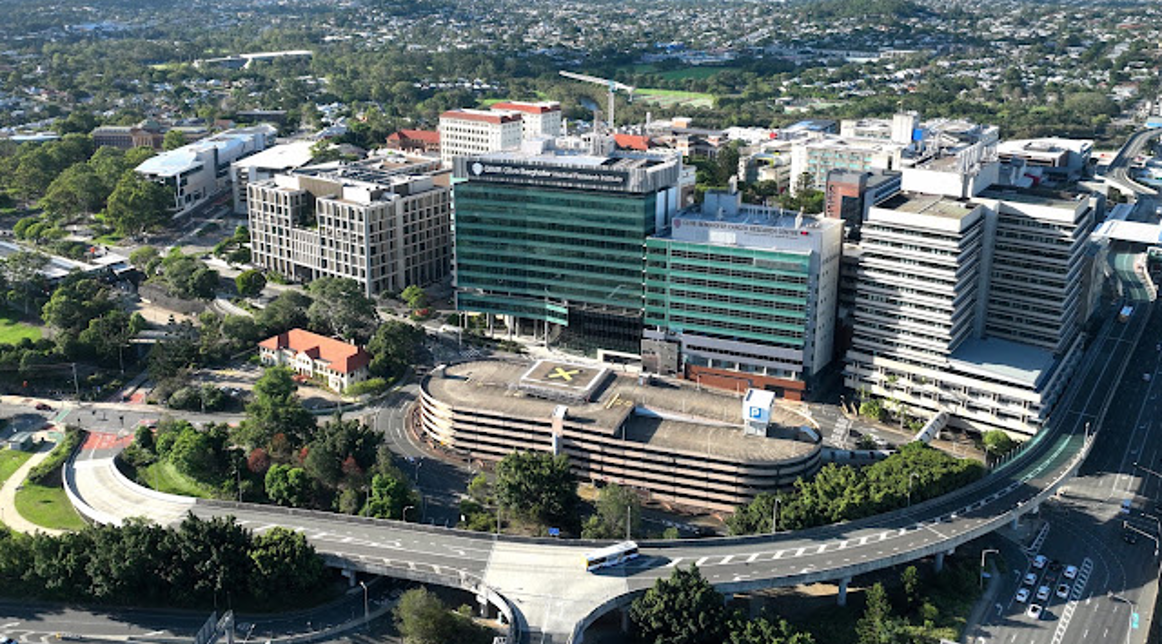
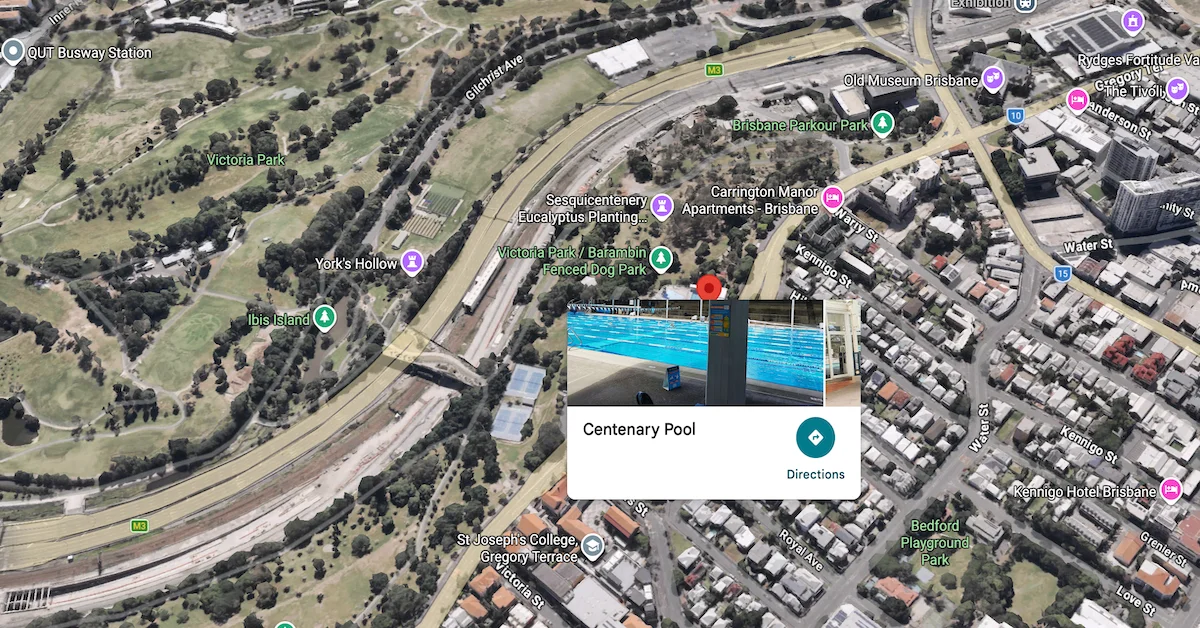
QUT’s Kelvin Grove campus sits next to the planned Victoria Park Olympic stadium and National Aquatic Centre, placing it within what is expected to become a major sporting hub.

The university has indicated the wider Olympic and Paralympic precinct will link with the nearby Herston Health Precinct, forming a connected corridor for sport, health and biomedical research in Brisbane’s inner north.

Photo Credit: Google Maps


At the same time, its Gardens Point campus near the CBD and Fortitude Valley is positioned within the broader inner-city zone expected to see increased activity as the Games approach.

Campus changes planned over next decade

QUT has outlined a long-term master plan covering both campuses, designed to respond to growth linked to Brisbane 2032 and wider city development. The plan includes improving accessibility and safety, making campuses easier to navigate, and creating more flexible teaching and learning spaces. It also focuses on making research and innovation work more visible, allowing stronger links between students, industry and the community.

These changes are being planned alongside major developments such as the Victoria Park redevelopment and the expansion of surrounding health and knowledge precincts.

Facilities support sport and health focus

QUT already has a wide range of sport and health facilities across its campuses, including gyms, aquatic centres, indoor and outdoor courts, a FIFA-accredited field with a running track, and dedicated spaces such as an esports arena and virtual sport studio.

The university also operates health clinics in areas including exercise physiology, podiatry, nutrition, optometry and psychology, which support both student learning and community services.

These facilities are expected to play a role in supporting athlete preparation, research and participation in the lead-up to 2032.

QUT Sport tech van
Photo Credit: QUT

Student programs and innovation projects underway

QUT is running several programs that link students directly to sport and event-related work. Through its Sport Innovation ProtoComp, students work with industry mentors to develop solutions for real-world challenges in sport, including digital tools and performance systems.

The university has also developed projects focused on inclusive sport, including a virtual reality sports wheelchair simulator and an adaptive handcycle trainer that allows wheelchair users to take part in virtual cycling programs.

These initiatives bring together design, engineering, health and technology, reflecting the range of skills needed for large events like the Olympics.

QUT student athletes
Photo Credit: QUT

Global sport conference brings focus to Brisbane

QUT has already brought international expertise to Brisbane through its Future of Sport Conference, held at the Gardens Point campus in March. The event brought together leaders in sport, technology and research to examine how data, innovation and partnerships are shaping the future of sport ahead of the 2032 Games.

The university has indicated the conference reflects its role in linking research with practical outcomes as Queensland prepares for a series of major sporting events. Discussions covered areas such as performance analytics, athlete wellbeing, emerging technologies and the long-term sustainability of sport.

Researchers involved highlighted how data is increasingly used to improve training, reduce injury risk and support athlete wellbeing, with these approaches expected to expand in the lead-up to 2032.


Published 13-April-2026

Lost Property Haul Goes Viral: How to Reclaim What You Left Behind on the Brisbane Bus or Metro

Tucked inside Brisbane Square Library on George Street in the CBD, Brisbane’s lost property headquarters has become something of an unlikely treasure trove, and a recently viral Instagram video has given the public its first real look at just how much commuters are leaving behind on the city’s buses, bus stops, and the Brisbane Metro.


Read: Adelaide Street Tunnel Set to Open for Brisbane Metro and Buses


The footage, posted on the BCC Instagram page and featuring Brisbane City employee Rheea, takes viewers on a tour through the storage facility’s shelves, which are stacked high with a staggering volume of misplaced belongings. Water bottles and sunglasses are par for the course, but it’s the more unusual items tucked among the everyday clutter that have had people stopping mid-scroll.

The video quickly gained traction online with over 1,700 reactions as of writing. If you’ve ever stepped off a bus and felt that sinking feeling of patting your pockets, you’re apparently far from alone.

For those of us who regularly hop on and off services across Fortitude Valley, Newstead, Bowen Hills, and into the CBD, the sheer volume of items on those shelves is both striking and oddly comforting. How do you forget a bag on the bus? Clearly, it happens all the time.

How to Get Your Lost Item Back

Lost Property
Brisbane Square Library (Photo credit: Google Maps/Arif 380)

Brisbane runs a dedicated lost property service for items left on council-operated buses and at bus stops. The process for recovering a lost item involves a few simple steps.

The first step is to call BCC directly on 07 3403 8888 to check whether your item has been handed in. From there, you’ll need to arrange a time to collect it in person from the Central Customer Centre, located within Brisbane Square Library at 266 George Street, Brisbane QLD 4000. The centre is open Monday to Friday, 9am to 5pm, excluding public holidays.

When you turn up to collect, bring along personal identification and, where necessary, proof of ownership. Can’t make it yourself? You can authorise someone else to collect on your behalf, provided they bring their own ID, copies of yours, and written or digital authorisation from you permitting the release of the item. Parents collecting on behalf of children under 18 need only their own personal identification.

The viral video has served as a timely reminder that Brisbane’s public transport network moves a lot of people every single day, and with that comes a steady stream of forgotten property flowing toward George Street.


Read: Works Progressing Well on Adelaide Street for Brisbane Metro


So next time you’re on a bus through the inner north, maybe take one last look around before you step off. Your future self and the staff at 266 George Street will thank you.

Published 13-April-2026

What QUT’s CBD Campus Could Look Like by 2050

A 25-year vision for Queensland University of Technology‘s riverside Gardens Point campus in Brisbane’s CBD proposes purpose-built science and engineering precincts, a new business and law faculty building co-located with a conference centre, hotel and student accommodation, and dramatically improved connections to the City Botanic Gardens and the Brisbane River.


Released in March, the 2026 to 2050 Campus Master Plan outlines the most ambitious redevelopment of the Gardens Point campus since QUT’s establishment as a university in 1989, positioning the site as a genuine city-shaping precinct in the lead-up to Brisbane 2032 and beyond.

Gardens Point campus sits in Brisbane’s city centre beside the river and the City Botanic Gardens. At its centre stands a heritage building dating to 1862. The masterplan leverages this riverside setting to better connect the campus with the surrounding city.

Science, Engineering and a Whole New Precinct for Business and Law

The most structurally significant proposals for Gardens Point involve the creation of dedicated, purpose-built precincts for science and engineering. These proposals consolidate and upgrade facilities currently spread across the campus, giving the university’s technical and research disciplines a more coherent physical home.

Photo Credit: QUT

The plan also delivers a new building for QUT’s business and law faculties, co-located with a conference centre, hotel and student accommodation in a mixed-use development that activates the campus beyond typical university hours. QUT’s architecture and built environment, business, engineering, information technology, law, mathematics and science students are based at Gardens Point, right in the centre of Brisbane, and the new building would serve as a landmark focal point for that community.

Getting the River Connection Right

One of the consistent themes to emerge from five years of community and staff engagement that shaped the masterplan was the sense that Gardens Point has never fully capitalised on its extraordinary location beside the Brisbane River and the City Botanic Gardens.

Arrival points will be reimagined as clear, welcoming gateways that strengthen QUT’s presence and invite the community and public in. Photo Credit: QUT

The plan addresses this directly, proposing better pedestrian walkways to connect the campus to the gardens and the riverfront. These connections would allow students, staff and visitors to move fluidly between the academic precinct and some of Brisbane’s best public spaces, making Gardens Point feel less like an island and more like an extension of the city.

Courtyards and plazas link the campus to nearby parklands, creating a more open, welcoming and connected space for the public. Photo Credit: QUT

The Campus Master Plan positions the Gardens Point and Kelvin Grove campuses as vibrant, collaborative hubs that foster innovation, creativity and real-world impact, while ensuring QUT’s physical environment remains people-centred, flexible and future-focused.

A Plan Decades in the Making

QUT Vice-Chancellor Professor Margaret Sheil said the vision had been shaped by genuine consultation. “By aligning with Brisbane’s broader growth and development strategy, the Campus Master Plan ensures QUT remains accessible, future-ready and central to the city’s economic, social and cultural life,” she said.

The masterplan reflects five years of engagement with staff, students, industry partners and the broader community, highlighting recurring themes including the need for more collaborative spaces, better connections to the surrounding city and a campus environment that supports both academic excellence and student wellbeing.

The full document spans both the Gardens Point and Kelvin Grove campuses and provides a high-level framework to guide development, investment and renewal across the next decade and beyond. Expressions of interest for the first elements of the plan, focusing on student accommodation at Kelvin Grove, are already underway, signalling that the university is moving from vision to action.

The full Campus Master Plan is available to download at here. Enquiries can be directed to masterplan@qut.edu.au.


Published 13-April-2026

Fortitude Valley Riverside to Host Giant Coastal Food Festival

Celebrated chef Danielle Alvarez is leading a massive transformation of the Fortitude Valley waterfront into a premium open-air seafood precinct that celebrates the traditional Queensland coastal lifestyle.


The event is scheduled to take place over two separate weekends during the April school holidays. This timing is intended to give local families and holidaymakers a chance to gather at Howard Smith Wharves while the weather is still warm. Organisers have planned the festival to run across the Main Lawn and various riverside areas to ensure there is plenty of space for the community to spread out and enjoy the view of the Brisbane River.

A New Take on Local Traditions

The festival focuses on a shared dining experience that blends old-fashioned seaside habits with modern cooking techniques. Danielle Alvarez expressed that eating fresh seafood by the water feels natural in a city like Brisbane and that her goal is to bring people together through vibrant food. 

While the menu features high-end items like freshly shucked oysters and tropical Queensland lobster tails, it also includes familiar favourites such as potato scallops and fish and chips. This approach ensures that the food remains accessible to everyone, including people who might prefer non-seafood options like burgers or soft-serve ice cream.

Photo Credit: Howard Smith Whaves/Facebook

Interactive Activities and Entertainment

Beyond the food, the event includes several ways for the community to stay active and entertained. A special pickleball court has been set up as a pop-up attraction, allowing guests to play a game with friends between their meals. Live music and different types of performers will also move through the crowds during the day to keep the energy high. 

For those interested in unique drinks, the festival is introducing a specific type of lager poured at sub-zero temperatures into frosted glasses, which is a first for the Brisbane area.

Collaborations Along the Wharf

Several local businesses are joining the festivities to offer different flavours and styles. Fellini’s Trattoria is updating its menu to include Italian-style seafood dishes that use simple, seasonal ingredients. Nearby, Ciao Garden will operate an oyster bar where a dedicated cocktail program has been designed to match the saltiness of the seafood. 

Adam Flaskas, the director of the group behind the event, noted that the festival is meant to be an ode to childhood memories of eating prawns and fresh fish with family. He believes the event shows how the riverside dining scene in the city is continuing to grow and change.


Family and Community Focus

The layout of the festival is designed to be inclusive for all ages, with specific attention paid to making sure children have plenty to do. By using communal tables and open spaces, the organisers hope to create a social environment where neighbours can meet and share a meal. The combination of local produce, riverside views, and a relaxed atmosphere is intended to provide a quintessential Queensland experience right in the middle of the city.

Published Date 08-April-2026

Ram Raid Hits Hermès Store in Brisbane CBD Overnight

A luxury retail store in Brisbane CBD was ram-raided in the early hours after offenders used a stolen vehicle to smash through the storefront and flee with high-end items.


Luxury Store Targeted In Coordinated Entry

A group of offenders carried out a rapid ram raid on a Hermès store in Brisbane CBD, using a stolen white Mercedes SUV to force entry through the front of the building along Edward Street.

The vehicle was driven into the store shortly after 3:00 a.m. on 6 April 2026, allowing the group to gain immediate access. The entry was brief, with offenders moving quickly inside before removing a selection of high-value goods.

Items taken included handbags, jewellery and clothing, with some Hermès handbags known to retail for more than $80,000. The total value of the theft remains unclear.

Brisbane CBD retail crime
Photo Credit: QPS/Facebook

Multiple Vehicles Used In Swift Escape

The operation involved more than one vehicle, with offenders transferring stolen goods into a second car waiting nearby.

A third vehicle was also used in the escape, with the offenders fleeing the scene in two vehicles. The Mercedes used to breach the storefront was abandoned at the site.

The vehicle had been stolen days earlier from a residential property in Coorparoo on 1 April 2026. A second vehicle taken during the same incident has not been recovered.

Near Apprehension In Brisbane CBD

Responding officers arrived quickly and came close to intercepting one of the offenders before the group managed to evade capture.

Police indicated the group may have fled south, with a possible route including the Story Bridge. Investigators have appealed for public assistance, particularly from anyone with CCTV or dashcam footage captured in and around Brisbane CBD at the time.

Authorities are also monitoring for any high-end Hermès items that may be offered for sale online. The abandoned vehicle is undergoing forensic examination as part of ongoing inquiries.

Brisbane CBD crime scene
Photo Credit: QPS/Facebook

Family Impact After Vehicle Theft

The vehicle used in the ram raid had been taken during an earlier break-in at a residential car park, where two cars were stolen within minutes by masked individuals.

The incident was witnessed by a child inside the home, and the aftermath has affected the family’s sense of safety. Locks at the home and business were changed following the theft.

In the days after the initial incident, there were reports of the stolen vehicle being driven erratically within the local area before it was later used in the Brisbane CBD ram raid.

Damage And Disruption Along Retail Strip

Following the ram raid, emergency crews attended the site and scaffolding was installed to support the damaged frontage. Forensic teams examined the interior for evidence.

The store remains closed until further notice, with visible damage to the entrance and interior displays.


The incident has drawn attention due to its location in a well-monitored section of Brisbane CBD, where such offences are considered uncommon.

Published 8-Apr-2026