



From Brisbane Girls Grammar to the Front: The Woman Who Pioneered Medicine in Queensland

Long before women were widely accepted in medicine, a Brisbane Girls Grammar student was determined to become a doctor—no matter the barriers. Eleanor Bourne went so far as to transfer to Brisbane Grammar School (Boys) to access the subjects she needed for university, eventually becoming the first woman from Queensland to study medicine. During World War I, she was also one of only 15 Australian women doctors to volunteer for active service.

Queensland’s First Woman in Medicine

Eleanor Bourne was born on 4 December 1878 in South Brisbane, the eldest child of John Sumner Pears Bourne and Jane Elizabeth Hockings. A high-achieving student, she topped the state scholarship exam in 1891 and began secondary school at Brisbane Girls’ Grammar in 1892.

Brisbane Girls’ Grammar School (Photo credit: bggs.qld.edu.au)

Read: Brisbane Girls Grammar Makes History with First Primary Students in 151 Years


Determined to study medicine—an uncommon ambition for women at the time—she transferred to Brisbane Grammar School (Boys) in 1896 to access the subjects needed for university entry. That same year, she earned the Sydney University Exhibition, a scholarship that enabled her to become the first Queensland woman to study medicine.

Breaking Barriers in Medical Practice

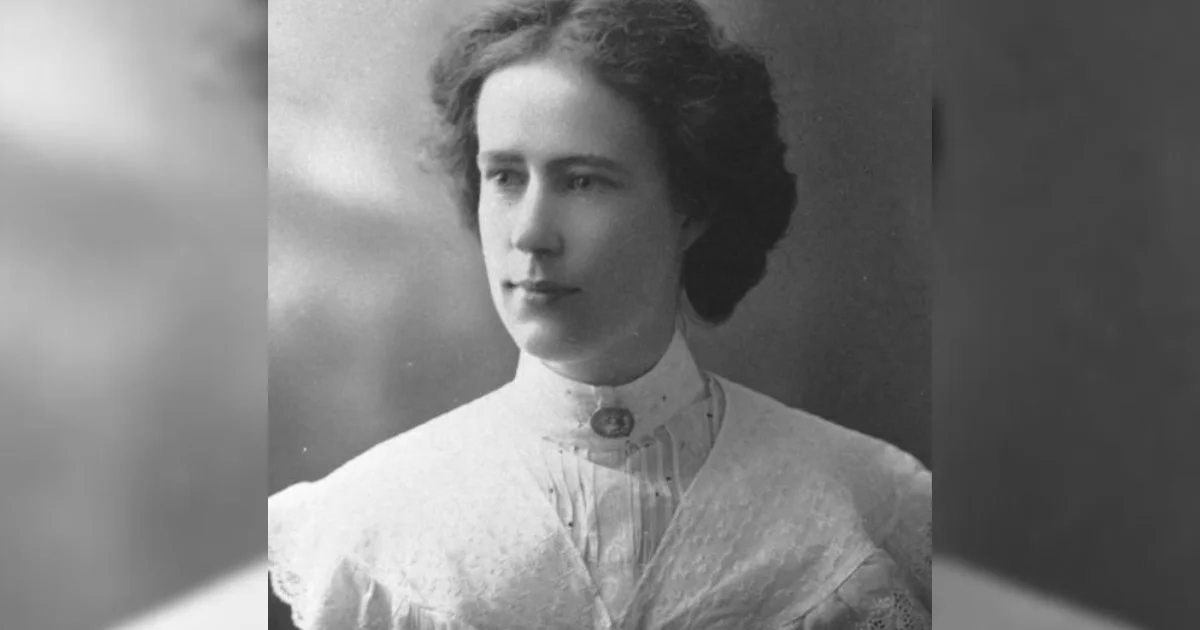
Eleanor Bourne
Photo credit: John Oxley Library, State Library of Queensland

After graduating, Dr Bourne quickly made her mark in the medical field. In 1903, she became the first woman resident at Brisbane General Hospital. She also held positions at the Women’s Hospital in Sydney and the Hospital for Sick Children in Brisbane, before entering private practice in 1907.

Dr Bourne giving an eye test in 1915 (Photo credit: State Library of Queensland)

In 1911, she was appointed the first Medical Inspector of Schools in Queensland’s Department of Public Instruction. In this role, she travelled widely through regional Queensland, introducing systematic medical examinations for schoolchildren and setting up early public health practices.

But her determination didn’t stop at breaking barriers in Australia.

Stepping Forward in Wartime

When World War I broke out, Eleanor’s dedication to service led her to London in 1916, where she enlisted as a lieutenant in the Royal Army Medical Corps. She was one of only 15 Australian women doctors to volunteer for active service during the war.

Eleanor Bourne
Page from Eleanor Elizabeth Bourne personal papers describing her time at the Endell Street Military Hospital in 1916 (Photo credit: State Library of Queensland)

Promoted to major in 1917, she served as medical officer to Queen Mary’s Army Auxiliary Corps and later became Medical Controller for the Northern Command. Her leadership in these roles helped care for the thousands of women supporting the war effort.

Leadership in Public Health

After the war, Dr Bourne remained in Britain and completed a Diploma of Public Health in 1920. She was appointed assistant medical officer to the city of Carlisle, where she oversaw child and maternal welfare services and helped establish a new maternity hospital.

She retired in 1937 and returned to Queensland, having spent her career at the forefront of medical service, education, and public health.


Read: ANZAC Day: The Resilience of Cecily Lydia Fearnley, Brisbane Girls’ Grammar Alumna


A Quiet but Powerful Legacy

Dr Bourne never married and died on 23 May 1957 at Nundah Private Hospital. She was buried at South Brisbane Cemetery. Her legacy lived on through her family as well—her sister Florence was principal of Maryborough Girls’ High School, and her brother George served with distinction in World War I.

This ANZAC Day, as we honour the soldiers who gave their lives for Australia and New Zealand, let us also remember the pioneers who changed lives in other ways. Dr Eleanor Bourne’s life was a series of bold steps forward—steps that made it easier for those who followed. Lest we forget.

Published 7-April-2025
Updated 15-April-2026

Anzac Day Pipe Bands Return to Brisbane Parade Following Outcry

Several pipe bands originally excluded from this year’s Brisbane Anzac Day Parade have now been welcomed back, following strong public support and renewed dialogue between the South Eastern District RSL Sub Branch and affected groups.


The reversal came after a meeting held on Monday, 22 April, where band representatives and RSL officials reached an agreement to allow the bands to participate. While some had already committed to other events and cannot return this year, they have been assured a place in next year’s parade. Among those returning are the Brisbane Pipe Band and the Queensland Irish Association Pipe Band.

A Return to Tradition

The decision marks a shift from earlier plans that saw half of Brisbane’s traditional pipe bands cut from the 2024 Anzac Day Parade. Those initial cuts, first revealed in February, drew widespread concern from veterans, musicians, and members of the public who view pipe bands as a vital part of the day’s commemorations.

Pipe Bands Queensland, which represents community and military-affiliated groups across the state, said that the change is a welcomed outcome and thanked the RSL for taking steps to resolve the issue. They added that this ensures pipe bands will remain a core element of honouring Anzac traditions in the Brisbane CBD.

The bands, known for their solemn and stirring performances, have accompanied Anzac marches for decades. The Queensland Irish Association Pipe Band, for instance, has marched nearly every year since the 1930s, with its only absence occurring after World War II due to a lack of members.

Community Response Made the Difference

Public reaction played a key role in reversing the decision. A post by Pipe Bands Queensland regarding the exclusion reached more than 200,000 views and received over 30,000 interactions in support of the bands. Messages of encouragement poured in from veterans, families, and residents across the state.

Nick Tomkins, Chair of Pipe Bands Queensland, previously said there was confusion over the reasons for the cuts, citing inconsistent explanations such as marching tempo and logistics. However, with the latest development, the focus has now shifted to the positive outcome and the continued presence of bands in future parades.


Tomkins acknowledged the overwhelming support and said it was the strength of community voices that led to the change. “This outcome was only made possible by the community,” he noted in a statement released Monday.

Published 22-April-2025

Six Ways to Commemorate Anzac Day From Your Home

Earlier this month, the Anzac Day Parade Brisbane Committee announced that the annual Anzac Day Parade in Brisbane has been cancelled, in support of the efforts to contain the spread of the coronavirus.

To help keep the spirit of Anzac Day alive, here are the many different ways you can celebrate and remember our fallen heroes on Anzac Day from the privacy of your home.

1. Watch the Anzac Day service on TV.

Watch the live broadcast of the Anzac Day Commemorative Service, to be held at 5:30 a.m. on Anzac Day. See here for details.

2. Digitised Content, Podcasts, and More

Digitised content and augmented virtual reality are now making it possible to experience war history. Explore Anzac Square Memorial Galleries even if the shrine is temporarily closed to the public.  Underneath Anzac Square’s Shrine of Remembrance and Eternal Flame, the Anzac Square Memorial Galleries contains various collections on war history curated by the State Library of Queensland.

Photo Credit : https://www.anzacsquare.qld.gov.au/

An “armchair glimpse” of the Memorial Galleries are now possible, by exploring the Anzac Square Memorial Galleries digitised content through the State Library’s One Search.

The Australian War Memorial wevsite also has a Museums at Home resource with videos, podcasts,  NS other interactive technology See here for details.

3. Take virtual tours.

Take a virtual trip inside the rarest tank in the world. Named “Mephisto” by its crew, the A7V Sturmpanzerwagen was one of 20 deployed by the German Army in combat in late 2017. The 30-tonne behemoth was sent to Australia as a war trophy, after the 26th Battalion AIF, composed mainly of Queenslanders, retrieved it from the battle field, dragging the tank under cover of darkness until it was safely behind Australian lines. 

Explore its combat history, check out the bullet damage, inscriptions and other hidden details through interactive displays in the Queensland Museum and this video preview.

4. Download the Anzac Correspondent Phone or Tablet App.

With the use of augmented reality and using a smartphone or tablet, the Anzac Correspondent app takes the user on a journey through events and places of interest in World War I, via the lens of a vintage 1918 camera.

Photo Credit : Google Store

If you want to try Anzac Correspondent for yourself, you can download it on the App Store or Google Play.

5. Apply for a Grave Memorial.

Few people know that before the Australian War Graves Commission was established, the ANZAC Day Commemoration Committee of Queensland allocated funds for our fallen heroes’ in foreign lands. Today, the Commission takes care of this and those of others who have subsequently died from illness or disease as a result of the war.

Photo Credit : Anzac Day Commemoration Committee

For those who aren’t covered by the above categories, the Commemoration Committee awards small, bronze memorial badges to be placed on graves and crematorium niches to properly recognize and honour a veteran’s service. Grave Memorial Grants are also available through an application process for headstones, lawn cemetery and crematorium plaques.

6. Look at the Places of Pride near you or submit an entry.

Places of Pride is the National Register of War Memorials. It is an online initiative which records the location and photos of every war memorial across the country.

Through the website,  you can enter your location or suburb, find and learn more about a war memorial in your area, submit a memorial location, add photos, and share stories.

About Anzac Day

“ANZAC” refers to a combined force of the First Australian Imperial Force and New Zealand Army troops who landed on the bloody battlefield of Turkey’s Gallipoli Peninsula in the dawn of the 25th day of April, 1915, just nine months after World War I began.

Every year, over the past 104 years since then, Australia and New Zealand have honoured and observed ANZAC Day. The annual parade features former and current veterans, their families, and other groups involved in the Day of Remembrance.