


Brisbane Gets a Blooming Good Surprise as CJ Hendry’s Flower Shop Arrives

CJ Hendry’s Flower Shop, the travelling pop-up that drew hour-long queues at Sydney’s Royal Botanic Garden last month, is heading to Fortitude Valley as the only other Australian stop on its 2026 tour.


The pop-up will run at 1 Arthur Street from 25 June to 12 July. Every fabric flower costs $5, and every visitor receives one free on entry. There is no limit on how many you can buy. If Sydney’s response is any guide, Fortitude Valley could be in for some serious foot traffic.

Hendry quietly announced the Brisbane dates through her online calendar, and locals were quick to take notice.

From Brisbane to Brooklyn

Hendry was born in South Africa and raised in Brisbane, studying architecture at QUT and also finance, before walking away from both to pursue art full-time in 2013.

She sold her designer wardrobe on eBay to fund the transition, drew from early morning until late at night seven days a week, and built a following entirely through Instagram before galleries or representation entered the picture.

By 2015 she had relocated to New York, where she is now based in Brooklyn. Her hyperrealistic large-scale drawings of luxury objects, rendered in her signature layered scribbling technique, command five to six-figure prices from collectors internationally. Her right hand is insured for $10 million.

She has described Brisbane as the place where she can simply switch off. “Brisbane is very calming for me,” she has said. The Flower Shop returning here is not an accident.

Inside the Flower Shop

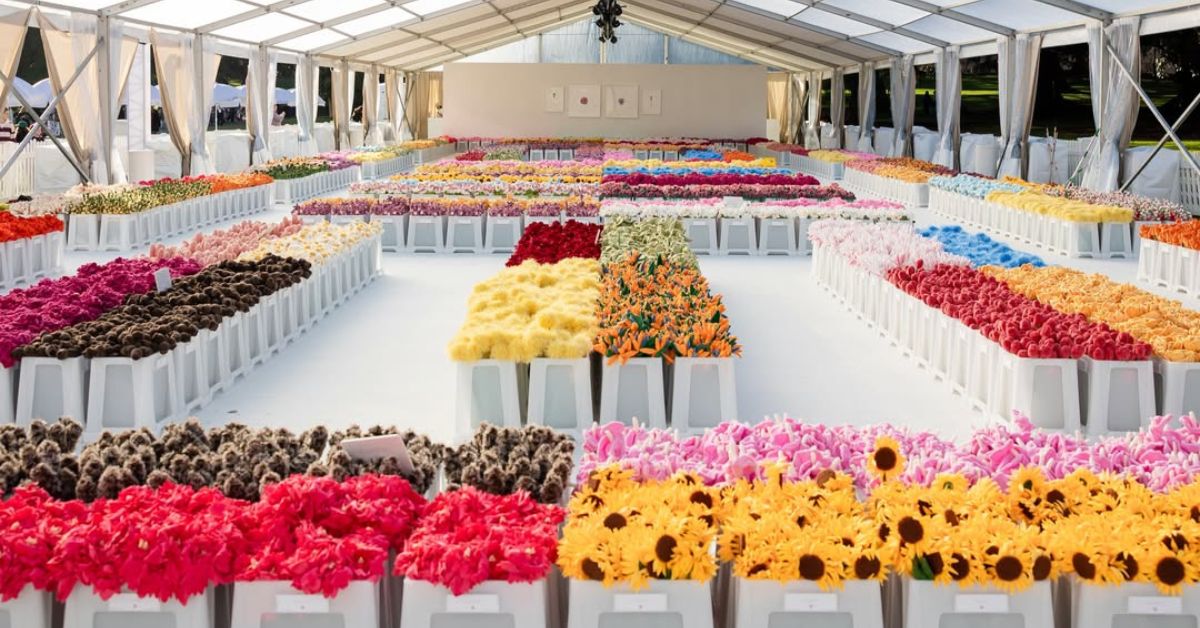
The Flower Shop is an in-person-only travelling market built entirely around Hendry’s fabric flowers, each one handcrafted from felt and fabric in different shapes, sizes, colours and textures.

Buckets overflow with blooms of every variety imaginable: classic roses and tulips alongside more surrealist forms, and Australian-exclusive designs including native florals such as wattle and gum nuts, which sold out in Sydney.
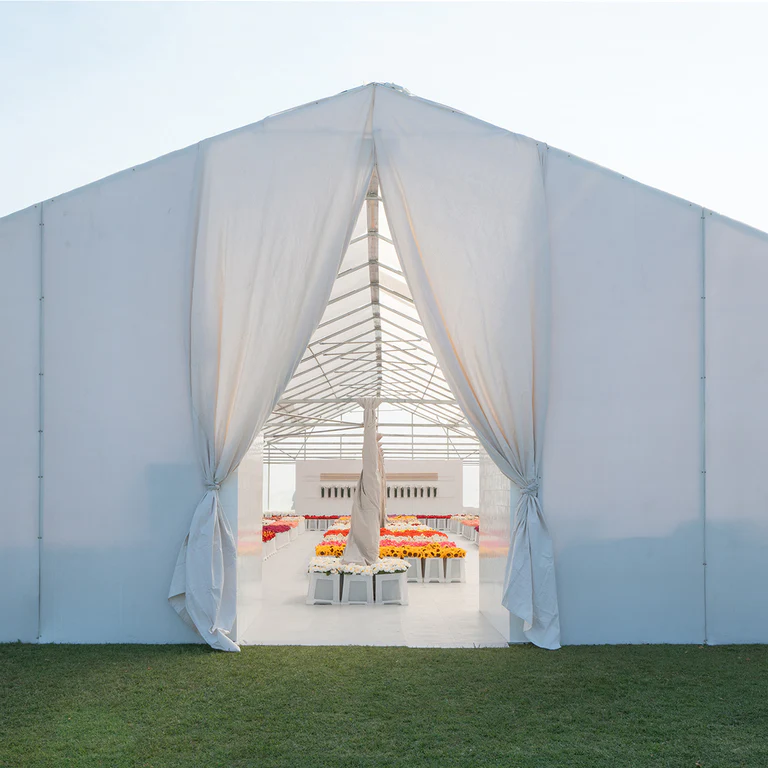
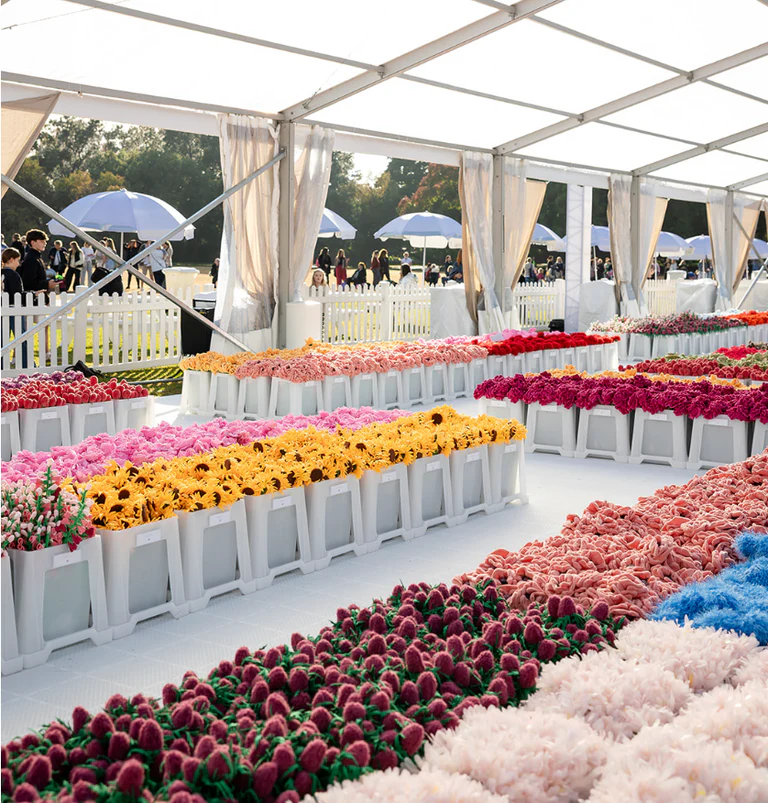
Photo Credit: @cj_hendry/Instagram

The concept draws on the same sense of play that runs through all of Hendry’s work: ordinary objects transformed into something slightly unreal, where the pleasure is in noticing the craftsmanship up close. At $5 a stem with a free flower on entry, it is also one of the more accessible encounters with a genuinely world-famous artist’s practice.
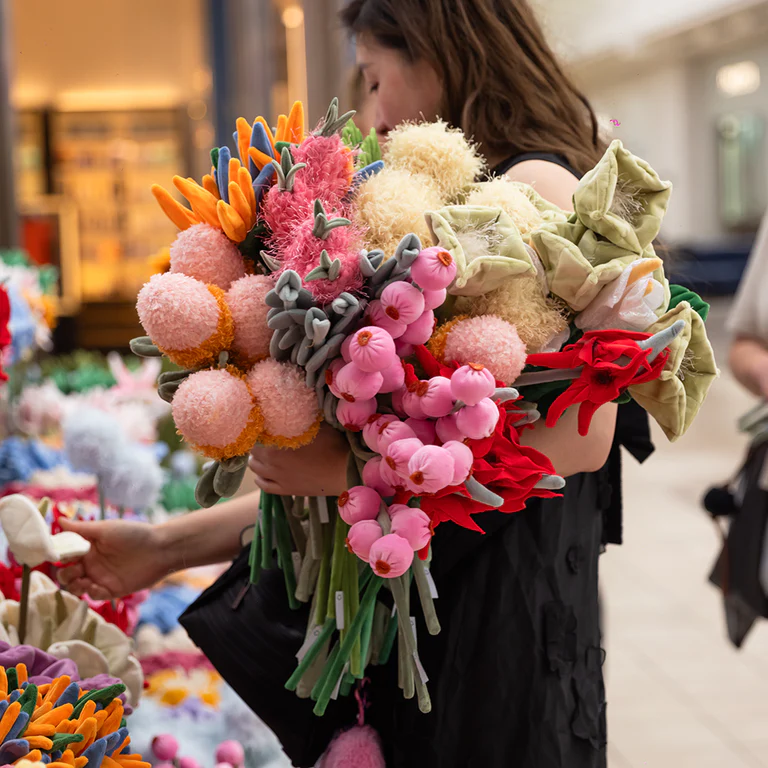
Photo Credit: @cj_hendry/Instagram

The Flower Shop has visited Singapore, Melbourne, Hong Kong and New York, where a permanent retail store now operates. Sydney and Hong Kong permanent stores are to follow. The Brisbane pop-up is a two-and-a-half week window only.

Getting there and what to bring

1 Arthur Street sits in Fortitude Valley, close to Brunswick Street and accessible from the Valley train station. Street parking is limited on weekday evenings and weekends, so public transport or rideshare is the practical choice.

Tips from the Sydney crowd: arrive early, check the Flower Shop’s Instagram before you go to shortlist your favourites, and bring something to carry your stems home in.

The CJ Hendry Flower Shop runs 25 June to 12 July at 1 Arthur Street, Fortitude Valley. Entry is free. Follow @cj_hendry for updates as opening day approaches.


Published 4-June-2026

Shimmer Exhibition Brings Creativity And Community To Museum Of Brisbane

A new exhibition at the Museum of Brisbane is reframing how young people see themselves, pairing art and identity through costume-based portraiture that celebrates queer creativity and self-expression.


A Celebration Of Creativity And Collaboration

Shimmer: An Artist in Residence project by Gerwyn Davies runs from 18 October 2025 to 8 March 2026 at the Museum of Brisbane’s Fairfax Gallery. The show presents vivid photographic portraits co-created with trans and gender-diverse young people from Open Doors Youth Service, marking the organisation’s 25 years of supporting queer youth in Queensland.

Photo Credit: Museum Of Brisbane

Shimmer began during Gerwyn Davies’s residency at the Museum of Brisbane, where young creators turned sequins, fabric, and household items into striking wearable art. Over a week of workshops, the space buzzed with colour, laughter, and invention. Davies photographed each participant in their creation, capturing the joy of self-expression. Rather than directing, he worked beside them, offering help while letting their ideas shine.

Reframing Visibility And Identity

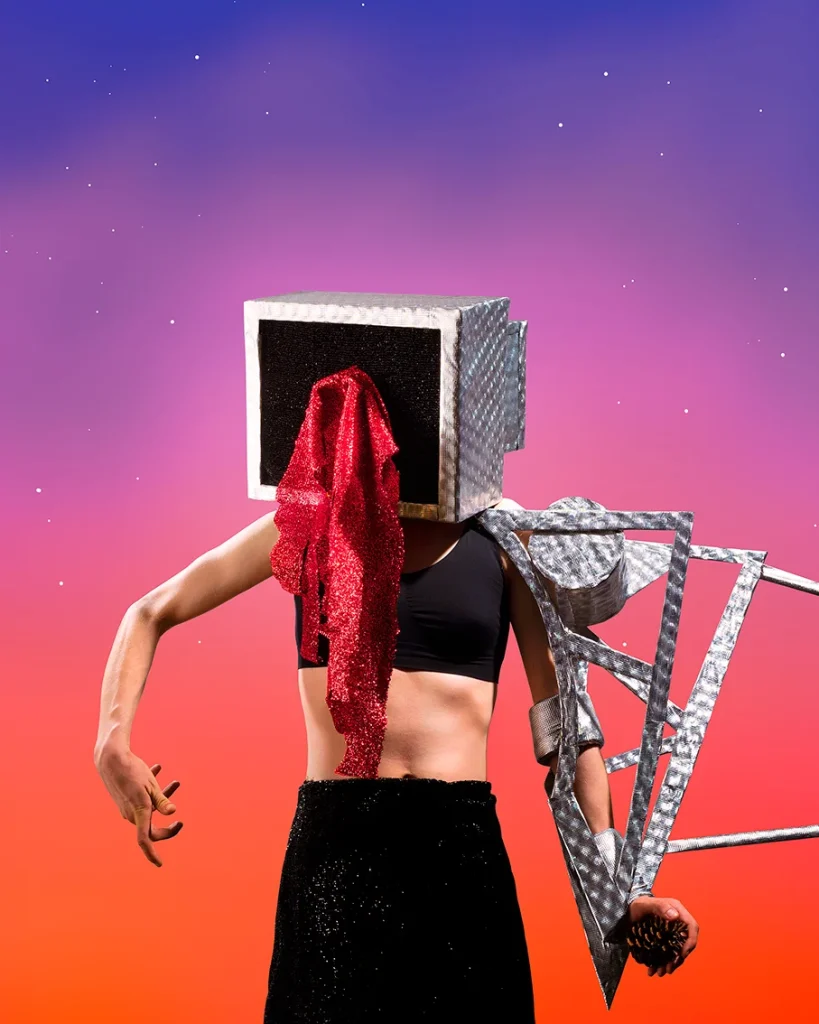
At its heart, Shimmer explores the ideas of visibility, anonymity and control. Each costume conceals the wearer’s face, shifting the viewer’s focus from identity to creativity. By doing so, the portraits challenge traditional ideas of photography, which often seek to reveal rather than protect.

Photo Credit: Museum Of Brisbane

Photo Credit: Museum Of Brisbane

The use of reflective and glittering materials makes the subjects hyper-visible yet unseen, a deliberate choice by Davies to question the power dynamic between subject and viewer. He sees this act of concealment as a way for participants to decide how they are seen, creating a playful but powerful redefinition of portraiture.

The Role Of Open Doors Youth Service

The project was developed in partnership with Open Doors Youth Service, a Queensland-based organisation that has supported LGBTQIA+ young people for 25 years. Through the collaboration, participants found a safe and supportive environment to explore their identities creatively.

Photo Credit: Museum Of Brisbane

Museum of Brisbane staff worked alongside Open Doors to guide the workshops, ensuring the participants’ voices shaped the final exhibition. For many, it was their first time using a sewing machine or contributing to a gallery project. The process built confidence, friendships and new skills while highlighting the value of inclusive public art programs.

An Invitation To The Community

The Museum of Brisbane’s exhibition invites the wider community to experience a world of colour, texture and self-expression. While rooted in queer experience, Shimmer speaks broadly about how people construct identity and claim visibility in a fast-changing world.


Davies hopes the exhibition encourages empathy and conversation, allowing audiences to appreciate both the artistry and the stories behind the images. The Museum describes the project as an exercise in joy and collaboration that reflects the diversity of Brisbane’s creative community.

Published 30-October-2025

Margaret Olley Painting Jumps to $125,000 in Brisbane Exhibition

A painting once sold for just $925 is now priced at $125,000, one of 26 works by celebrated still life artist Margaret Olley now on display at Brisbane’s Philip Bacon Galleries.


Olley’s Work Returns to the Spotlight

Running from April 29 to May 24 in Fortitude Valley, the exhibition at Philip Bacon Galleries shines a light on Margaret Olley’s legacy. Curated by Philip Bacon, who managed her estate after her death in 2011, the show includes early portraits, European landscapes and vibrant still lifes from her final years. 

The collection expanded after families, mostly baby boomers, offered works for sale, part of what Bacon called an intergenerational shift. Among the highlights is Sunday Flowers, first sold in 1977 for $925 and now priced at $125,000, reflecting the rising value of Olley’s work and its lasting impact.

A Lifelong Artist with Queensland Roots

Born in Lismore in 1923 and raised in northern Queensland, Margaret Olley studied art in Brisbane during the war before moving to Sydney. She gained national attention in 1948 as the subject of William Dobell’s Archibald Prize-winning portrait, though her still lifes would later define her career. 

Known for colourful interiors filled with flowers, fruit and everyday objects, her work is recognised for its detail and warmth. Since her death at 88, her reputation has grown, supported by the Margaret Olley Art Centre in Murwillumbah, which features a re-creation of her Paddington studio.

Charting a Life in Paint

Instead of a modest display, the exhibition presents a broader view of Margaret Olley’s artistic journey. The 26 works trace her growth from student pieces to the confident still lifes of her later years, including paintings from her European travels and final works from her Sydney home.

Each piece captures the everyday, made vivid through Olley’s distinctive use of oil and board.

A Personal Connection to Brisbane

To many in Brisbane, Margaret Olley’s name is part of the city’s story. Philip Bacon recalled how she would arrive, wind down the car window and say she could smell the jasmine and frangipani. 


Though based in Sydney, Olley often said Brisbane felt like home. Now in its 50th year, Philip Bacon Galleries continues to honour that connection. With free entry, the exhibition invites visitors to see Australian life through Olley’s intimate and vibrant perspective.

Published 1-May-2025