


Blind Paralympian Swaps the Track for Chocolate Making

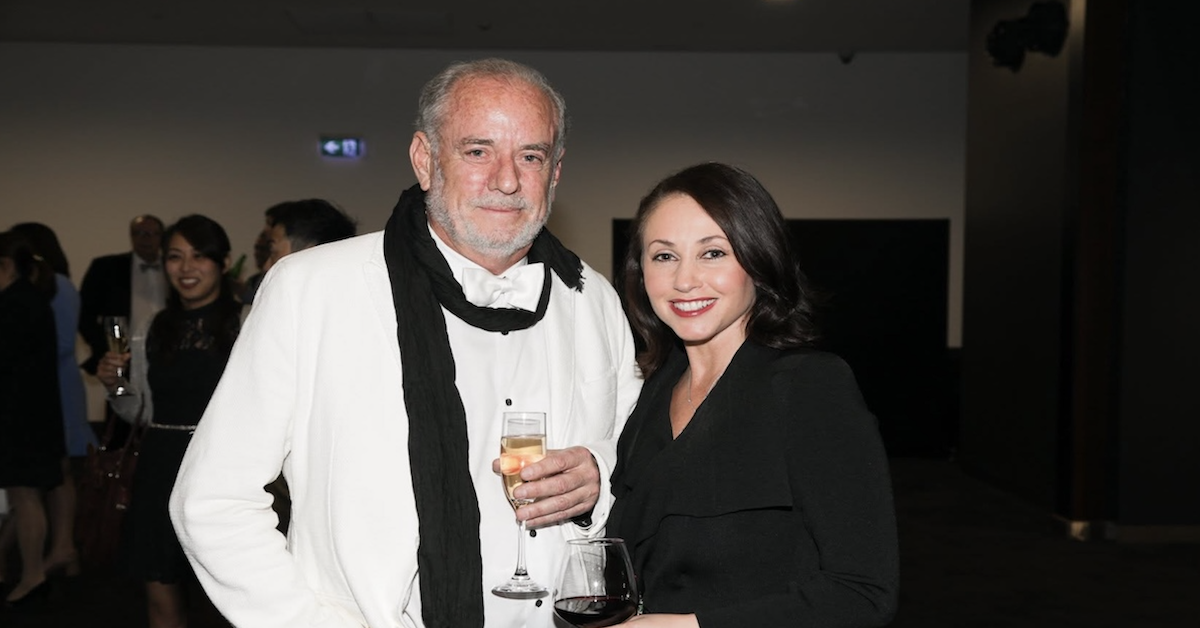
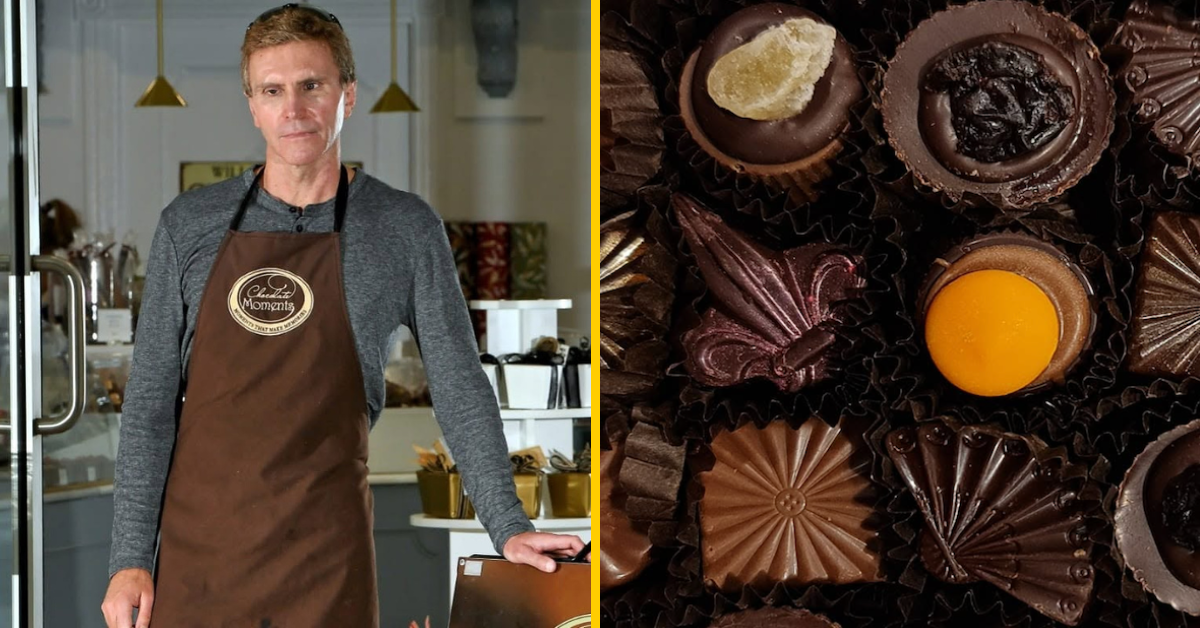
The smell of melting chocolate has replaced the roar of stadium crowds for Gerrard Gosens. The three-time Paralympian has reinvented himself as a Brisbane chocolatier, marking World Chocolate Day with handcrafted creations entirely made without sight at Chocolate Moments, his boutique chocolate shop and café on Albert Street.


A remarkable second act

Before becoming a chocolatier, Mr Gosens was an international Paralympian.

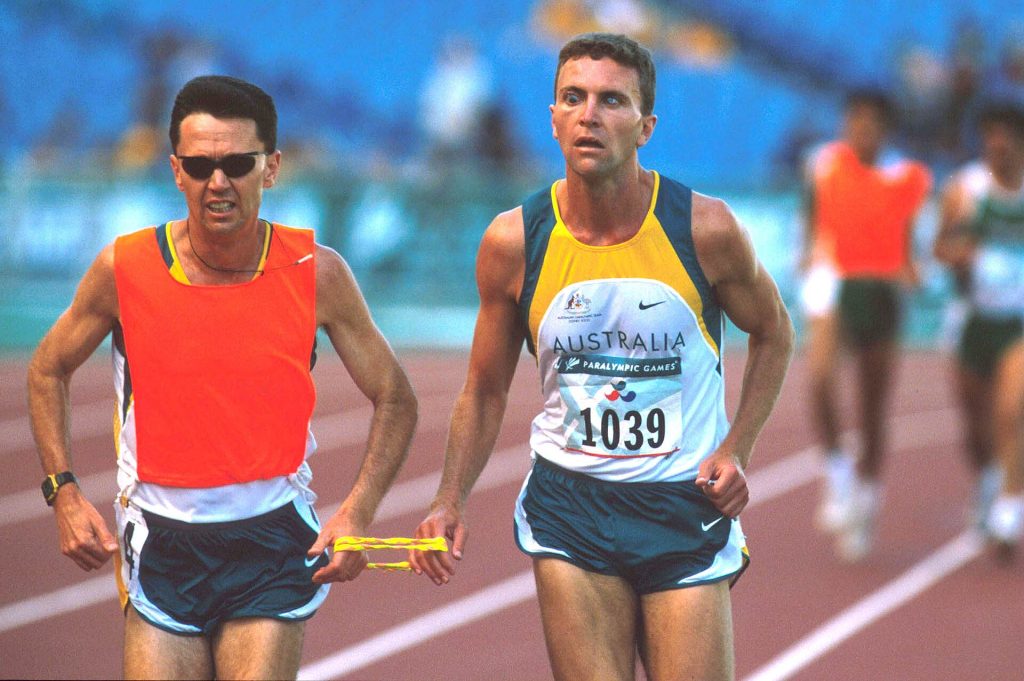
Born blind, he represented Australia at three Paralympic Games across two sports, making his debut in goalball at the 1996 Atlanta Paralympic Games before switching to athletics. As a T11 middle- and long-distance runner, he competed at the Sydney 2000 and Beijing 2008 Paralympic Games.
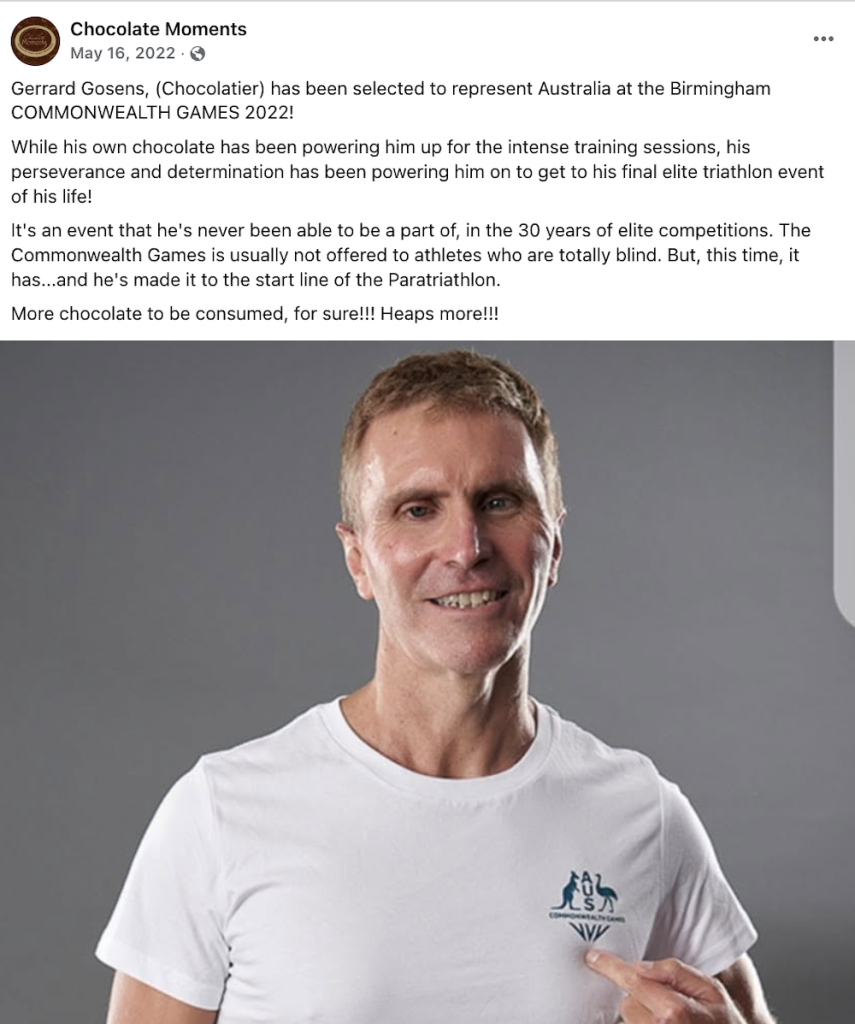
His sporting achievements extend beyond the Paralympics. Mr Gosens has competed internationally in para-triathlon, represented Australia at the 2022 Commonwealth Games, and completed numerous endurance challenges, including long-distance charity runs and open-water swimming projects.
Away from elite sport, he has built a business around another lifelong passion.

As a totally blind chocolatier, Mr Gosens develops many of his recipes by relying on his senses of smell, taste and texture rather than sight, producing premium handmade chocolates from his Brisbane boutique.

Building Chocolate Moments

Opening Chocolate Moments was about more than starting a business. Developed with his wife, Heather, the boutique chocolate shop was designed around the belief that chocolate should be experienced through the senses rather than simply admired. 
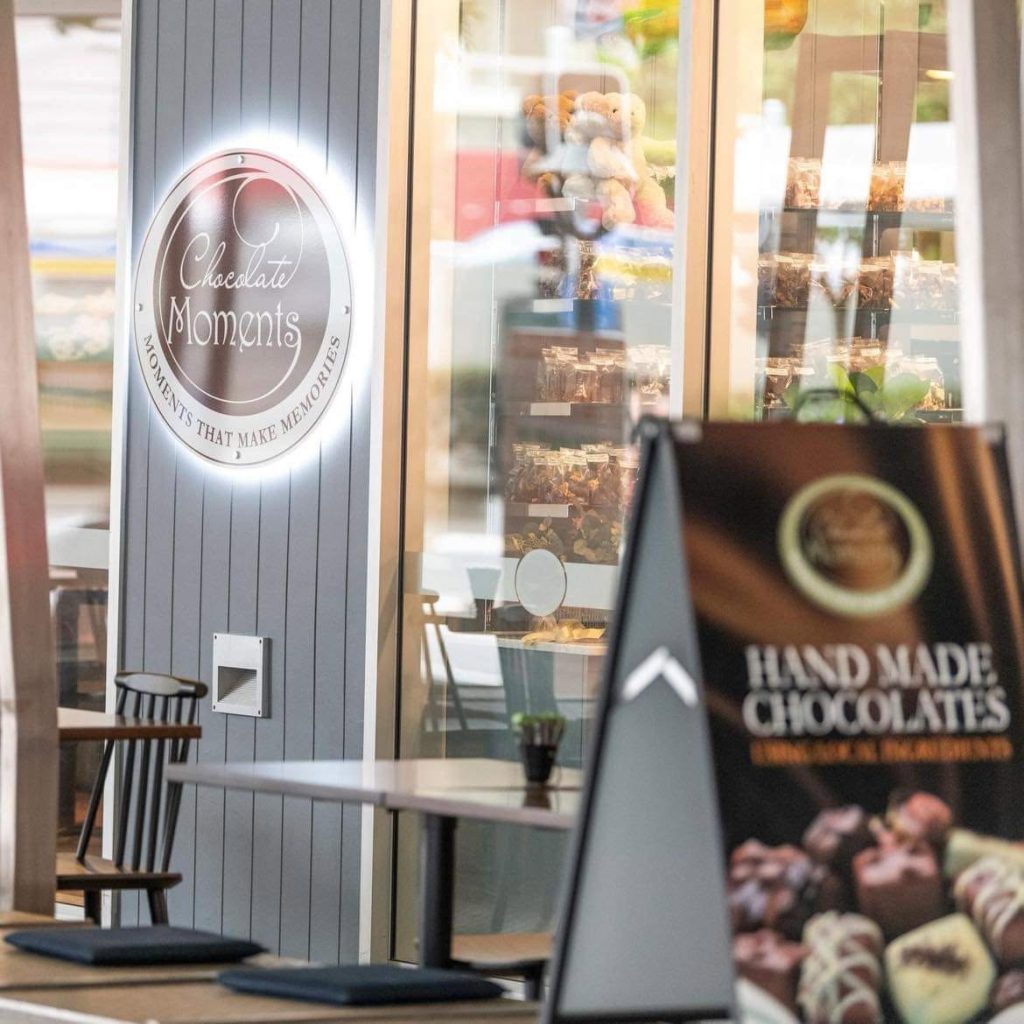
The couple named the business Chocolate Moments because they believe “there’s a moment for chocolate in everyone’s lives,” whether it’s celebrating a milestone, saying thank you or simply sharing time with friends and family.  

His unique career transformation was highlighted as part of 4BC’s World Chocolate Day coverage, where he spoke about making chocolate without sight and the business he operates with his wife, Heather.

A sweet way to celebrate

Last 7 July, Gerrard Gosens marked World Chocolate Day by inviting customers to celebrate with a handcrafted seasonal treat. To coincide with the annual celebration, Chocolate Moments baked a Dark Chocolate, Date, Walnut and Fig loaf, served as thick toasted slices and paired with premium barista coffee or a hot chocolate drink.

The special offering was available at both Chocolate Moments on Albert Street in Brisbane’s CBD and its sister venue, Graceville Moments Café & Catering.

Rather than hosting a large public event, the business marked the occasion by showcasing artisan chocolate through its café experience, where customers can enjoy handcrafted chocolates alongside coffee, hot chocolate and house-made sweet treats.


This year’s celebration centred on a handcrafted seasonal loaf and an invitation for customers to pause and enjoy what the business describes as a “chocolate moment.” For Mr Gosens, it was another opportunity to demonstrate that life after elite sport can take unexpected and delicious directions.

Published 8-July-2026
George Street UniLodge Redevelopment Offers Blueprint For Brisbane’s 2032 Housing Challenge

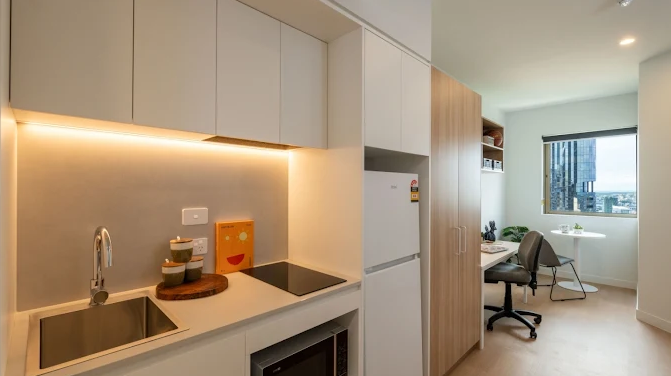
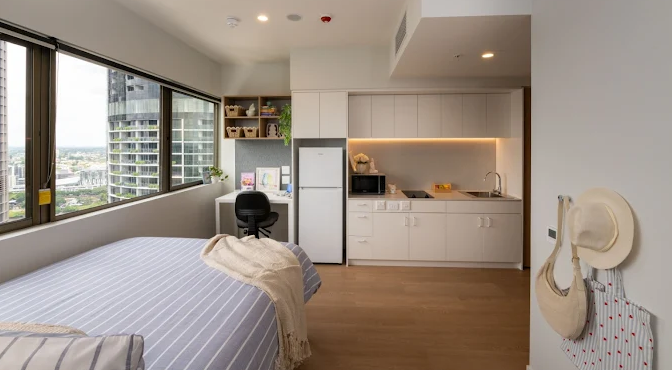
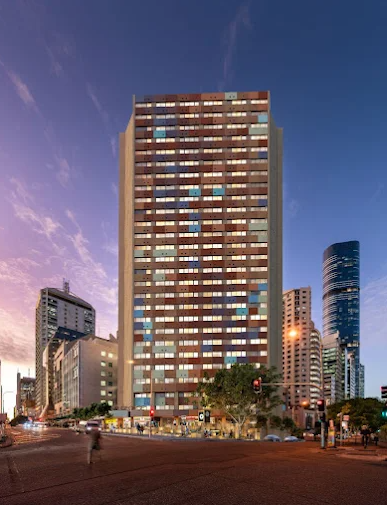
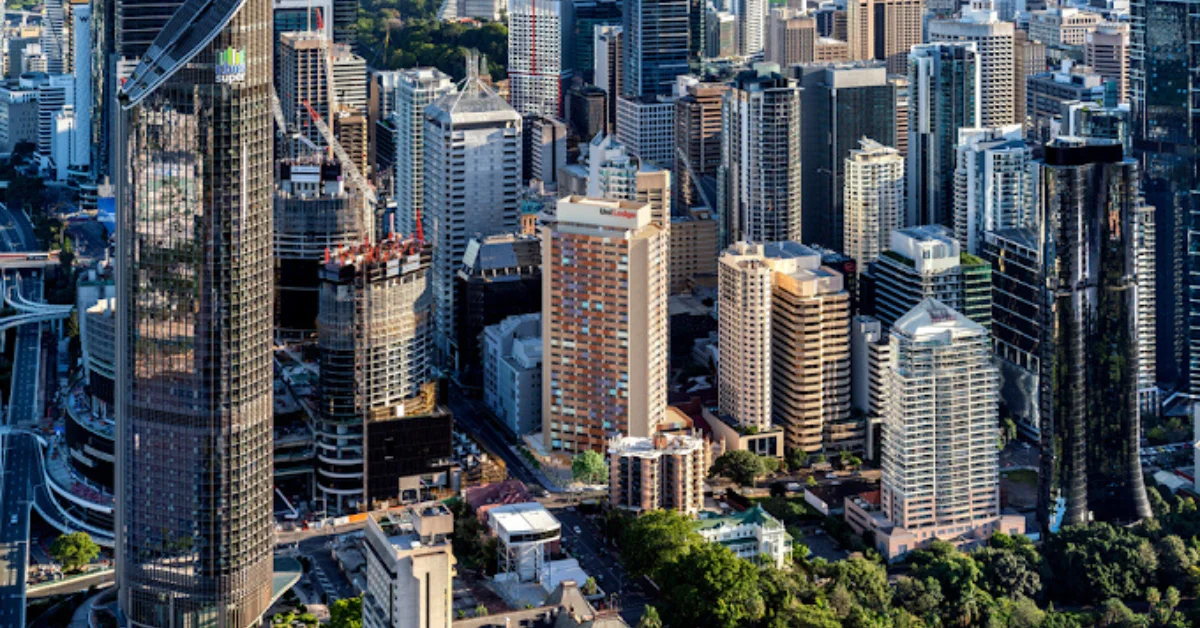
The opening of UniLodge Brisbane City at 41 George Street is being highlighted by industry figures as an example of how adaptive reuse and modular construction could help Brisbane deliver accommodation more efficiently as the city prepares for the 2032 Olympic and Paralympic Games.


Read: Singaporean Group Acquires George Williams Hotel in Brisbane CBD


Originally completed in 1979, the building served as office accommodation for more than four decades before Dexus acquired the vacant property in 2024. The redevelopment has converted the tower into a 1,180-bed UniLodge student accommodation complex within the Queen’s Wharf precinct. According to Dexus, the project demonstrates the potential for adaptive reuse to accelerate project delivery while reducing environmental impacts.

Delivered by Dexus and Marquette Properties, the redevelopment was completed about five months ahead of schedule, according to Dexus. The project has attracted attention as Brisbane faces increasing pressure to expand housing and accommodation capacity ahead of the Games.

Modular Construction Helps Speed Delivery

Photo credit: Google Maps/UniLodge Brisbane City

Project leaders have credited a combination of adaptive reuse and modular construction techniques for helping shorten the construction program. Rather than relying solely on conventional building methods, the redevelopment incorporated hundreds of prefabricated bathroom pods manufactured off site and transported to Brisbane for installation.

The project also benefited from converting an existing office tower instead of constructing a new building from the ground up. Its layout, including dual lift cores, allowed demolition and construction teams to work across different levels simultaneously, helping maintain construction momentum.

Photo credit: Google Maps/UniLodge Brisbane City

The George Street redevelopment has also renewed discussion about the role modular construction could play in Queensland’s building sector.

Researchers said prefabrication has the potential to reduce construction time, improve efficiency and reduce the number of workers required on site. They also note that modular construction requires much more planning during the early design stage because components must be carefully coordinated before work begins.

Experts said this additional upfront planning can present challenges but believe modular construction will become increasingly important as Brisbane works to deliver major accommodation projects within tight timeframes.

Some developers remain selective about where modular construction is most effective. While transport and installation costs can reduce its financial advantages on some residential developments, projects featuring large numbers of similar rooms, including student accommodation and hotels, are considered better suited to prefabricated building components.

Meeting The Olympic Accommodation Challenge

Photo credit: Google Maps/UniLodge Brisbane City

The redevelopment comes as Brisbane faces significant accommodation demands leading into the 2032 Olympic and Paralympic Games.

Industry forecasts indicate the city needs to deliver around 8,000 apartments each year through to 2031 and more than 7,100 annually after that to keep pace with demand. However, apartment construction has consistently fallen well below those levels in recent years.

Against that backdrop, the George Street redevelopment has attracted attention as an example of adaptive reuse. Project leaders and industry experts say it illustrates how existing commercial buildings can be repurposed while incorporating construction methods that may help deliver accommodation more quickly.


Read: Waterfront Brisbane: Dexus’ New Retail and Office Development Approved


Project leaders also believe future developments are likely to combine traditional building techniques with modular elements rather than relying exclusively on one approach. The George Street redevelopment has added to industry discussion about how Brisbane could deliver the homes, student accommodation and hotel rooms needed before 2032.

Published 8-July-2026
John Kilroy, Who Helped Shape Brisbane’s Dining Culture, Dies at 73

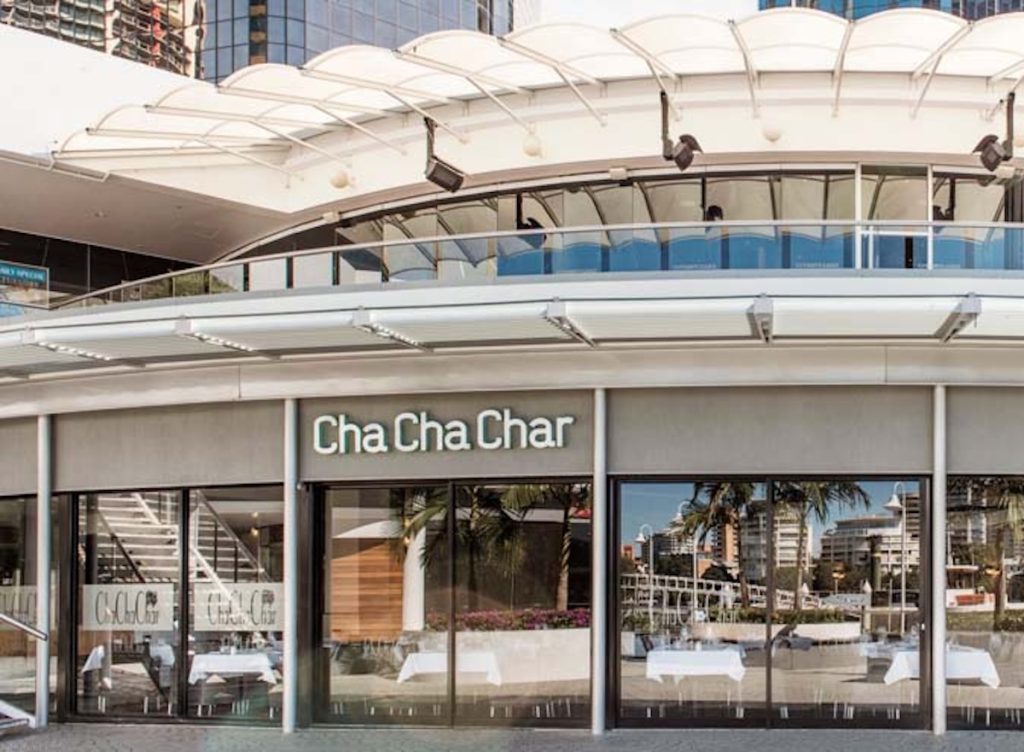
For many Brisbane diners, a meal at Cha Cha Char was more than a steak dinner. It was where business lunches were held, milestones were celebrated and visitors experienced a city whose food scene was coming into its own. Behind much of that rhythm was John “Killer” Kilroy.


Born on a grazing property in western Queensland, Kilroy brought his country roots into a hospitality career that spanned more than four decades. He became one of the restaurateurs credited with helping shape Brisbane’s dining culture by championing Queensland beef, supporting local producers and creating venues that became part of the city’s story.

Now, Kilroy is being remembered not only for the restaurants he built, but for the influence he had on Brisbane’s hospitality industry.

Kilroy died at the age of 73 after being reported missing in Brisbane on Monday, 29 June 2026. Queensland Police said officers found the body of a 73-year-old man in a car park near Howard Street in Brisbane City after receiving a missing person’s report earlier that day. Police said the death is not being treated as suspicious and that a report will be prepared for the coroner.

A country upbringing shaped his philosophy

Kilroy believed diners should know where their food came from, especially the beef that became the centrepiece of his restaurants. He was among the early Brisbane restaurateurs to identify the properties supplying the beef on his menus, strengthening the connection between Queensland producers and the dining experience.

Over more than 40 years, he owned and operated pubs, restaurants and function venues across Queensland, earning respect for his business knowledge and commitment to customer service.

The restaurant that became a Brisbane landmark

When Cha Cha Char opened at Eagle Street in 1997, Brisbane’s restaurant scene was growing rapidly. Over the next two decades, the steakhouse became one of the city’s best-known dining destinations, welcoming business leaders, politicians, visiting celebrities, interstate travellers and families marking special occasions.

Cha Cha Char owned by John Kilroy
Photo Credit: Hidden City Secrets

Kilroy combined premium Australian beef with attentive service and a welcoming atmosphere. After selling Cha Cha Char in 2020, he retired to Hervey Bay, leaving behind a restaurant that had become closely associated with Brisbane hospitality.

Tributes reflect a career built on respect

The tributes that followed news of Kilroy’s death reflected the regard he earned throughout Queensland’s hospitality industry.

Long-time friend and fellow restaurateur Andy Georges remembered operating alongside Kilroy at Eagle Street, describing him as someone who valued friendship over rivalry.

Hairdressing entrepreneur Steve “Stefan” Ackerie remembered Kilroy as a generous and colourful host whose restaurants reflected his personality.

Gambaro Group director John Gambaro described Kilroy as one of the pioneers who helped shape Brisbane’s restaurant industry, while former employees, customers and fellow hospitality workers remembered him as someone who gave people opportunities and made a lasting impression.

His final days in Brisbane

Media reports said Kilroy had been staying with friends in Brisbane while receiving cancer treatment.

Friends quoted in those reports said he went for a walk on Sunday evening but did not return, prompting a missing person’s report and a police search.


A lasting place in Brisbane’s story

John Kilroy’s legacy extends well beyond the restaurants he owned. It lives on in the Queensland producers he supported, the hospitality professionals whose careers crossed his path and the memories created by thousands of diners who gathered around his tables.

Published 1-July-2026
Historic Brisbane School of Arts Set for Private Sale After Revival Bid Falls Short

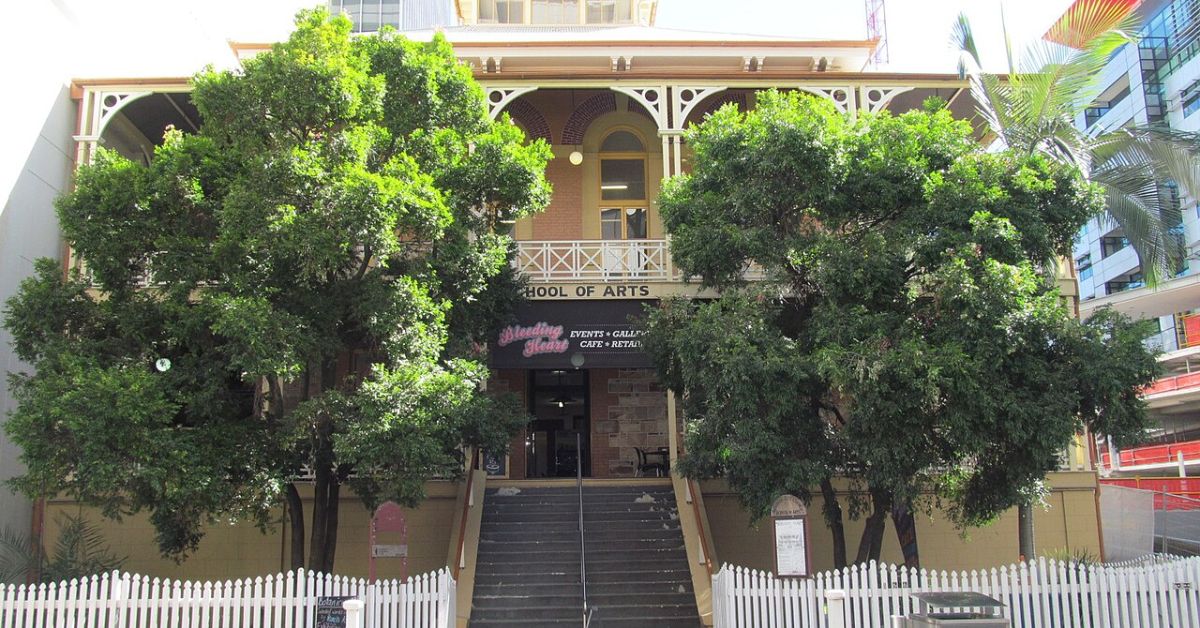
The heritage-listed Brisbane School of Arts building at 166 Ann Street in the city is set to be sold to a private buyer after an expressions of interest process, which closed in May 2026, failed to produce a feasible proposal for the building’s revitalisation.


The Ann Street building, which has sat vacant in the heart of Brisbane’s CBD for some years, is one of the oldest surviving civic buildings in the city and one of the few remaining heritage landmarks with significant untapped renewal potential. Its sale marks the end of a publicly led revitalisation process and opens the door to private sector involvement in determining what the school of arts becomes next.

The expressions of interest process, which ran through early 2026, invited cultural organisations, education providers, industry bodies and investors to collaborate on a mixed-use concept combining cultural programming, adult learning and commercial uses such as boutique food and beverage outlets, all within a framework respecting the building’s heritage significance. No feasible proposals emerged.

Brisbane’s city authority has confirmed any future owner will be required to comply with full heritage protections and planning requirements, preserving the building’s historic character regardless of what use it transitions to.

A building that has served Brisbane since 1865

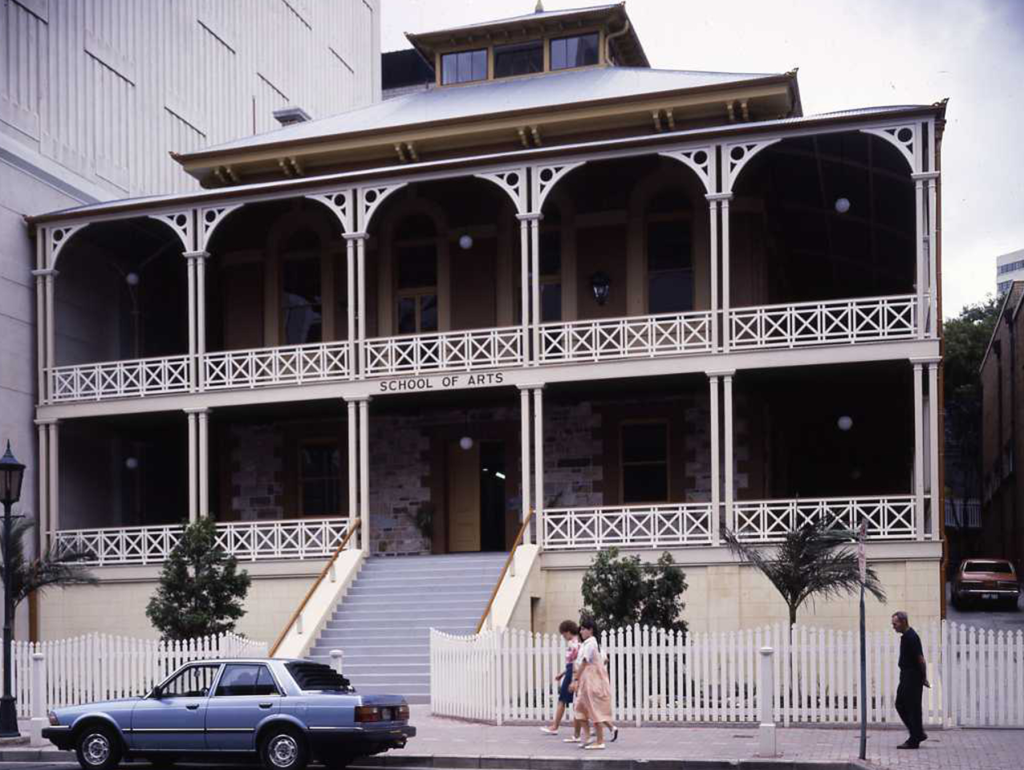
The Brisbane School of Arts building at 166 Ann Street carries more than 160 years of civic history. Erected in 1865-66 with a ground floor and two upper galleries, it was originally known as a Servants Home, providing accommodation for single adult women who had migrated to Queensland and were waiting to take up employment as domestic servants.

Photo Credit: Museum of Brisbane

In 1873, the trustees of the North Brisbane School of Arts purchased the building for one thousand pounds. It was let to tenants before being formally converted to a school of arts in 1878.

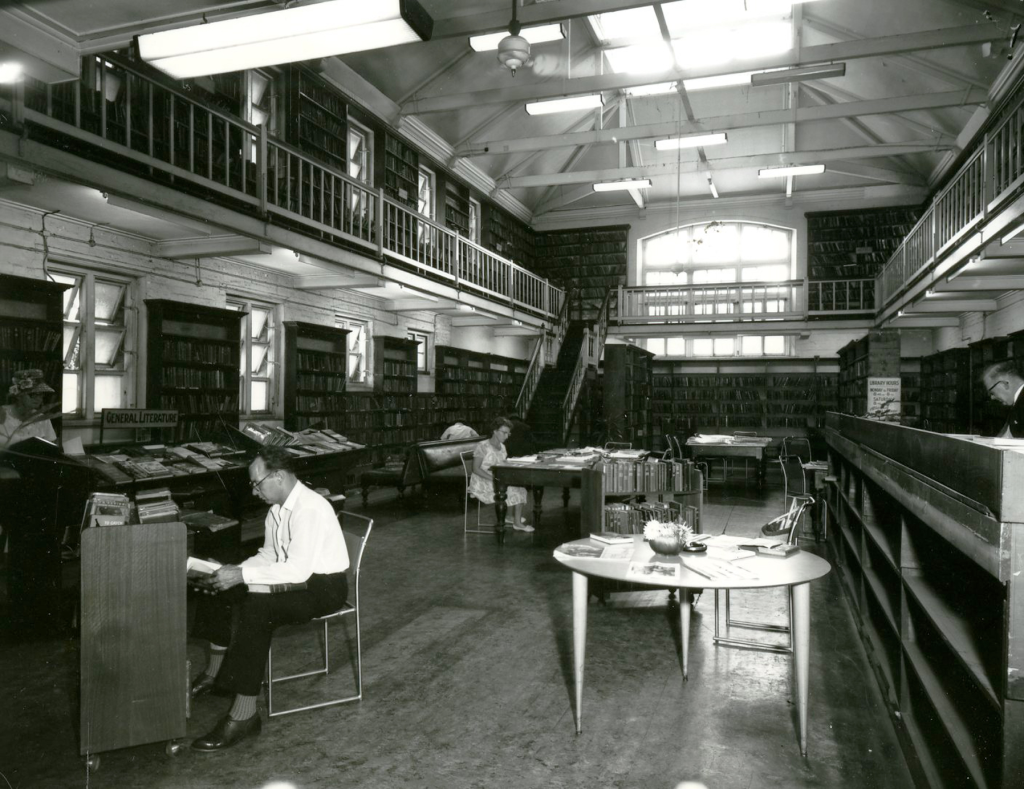
The institution operated libraries and reading rooms oriented around “the advancement of reading and study by the delivery of lectures,” and promoted what its trustees described as “the recreation and entertainment of its members by games of skill, and generally the diffusion of knowledge and the promotion of intellectual amusement.”

Photo Credit: Museum of Brisbane

A hall was added to the rear in 1884 to accommodate the Brisbane Technical College, which used the building until 1902, when responsibility for technical education transferred to the state. Brisbane’s city authority assumed trusteeship of the building in 1965-66 and operated a public library on site until 1981. Since then, the building has been let to various community groups, and more recently has sat vacant.

A new chapter for Brisbane’s heritage buildings 

The sale of the Brisbane School of Arts building will place it alongside a growing cohort of Brisbane heritage properties that have found new life through private investment.

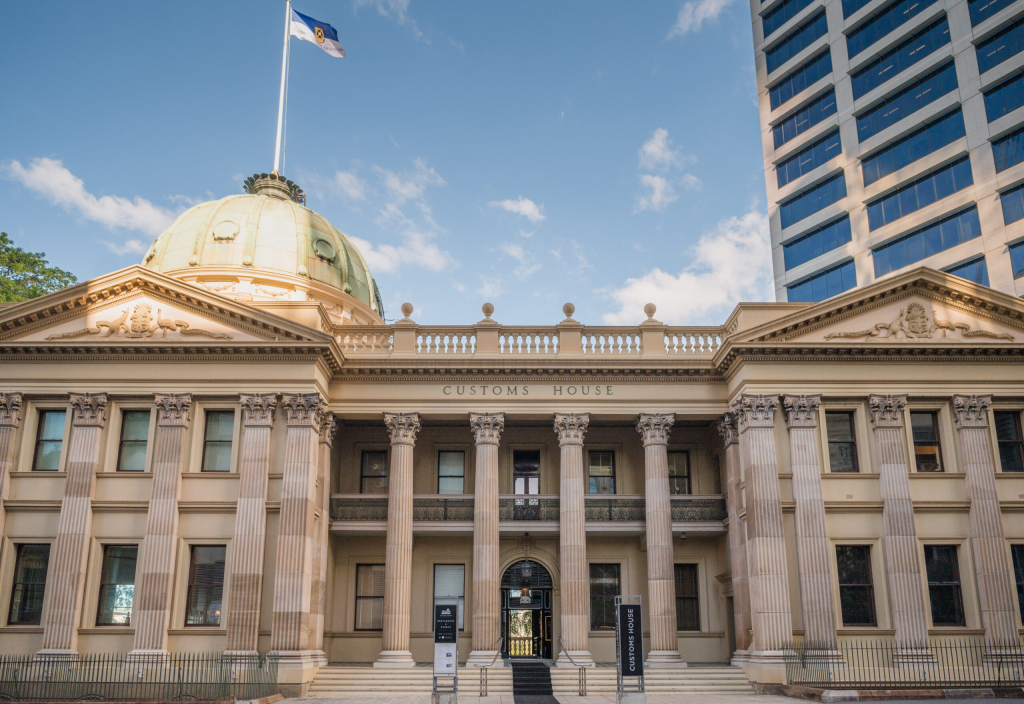
Customs House on Queen Street, the former Brisbane Dental Hospital and the former Treasury Building — currently being converted into a university campus — have all transitioned from public to private or institutional ownership while retaining their heritage character.

Photo Credit: Customs House

Brisbane’s city authority described opportunities like this as rare, noting its intent to “secure private sector investment to write the next chapter of this iconic Brisbane building.”

The building’s location on Ann Street places it within the CBD’s lower precinct, close to the boundary with Fortitude Valley and within easy walking distance of the Queen Street Mall, Brisbane Square and Central Station. For the inner-city community, what the building becomes matters — it is a prominent address in a part of the city that residents, workers and visitors pass through daily.

Heritage protections that bind any future owner

The Queensland Heritage Register records the building’s significance as a rare example of a purpose-built civic institution from the colonial period that retains much of its original fabric and form. Any purchaser takes on a building that cannot be substantially altered without heritage approval, a condition that tends to attract buyers with genuine interest in adaptive reuse rather than demolition and redevelopment.

The expressions of interest process had envisioned exactly that kind of outcome: a vibrant, mixed-use activation that brought people back into the building while preserving its layered history. Whether the sale process produces a buyer with that vision, or someone with a more commercial intent operating within the heritage constraints, remains to be seen.

Information on the Queensland Heritage Register listing for the Brisbane School of Arts can be found here.


Published 29-June-2026

Disney Fans, Get Ready: Australia’s Biggest Disney Pop-Up Is Coming to Brisbane

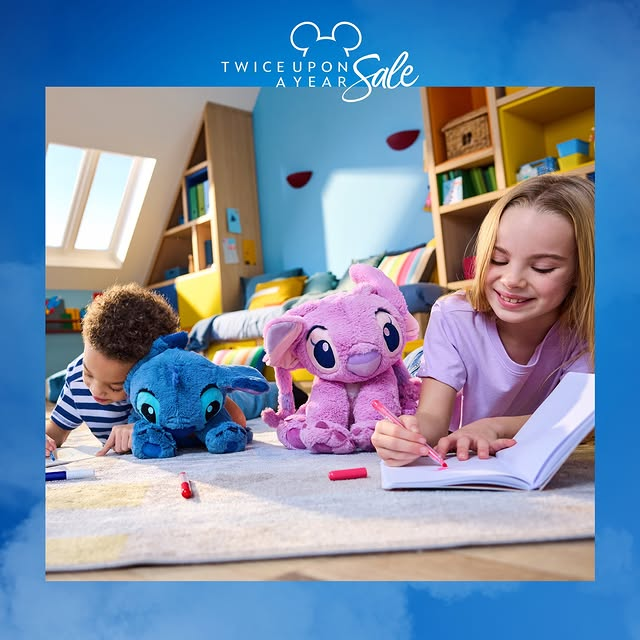
An official Disney Store pop-up is opening at Wintergarden on Queen Street Mall, bringing what the brand describes as its biggest pop-up experience in Australia to date.


The store will operate from 4 July to 27 September at Shop QSM 103, 209 Queen Street Mall, stocking collectibles, toys and apparel inspired by a wide range of Disney and Pixar characters. It arrives during Pixar’s 40th anniversary year, with the studio having been founded in 1986, and the range will include dedicated anniversary product lines alongside the broader Disney offering.

The first 50 people through the door when the store opens at 9am on 4 July will receive a free gift.

What’s on the shelves

The range goes well beyond the standard souvenir fare. Brisbane-exclusive collective cards, designed specifically for this city and not available anywhere else, are one of the headline offerings. Disney Store Japan ranges will also be stocked, bringing product lines that rarely surface in Australian retail.

Christmas in July will be represented through ornaments of beloved characters, and a dedicated pin collector event runs on 8 July, focused on Disney’s beloved animals and featuring exclusive pins available only in London, Dublin and Brisbane. Tickets for the pin event are sold separately.

Stock refreshes weekly throughout the run, which means a visit in July and another in September are likely to turn up very different shelves.

Planning your visit

Those who visited Brisbane’s previous Disney Store pop-up will remember the queues. This one is described as the largest iteration yet, and the Queen Street Mall location gives it one of the highest foot traffic spots in Queensland retail. Weekday visits are the practical choice for anyone who wants to browse without pressure.

Weekend mornings, especially in the school holiday period around early July, are likely to be a different experience entirely.

The store is open Monday to Thursday from 9am to 6pm, Friday from 9am-9pm, Saturday from 9am-6pm, and Sunday from 10am-5pm. The Disney Store pop-up at Wintergarden, Shop QSM 103, 209 Queen Street Mall runs 4 July to 27 September. Further details are available at here.


Published 4-June-2026

Brisbane’s Night at The Parkland Returns Bigger Than Ever for 2026

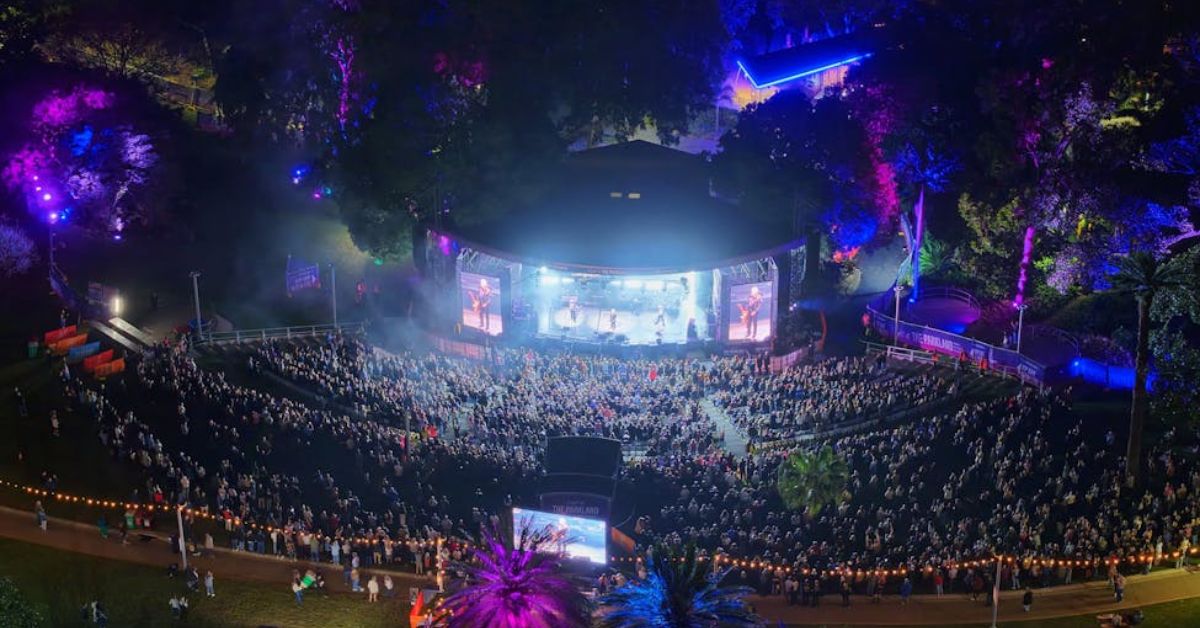
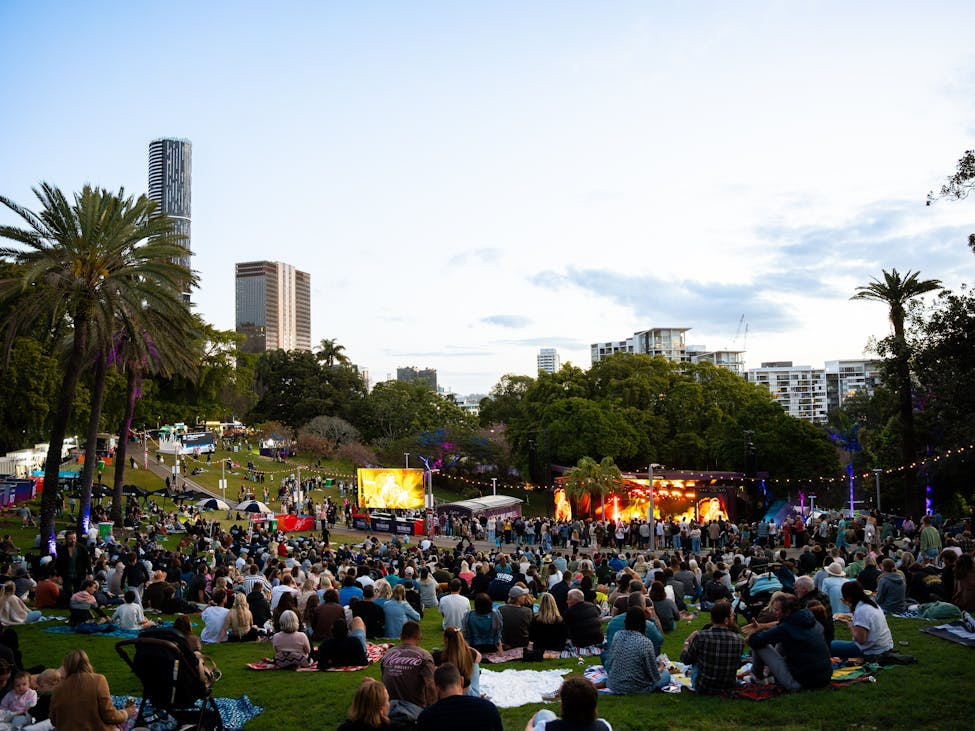
Night at The Parkland returns to Roma Street Parkland for its second season in September, bringing nine open-air concerts across three weekends as part of Brisbane Festival’s 2026 program.


The concert series, presented by Toyota in association with Brisbane Festival, runs from 4 to 20 September 2026. Organisers expanded the program following strong attendance during last year’s debut season. General public tickets go on sale from 9am on 2 June.

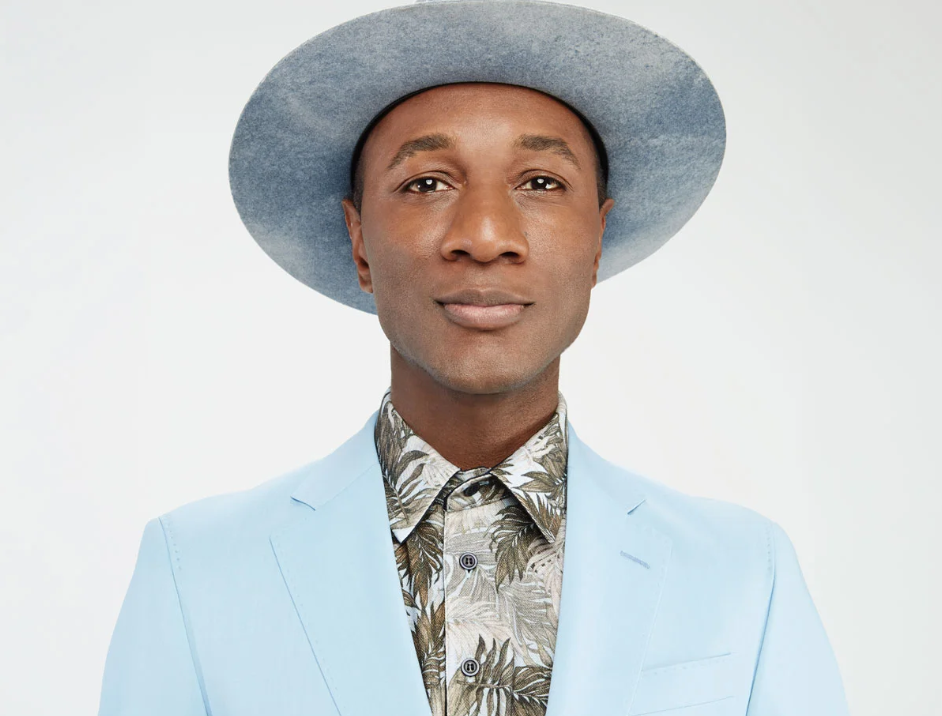
Promoters Second Sunday have built the 2026 lineup around a mix of Australian ARIA winners and one international headliner: Grammy-nominated American singer-songwriter Aloe Blacc, making his first Australian live appearance in seven years.

The full September schedule

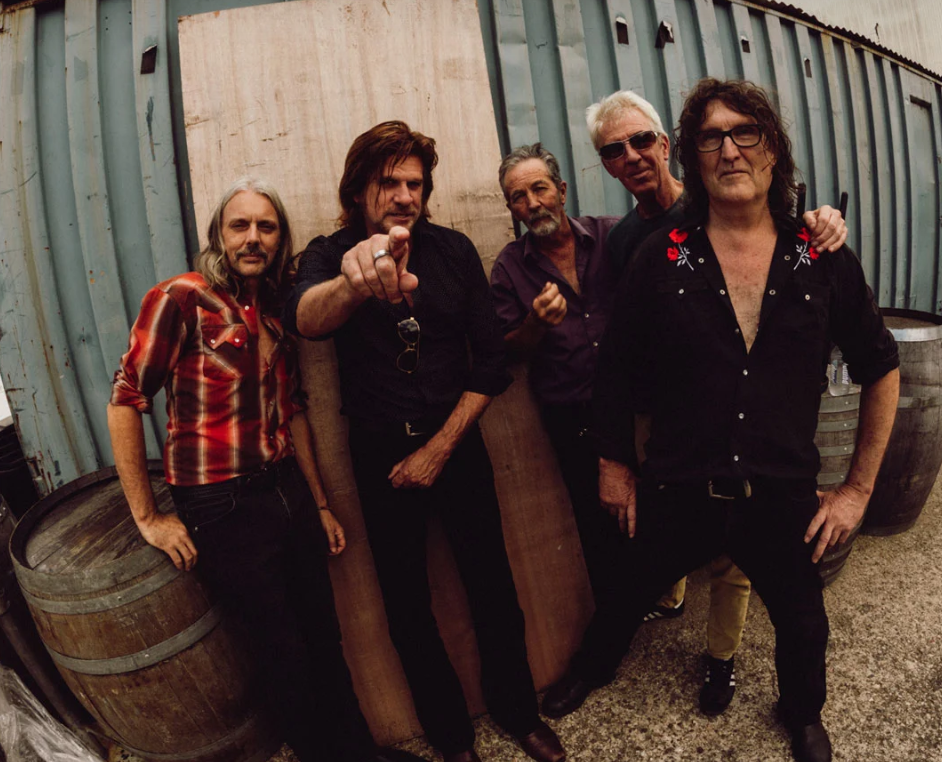
The series opens on Friday 4 September with The Cruel Sea, joined by special guests Magic Dirt, to celebrate the 30th anniversary of the double-platinum, number-one album Three Legged Dog. Katie Noonan brings her critically acclaimed Jeff Buckley’s Grace show to the parkland the following evening, fresh from a national tour of more than 25 sold-out performances.

Photo Credit: Night At The Parkland

Sunday 6 September features Yesterday’s Gone: The Fleetwood Mac Legacy, with Fanny Lumsden, Charlie Collins and Karen-Lee Andrews sharing the stage for the tribute show.

Photo Credit: Night At The Parkland

Aloe Blacc headlines Friday 11 September as part of his Wake Me Up tour. The Temper Trap follow on Saturday 12, and Human Nature bring their All The Hits Live show to the parkland on Sunday 13 September.

Photo Credit: Night At The Parkland

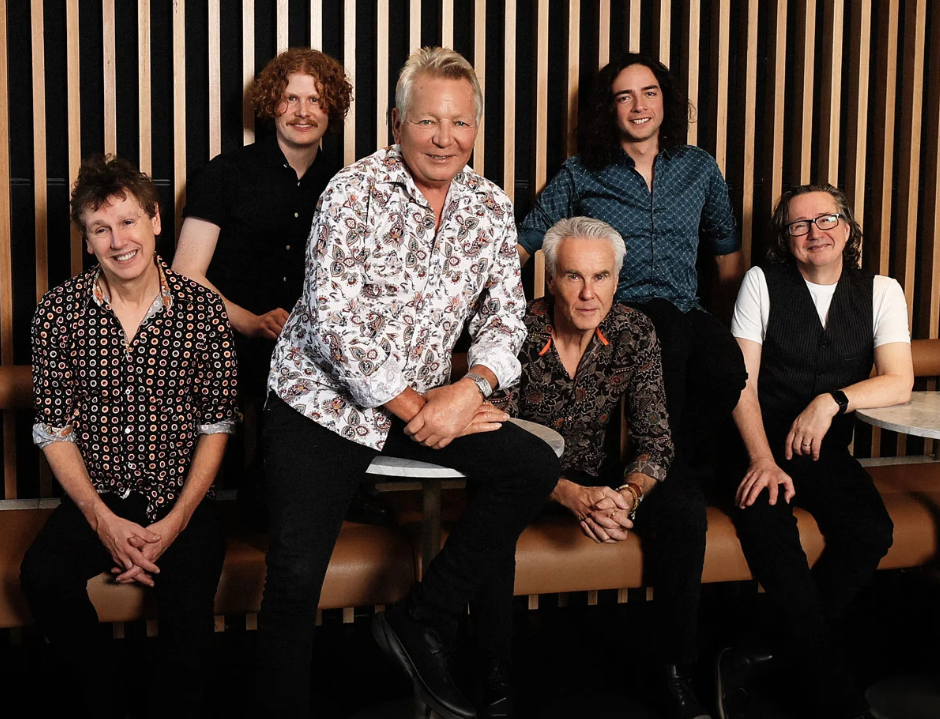
The final weekend opens with Icehouse on Friday 18 September, returning after a sold-out appearance in the 2025 season. PNAU take Saturday 19, performing an unseated, dancing-encouraged set of hits alongside tracks from their forthcoming album AHHCade, due in late July. Missy Higgins closes the series on Sunday 20 September.

Support acts across the series include Vandalism Angel, Jo Davie, Georgia Fields, Birren, Wilsn, Clea, Lastlings, Jaymon Bob, Ally Row, Kyla Belle, Alice Ivy, Hazel Mei, Jem Cassar-Daley and more.

An outdoor setting that suits the music

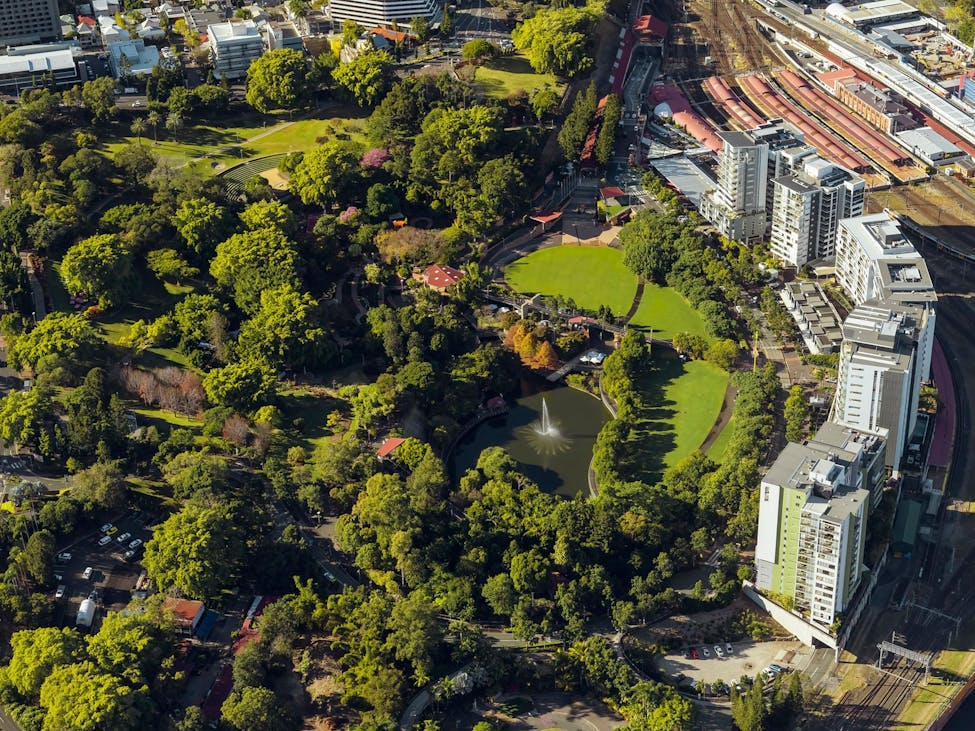
Roma Street Parkland sits at the northern edge of Brisbane’s CBD and is described as the world’s largest subtropical garden in an urban centre. The setting — tiered gardens, mature trees, open lawns — makes it a genuinely distinctive alternative to the arena circuit, and the 2025 season proved there is an appetite in Brisbane for exactly this kind of outdoor live music experience.

Second Sunday co-founder Cameron Coghlan said the expanded program reflects the response to last year’s debut. “We’re incredibly proud to see Night at The Parkland return for its second year, building on a strong debut and creating even more opportunities for audiences to enjoy great live music in a unique outdoor setting,” he said.

Brisbane Festival Artistic Director Ebony Bott added that the series had quickly established itself as a standout live music event for the city. “We’re excited to welcome Night at The Parkland back to Brisbane Festival in 2026, bigger, bolder and expanded across three incredible weekends,” she said.

Tickets and information

General public tickets go on sale today, Tuesday 2 June, at 9am AEST. Full lineup details, individual show information and tickets are available at here. Getting to Roma Street Parkland is straightforward, with trains running directly to Roma Street Station and buses servicing the underground busway or street-level stops right outside.


Published 2-June-2026

Brisbane CBD To Welcome The Red Dress, A Global Story Stitched By Hundreds Of Hands

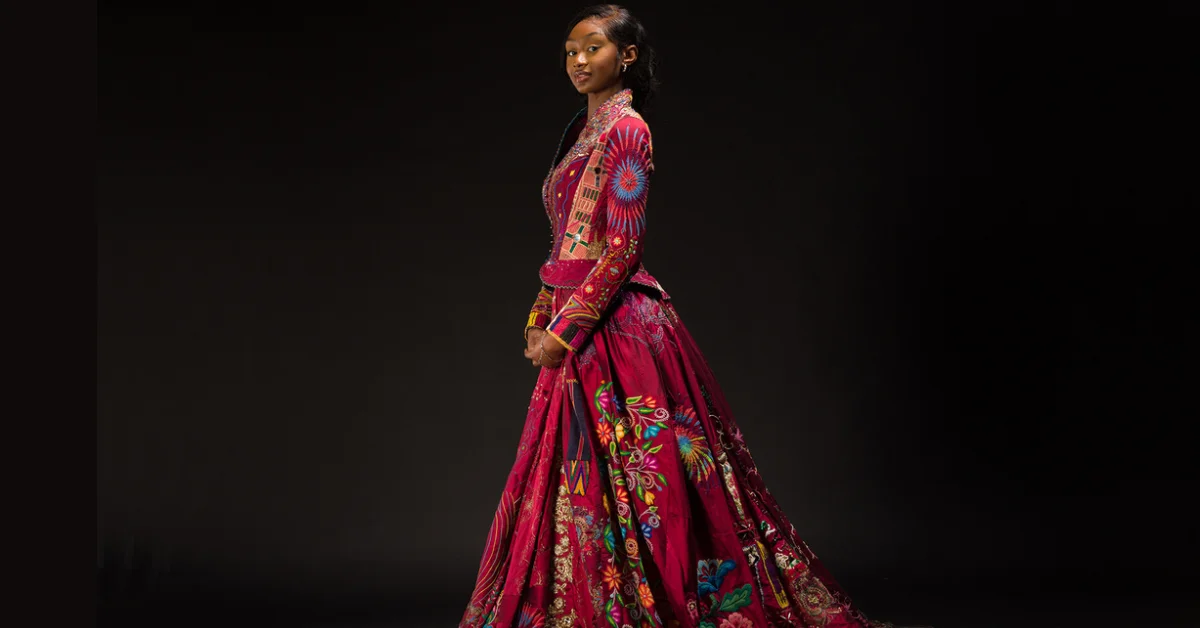
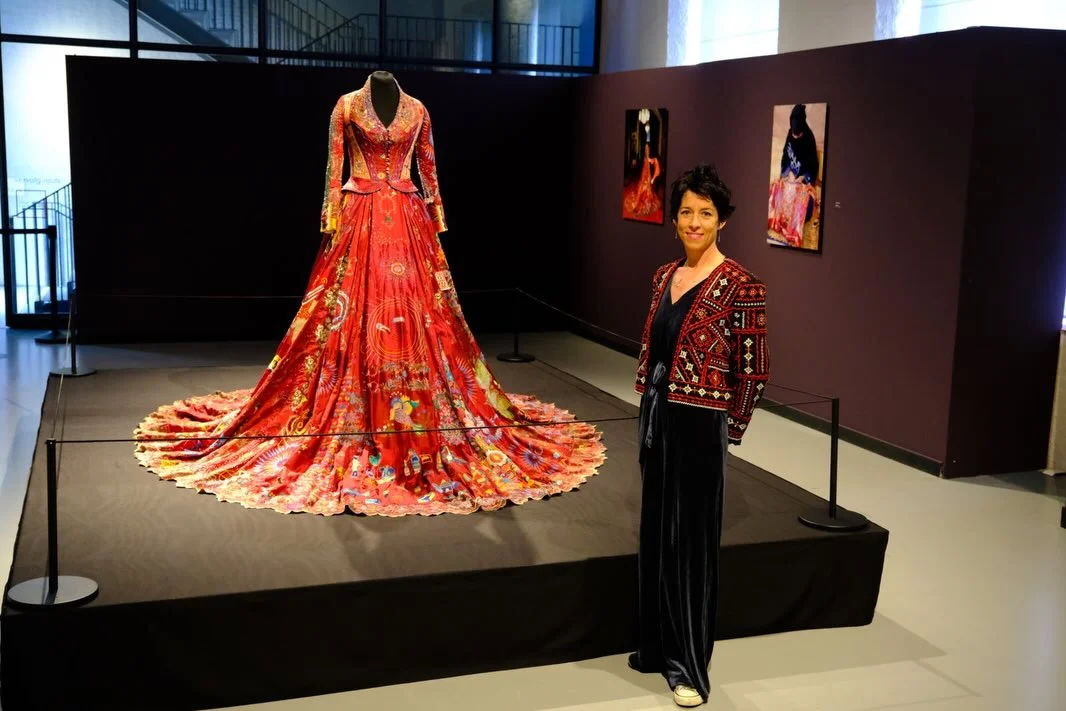
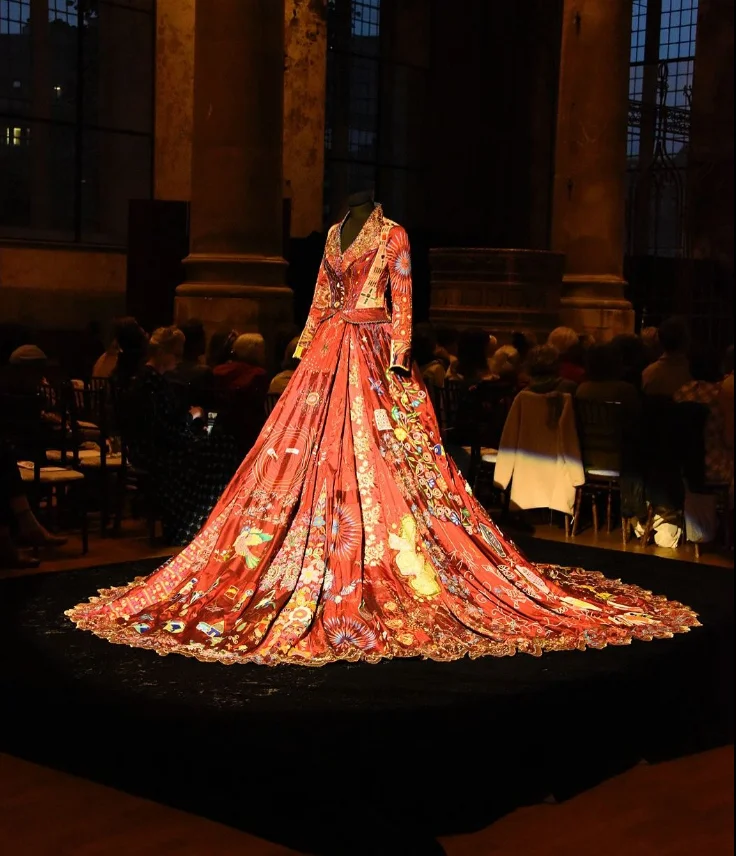
A burgundy silk dress stitched across continents will soon take its place inside Museum of Brisbane, carrying with it the work, memory and imagination of 380 embroiderers from 51 countries.


A Dress That Travelled Before It Was Complete

The Red Dress began as an idea by British artist Kirstie Macleod: a single garment that could give people, particularly women and communities facing vulnerability or poverty, a way to tell their stories through embroidery.

Over 14 years, from 2009 to 2023, pieces of the dress travelled around the world. They were passed between experienced textile artists, community groups, first-time embroiderers and people using stitch to express personal histories, cultural traditions and lived experiences.

By the time the garment reached its final form, it had become far more than a dress. It had become a record of hundreds of hands working across distance, language and circumstance.

The completed work is constructed from 87 panels of burgundy silk dupion and weighs 6.8 kg. Across its surface are an estimated 1 to 1.5 billion stitches, forming a dense and intricate textile map of the people who helped create it.

The project now holds a Guinness World Record for the largest collaborative embroidery project.

The Red Dress Comes To Brisbane CBD

The Red Dress will be exhibited at Museum of Brisbane from 25 July to 13 September 2026, in the Fairfax Gallery. The exhibition will be free to enter and open daily from 10:00am to 5:00pm.

Its Brisbane CBD showing forms part of the dress’s first Australian tour, which also includes Warwick Art Gallery.

For Queensland audiences, the exhibition offers a chance to stand close to a work that is built on detail. The dress is not designed to be understood at a glance. Its meaning sits in the panels, in the threads, in the contrast between highly skilled embroidery and simple stitches used to carry difficult memories.

Its contributors include 367 women and girls, 11 men and boys, and two non-binary artists. Among them are refugees, asylum seekers, survivors of war, disadvantaged women and artisans from embroidery studios and community groups.

All 141 commissioned embroiderers were paid for their work and receive a share of ongoing exhibition fees and merchandise sales.

Brisbane’s Own Stitch In The Dress

The Australian contribution gives the global artwork a local connection. Created by 24 members of Brisbane’s Allthreads community, the panel captures elements of the Australian landscape, flora and fauna.

That Brisbane-made contribution sits alongside embroidery traditions and personal symbols from across the world, adding another layer to a garment already shaped by many places and experiences.

The dress also includes Lambani embroidery gathered by Macleod during travels in southern India in 2002. That experience of stitching alongside Lambani women, despite not sharing a common language, later helped inspire the project.

A Garment Built From Memory, Culture And Survival

The Red Dress was first intended to create dialogue around identity. Over time, it developed into a wider platform for self-expression, allowing contributors to record culture, memory, trauma, recovery and resilience through stitch.

Some embroiderers used techniques passed down through families, villages or communities. Others used simple stitches to express painful events or personal transformation. For some, embroidery was already a profession. For others, it became part of rebuilding a life, earning income or supporting a community.

Now complete, the dress continues to travel with the aim of reaching broad audiences, including people who may not usually have access to textile exhibitions.


At Museum of Brisbane, The Red Dress will bring hundreds of individual stories into one room. Its arrival in Brisbane CBD is not just an exhibition of a world record-holding artwork, but an invitation to look closely at how fabric, thread and time can hold lives from across the world.

Published 21-May-2026

Brisbane CBD Traffic Disrupted As Teen E-Bike Riders Swarm Streets

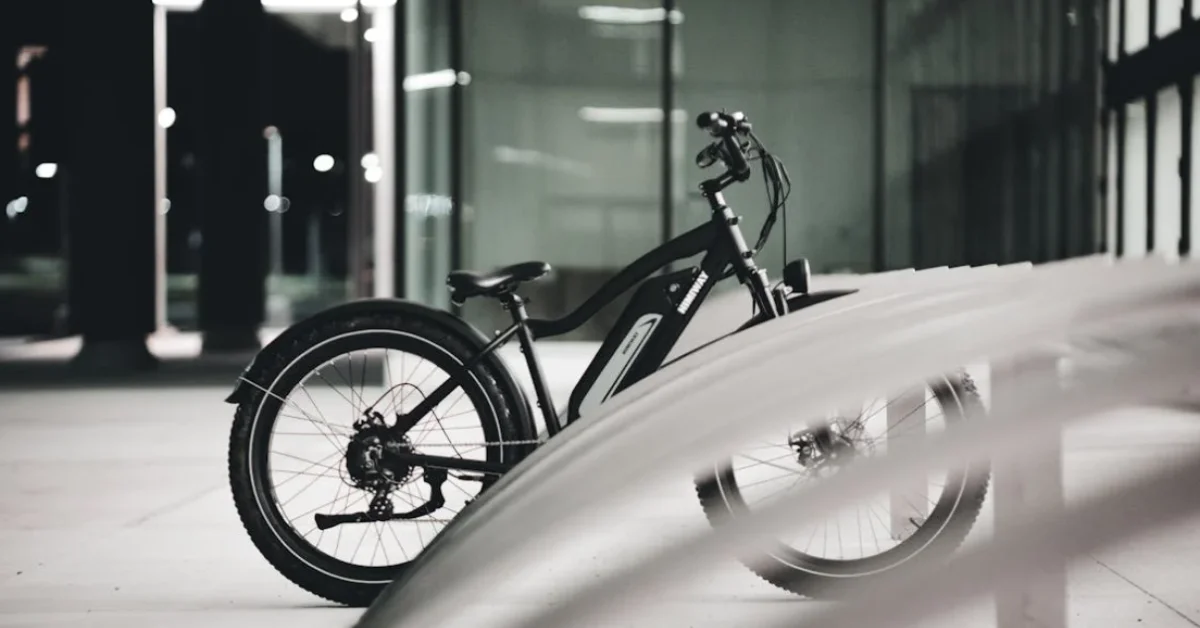
A large group of teenagers on modified e-bikes disrupted Brisbane CBD traffic after riders moved through inner-city streets, tunnels and major roads while police tried to respond to the fast-moving group.


Large Group Moves Through Brisbane CBD

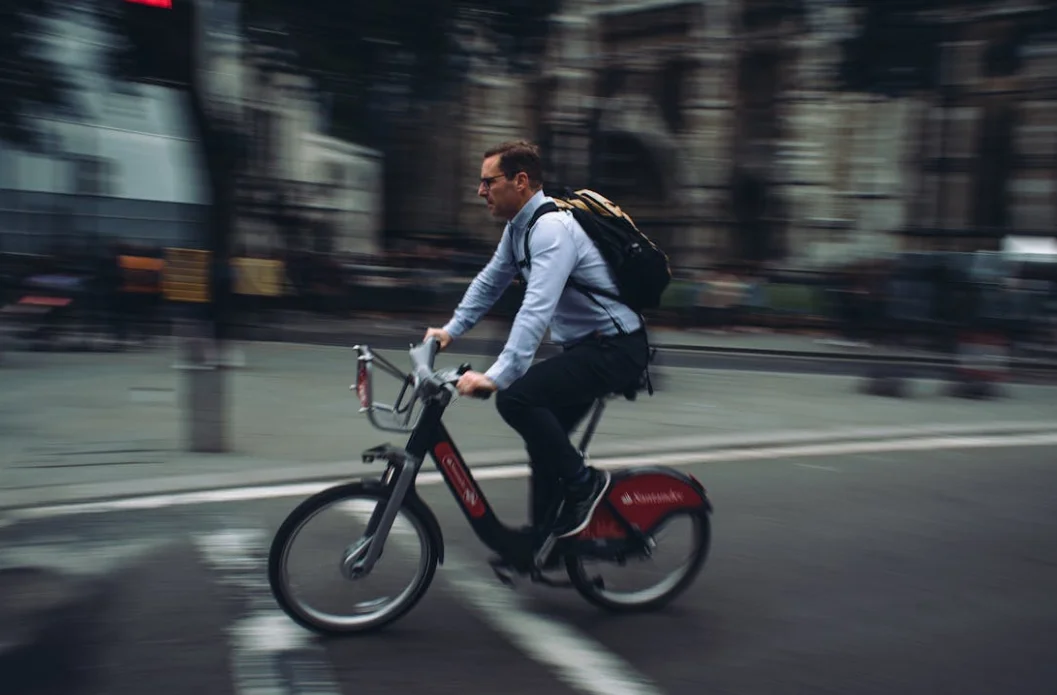
Traffic was disrupted across Brisbane’s inner city after hundreds of teenagers on modified e-bikes rode through the CBD, blocking roads, weaving around vehicles and drawing concern from motorists and workers.

The riders gathered at Victoria Park on Sunday, 17 May before travelling through the park, through tunnels, across the Story Bridge and around The Star Hotel and Casino. As the group moved through the city, riders performed wheelies, filled intersections and rode around cars and police vehicles.

The ride caused traffic to bank up across parts of the CBD as vehicles were forced to slow or stop while the group passed through. Footage posted online showed riders moving in large numbers through traffic as police vehicles attempted to intercept them.

Police were outnumbered as the group scattered around patrol cars and continued through the streets. Officers indicated riders would only be intercepted when it was safe to do so.

e-bike riders
Photo Credit: Pexels

Brisbane CBD Ride Raises Road Safety Concerns

The incident has renewed concern about large e-bike gatherings in Brisbane, particularly when riders move through busy traffic corridors and restricted areas.

Electric bikes and scooters are not permitted in tunnels or on multi-lane roads under Queensland road rules. The riders’ route included tunnels and major inner-city roads, creating concern among motorists who were caught in the disruption.

One motorist reported damage to a vehicle mirror during the incident. A bus driver caught among the group described the riders as taking over the road and holding up traffic, while a nearby worker said staff became concerned about customers as the group moved through the area.

No arrests or charges had been announced as investigations continued on Monday.

Brisbane CBD e-bikes
Photo Credit: Pexels

Public Frustration Grows Over Modified E-Bikes

The Brisbane CBD incident has added to wider frustration about repeated mass e-bike rides through inner-city streets. The gatherings have been described as becoming a regular occurrence, with locals concerned about riders using busy roads for stunts and group rides.

Online reaction also raised questions about whether some of the vehicles should be described as e-bikes. Some commenters claimed the bikes appeared closer to motorised two-wheelers because of hand throttles and limited visible pedalling, although that has not been confirmed.


For motorists and workers in the CBD, the latest ride was not just a passing disruption. It became another example of the tension between large groups of modified e-bike riders and the everyday flow of traffic through Brisbane’s busiest streets.

Published 20-May-2026

End of An Era for Brisbane CBD Nightlife as Riverfront Institution Finishes Forty-Year Run

The loss of a forty-year-old riverfront institution is set to reshape the nightlife landscape of the Brisbane CBD as a major precinct redevelopment forces a local icon to pack up its bars and dance floors.


End Of A Nightlife Era

The long-running venue Fridays Riverside will finish its operations at the Eagle Street location this coming Sunday, May 24. For four decades, the massive multi-bar establishment served as a central hub for corporate workers looking for end-of-week drinks, weekend partygoers, and community celebrations. 

The venue outlasted several other nearby riverside establishments over the decades, making it a familiar constant for generations of local residents who gathered by the water for music and socialising.

Development Shifts The CBD

The closure comes as the property lease reaches its natural conclusion, alongside widespread structural changes throughout the waterfront area. Property owners are currently moving forward with extensive redevelopments in the immediate neighbourhood, including the newly finished Kangaroo Point Bridge, an updated Riverwalk system, and billions of dollars in upgrades slated for the nearby Waterfront Place precinct. 

Management from the nightclub noted that while the landlord has different plans for the physical site, the identity of the venue might return to the city in a different format or location if the right property becomes available in the future.


A Final Local Sendoff

Local residents are planning to gather at the heritage-listed building, which was originally crafted by award-winning architect Harry Seidler in the mid-1980s, for one last weekend of live music. The venue management team has organised a full lineup of local musicians and disc jockeys to play through Friday and Saturday nights to give the community a proper chance to say goodbye to the space. 

Staff members expressed that the final weekend is designed to celebrate decades of local memories before the current iteration of the venue finishes its historic run.

Published Date 20-May-2026

Brisbane’s Golden Triangle Welcomes Its Newest Commercial Tower

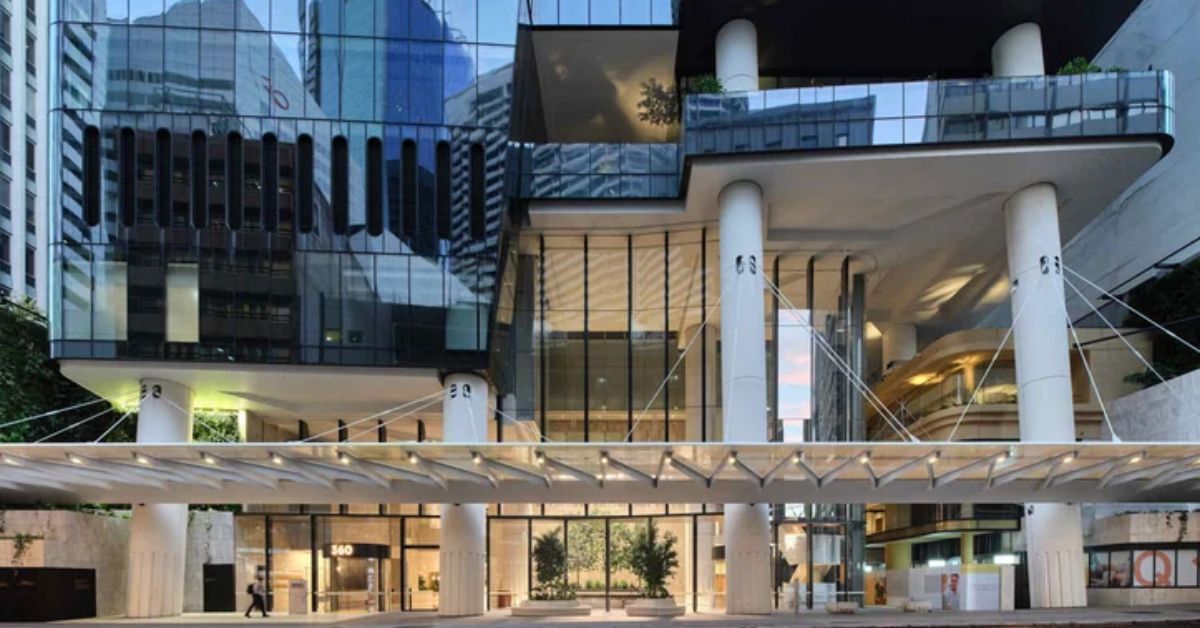
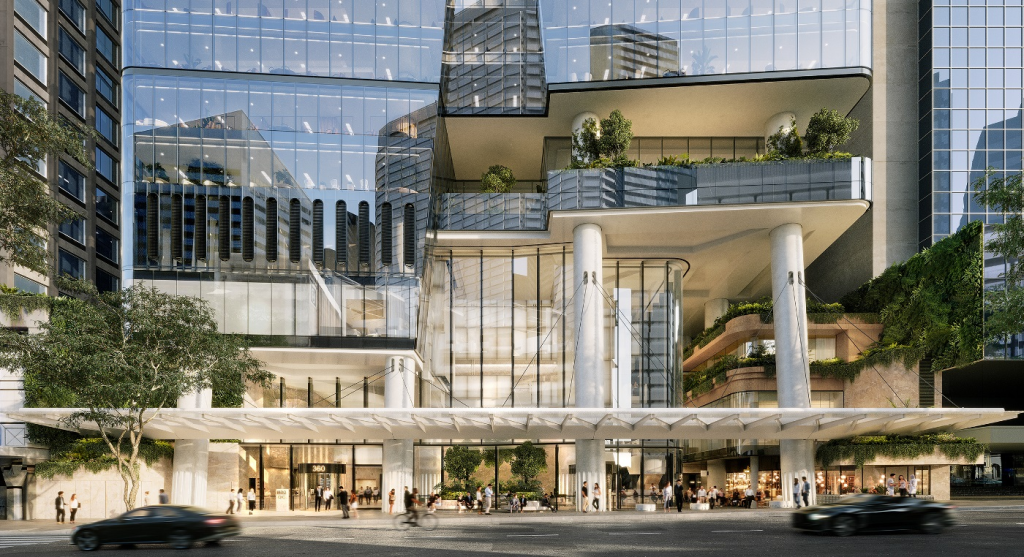
The $700 million 360 Queen Street tower has officially opened in Brisbane’s Golden Triangle, bringing a 33-storey premium office building to the CBD that will hold the title of the city’s newest commercial tower until Dexus’ North Tower at Waterfront Brisbane completes in late 2028, a gap of more than two and a half years.


The joint venture between Charter Hall and Investa, developed through the Charter Hall Prime Office Fund and Investa Commercial Property Fund, marked the official opening on 1 May 2026 after a build that ran approximately 12 months beyond its original schedule, navigated through a period Carmel Hourigan, Charter Hall’s Office CEO, describes simply as “one of the hardest periods working in office.”

“Going through the Covid pandemic, cyclones, flooding, a massive cost escalation and productivity issues was challenging for the joint venture partners,” Hourigan said.

The building is 95 per cent pre-committed and currently half full, with tenants progressively completing fit-outs and relocating across the coming months.

From a 40-storey plan to a 33-storey building

The tower that opened bears only a partial resemblance to what was first proposed. The original concept was a 40-storey building, and scaling it back to 33 storeys was, by Investa CEO Pete Menegazzo’s own account, not a smooth internal process.

Photo Credit: 360 Queen Street

“When decisions were made we were just coming out of Covid and so there were still a lot of questions about what was going on in the office market in the longer term and higher levels for precommitments were a risk,” Menegazzo said. “It was a healthy debate we needed to have.”

The decision proved well-calibrated. By the time the building reached completion, the Brisbane office market had moved firmly in its favour, with the newest tenants paying a net effective rent approximately 40 per cent higher than HopgoodGanim Lawyers and BDO, who both signed in early 2022 as the first tenants committed to the building.

Photo Credit: 360 Queen Street

Hourigan acknowledged the early commitment to those businesses: “The early birds certainly got the worm.”

Inside 360 Queen Street

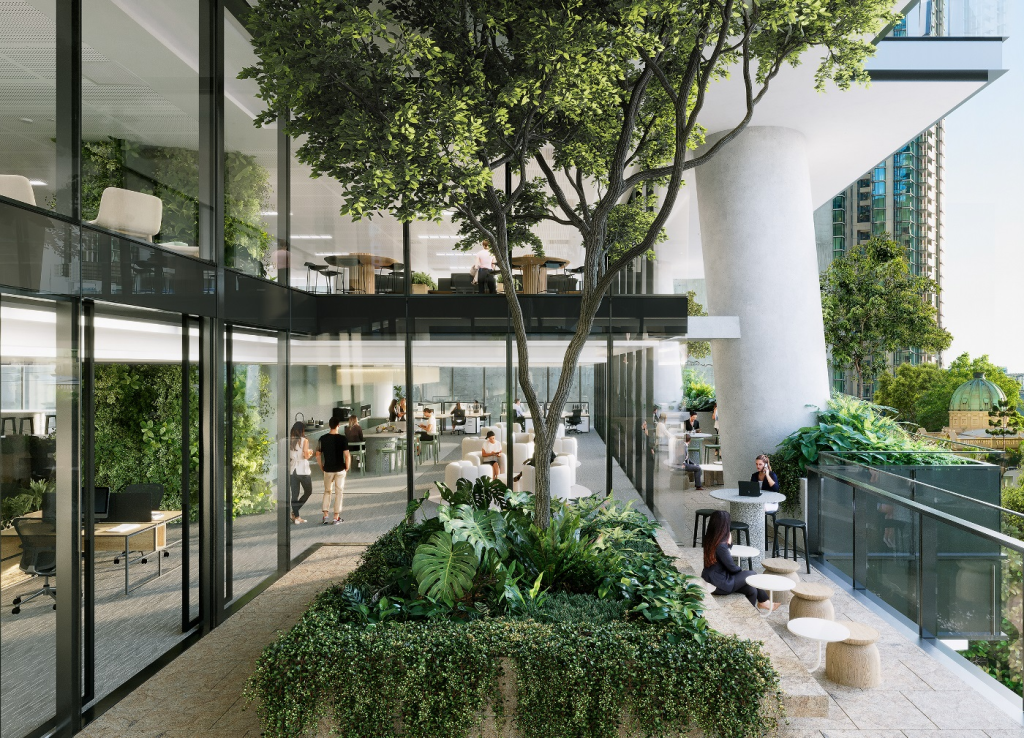
Designed by Blight Rayner Architecture and built by Hutchinson Builders, 360 Queen Street delivers premium office floors alongside a suite of amenities built around the direction that workplace design has been moving.

Photo Credit: 360 Queen Street

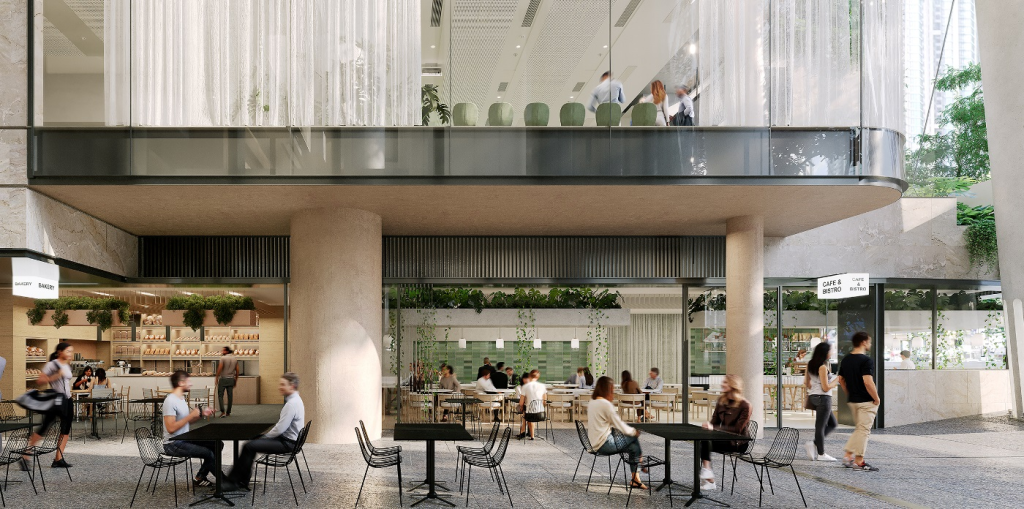
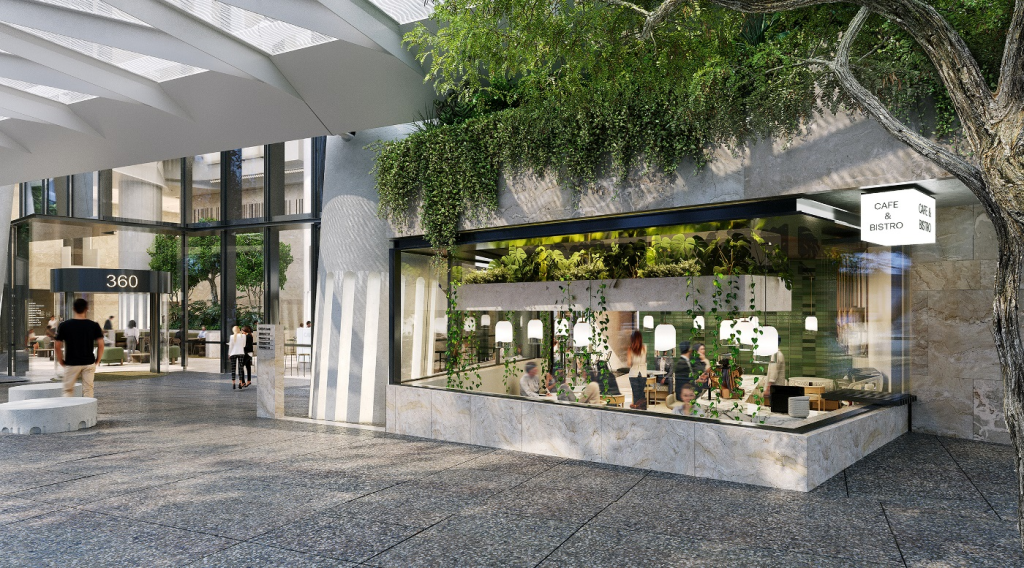
A dedicated wellness centre, a multi-functional conference and business hub, a curated retail laneway, cafes and an activated ground plane bring a mix of uses to the building that reflects the contemporary expectation that premium offices need to be destinations rather than simply places to sit at a desk.

Photo Credit: 360 Queen Street

Positioned within the Golden Triangle, the 360 Queen Street tower sits right on the CBD’s northern gate, putting both Fortitude Valley and the major law and finance hubs within arm’s reach. 

The joint venture intends to hold the asset long-term.

“I think we’ll just enjoy it,” Hourigan said.

Brisbane’s premium pipeline is thin from here

The significance of 360 Queen Street for Brisbane’s office market extends beyond the building itself. With its completion, Brisbane effectively exits its current pipeline of premium office supply for more than two years.

The next major addition will be Dexus’ North Tower, the taller of the two towers in the $2.5 billion Waterfront Brisbane development on the northern edge of the CBD, which is due for completion at the end of 2028.

For tenants seeking large-floor-plate premium space in Brisbane between now and late 2028, the choices are effectively fixed. That supply constraint, combined with the continued migration of tenants from older-stock buildings to premium assets, underpins the rental growth trajectory that has already made 360 Queen Street’s newest leases substantially more expensive than its founding ones.

For leasing enquiries at 360 Queen Street, click here.


Published 7-May-2026