
High-Rise Apartment Proposal Lodged For Former Bread Factory In Fortitude Valley

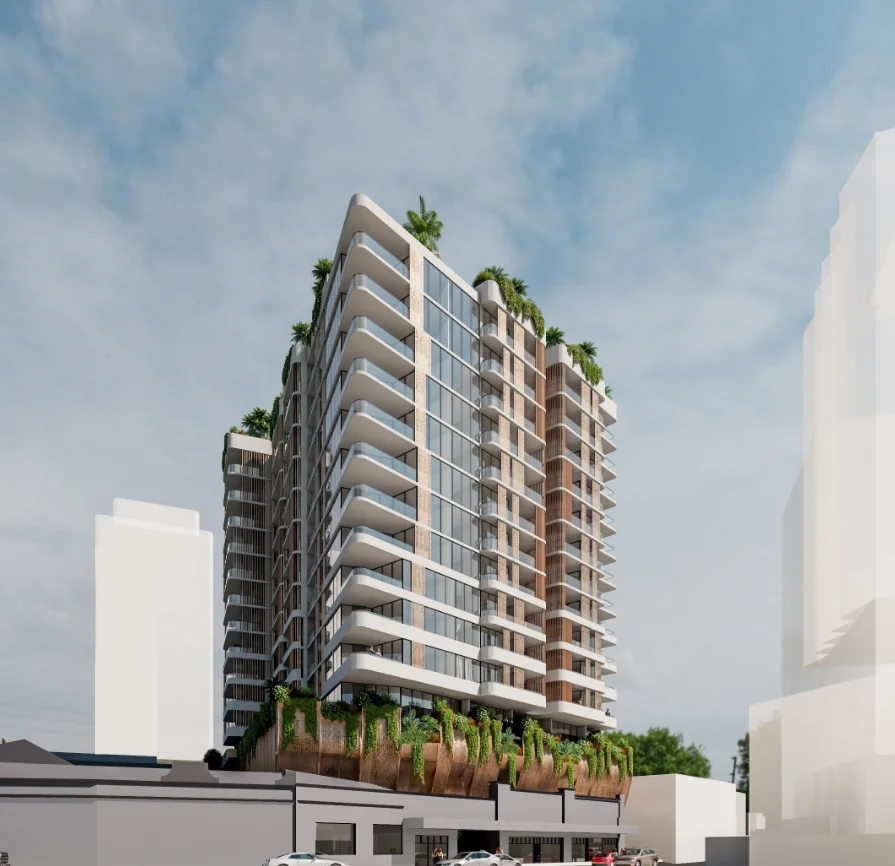
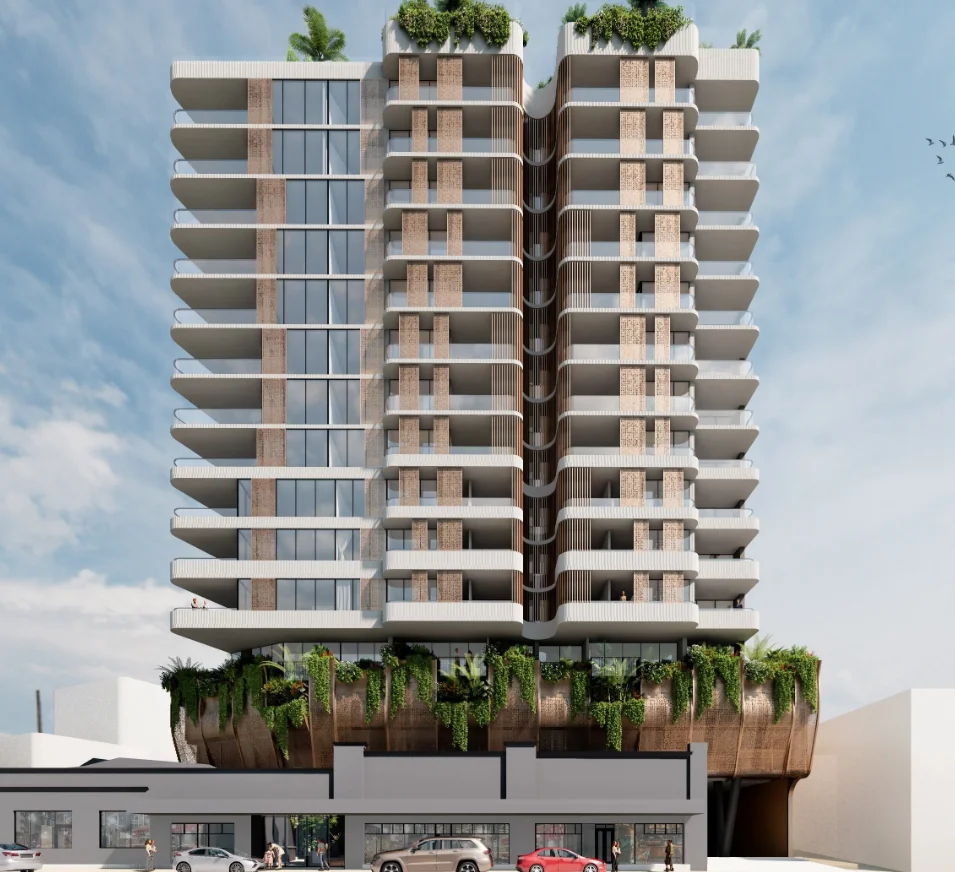
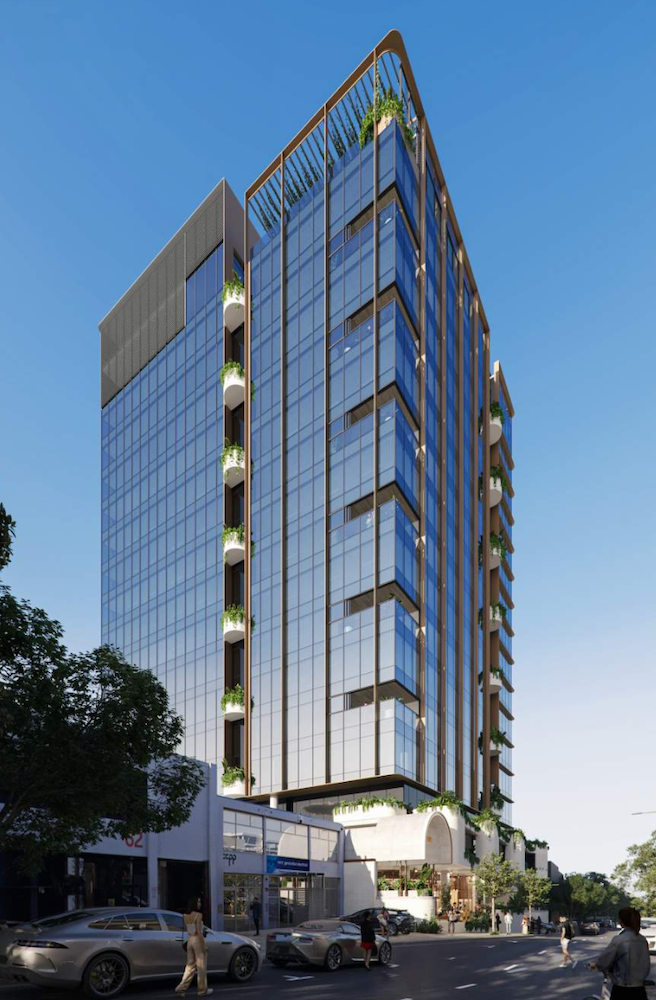
A revised development application has been lodged for a high-rise apartment building at the heritage-listed former bread factory site in Fortitude Valley.


Application Details For Warry Street Site

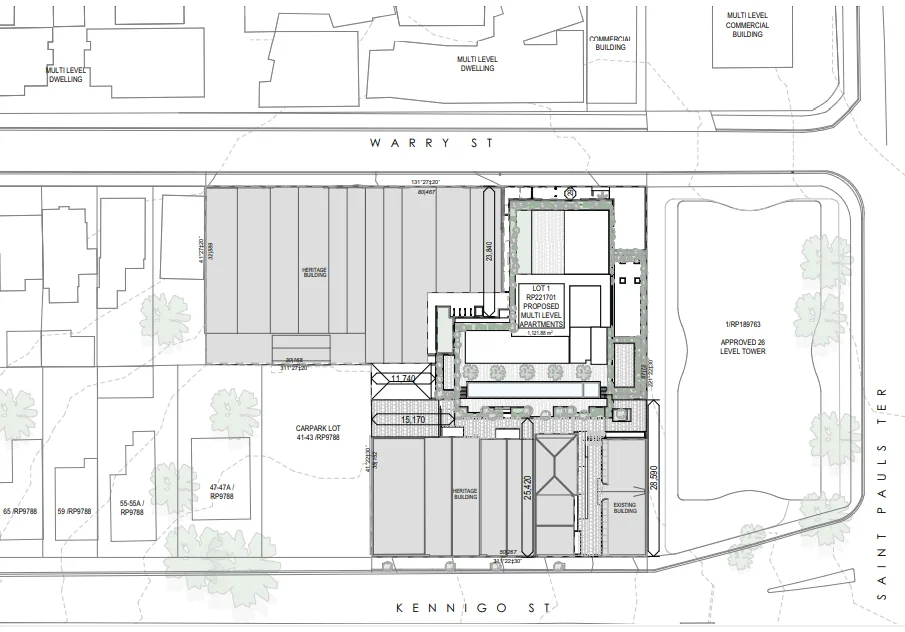
The proposal relates to 36 Warry Street within the complex known as The Baker’s Grounds. An associated property at 39 Kennigo Street is also listed.

The development application, numbered A006963038, was submitted on 17 February 2026 and is recorded as in progress. It seeks approval to carry out building work and a material change of use, with the assessment listed at code level. RG Property Pty Ltd is named as the primary applicant, with Urbis Pty Ltd identified as consultant.

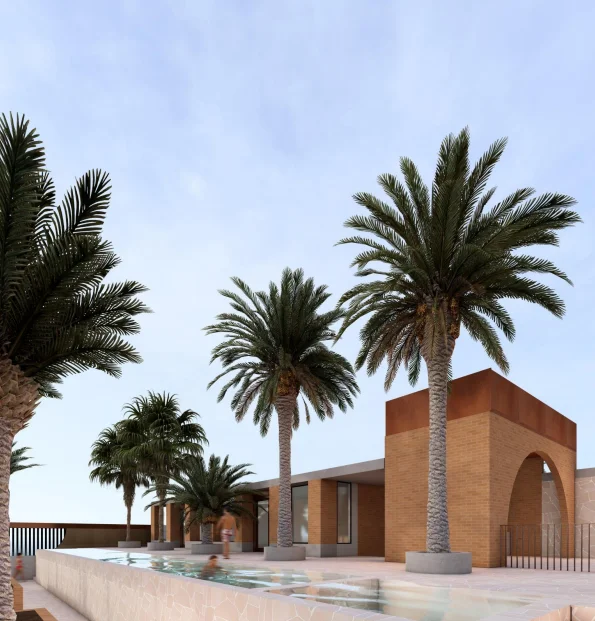
apartment proposal
Photo Credit: DA/A006963038

Background Of The Heritage Complex

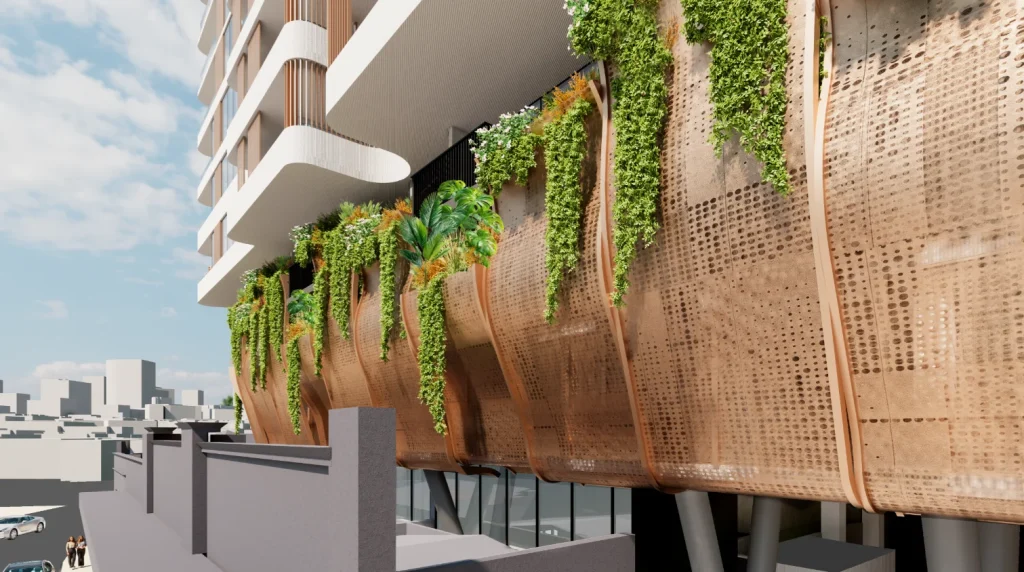
The brick complex was originally constructed in 1916 as Keating’s Bread Factory. Bread production ceased around the end of World War II.

Parts of the former ovens and stables used for horse deliveries remain on site. The property was listed as a local heritage place in 2004. The site sits between Warry Street and Kennigo Street, about 250 metres from Victoria Park. It is currently used largely as office space under the name The Baker’s Grounds.

Fortitude Valley redevelopment
Photo Credit: DA/A006963038

Revised Tower Plans In Fortitude Valley

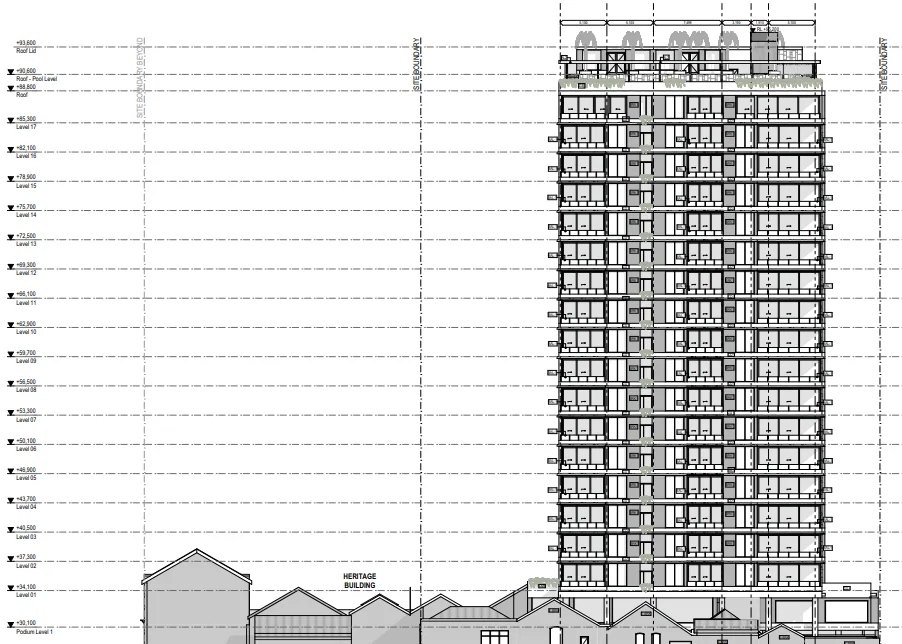
Updated plans describe a residential tower containing 100 apartments. The building height has been reported in two different ways, with one account describing 17 storeys and another referring to 20 storeys.

The revised proposal follows an earlier 15-storey scheme approved in December 2024, which was reported as allowing 111 units. The updated plan reduces the residential yield to 100 apartments. Design documentation for the revised proposal has been prepared by DAH Architecture.

heritage redevelopment
Photo Credit: DA/A006963038

Planning Status And Next Steps


Process milestones include the commencement of the confirmation period on 27 February 2026 and a properly made date of 2 March 2026. A decision notice date is not yet recorded. No construction start date has been confirmed, and existing tenancies continue to operate at the Fortitude Valley site while the application remains under assessment.

Published 3-Mar-2026

Behind Queensland’s Growth: The Infrastructure Race to Keep the Lights On

Queensland is building at speed. New estates are opening, infill projects are moving through approvals and cranes continue to reshape inner-city skylines.

But not every new home can simply be switched on.

Behind the construction surge is a quieter pressure point that directly affects housing supply: access to electricity and water. Without confirmed utility connections, dwellings cannot be completed, settled or occupied — regardless of demand.

According to Energy Queensland Annual Report 2024–25, more than 55,000 applications for new electricity connections were lodged in a single financial year. While most are delivered through existing infrastructure, around 12 per cent require major network upgrades — new transformers, substations or power lines — adding time and cost to projects already under pressure.


Why Connections Matter to Buyers and Developers

For developers, network augmentation can shift feasibility calculations. Extended connection timelines may affect staging, holding costs and settlement schedules. For smaller builders and infill projects, uncertainty around capacity can complicate construction programs and financing.

In a market grappling with housing shortages and strong subdivision activity, those delays ripple outward. If a project cannot secure timely utility access, new supply is effectively paused — even if planning approvals are in place and buyers are ready.

For purchasers, the implications are less visible but no less significant. Delayed settlements, extended build times and rising infrastructure costs ultimately feed into pricing and availability.

Compounding Pressures: Labour and Supply Chains

The challenge is not purely technical. Queensland is simultaneously managing workforce shortages across engineering, electrical and construction trades, while preparing for major infrastructure commitments in the lead-up to the 2032 Olympic and Paralympic Games.

Global supply chain disruptions add further complexity. Industry reporting has highlighted extended manufacturing lead times for large power transformers, with some equipment taking years to produce and deliver. Projects requiring network upgrades can therefore face materially longer timelines than standard connections.


Industry Response and Market Implications

Utilities have introduced improved mapping tools to help developers identify available network capacity earlier in the planning phase, alongside efforts to reduce application backlogs and streamline approvals.

Industry groups are increasingly focused on early collaboration between developers, planners and network operators to identify potential bottlenecks before projects reach construction.

The issue will be examined at the upcoming Pipes and Wires: Connecting Queensland’s Utilities event hosted by the Property Council of Australia on 25 March in Eagle Street, where infrastructure capacity and housing delivery will be central themes.

While power connections rarely attract the attention given to towers or transport corridors, they sit at the core of housing supply. Without reliable electricity and water, homes cannot settle, tenants cannot move in and new communities cannot function.

In a market defined by undersupply and population growth, Queensland’s property pipeline depends not only on approvals and construction — but on whether the lights can come on.

Published 13-Feb-2026

How a New Office Tower Could Change the Daily Life of James Street

The approval of a 16-storey office tower on Robertson Street is likely to have impacts that extend well beyond the building site itself, reshaping how people move through and use one of Brisbane’s most tightly held inner-city precincts.


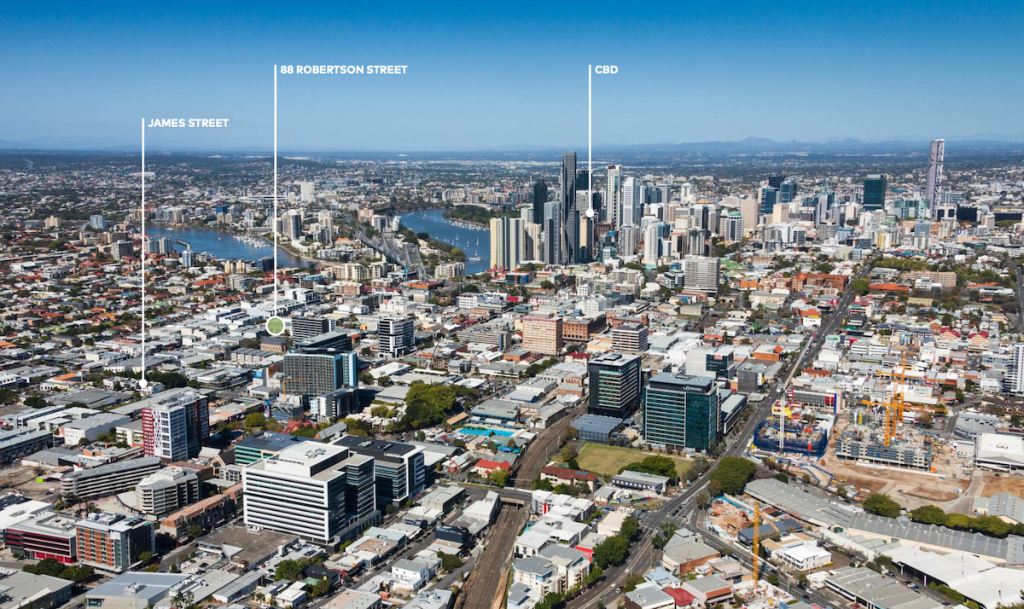
The $300 million project at 88 Robertson Street (DA A006677589) in December 2025 sits on a former industrial block in Fortitude Valley, a short walk from James Street’s retail strip and near Howard Smith Wharves. While the development adds new commercial space, urban planners say its greater significance lies in how it reinforces the precinct’s shift from a retail-only destination to a mixed-use neighbourhood.

Unlike traditional CBD office towers that empty after hours, the building is designed to bring a steady weekday population into the area, supporting cafés, retailers and hospitality venues beyond the weekend peak. Ground-level shops and a café-focused laneway are intended to link directly into the surrounding streets, potentially increasing foot traffic along quieter edges of the precinct.

The project also includes public-facing elements not typically associated with office developments, including a rooftop restaurant and event space and landscaped areas integrated throughout the building. These features reflect a broader planning trend in Brisbane, where new commercial buildings are increasingly expected to contribute to street life rather than operate as closed corporate environments.

Photo Credit: DA A006677589

For nearby residents and businesses, the development could help stabilise local trade during the working week, particularly as office attendance across Brisbane continues to recover. Industry data shows weekday office use is approaching pre-pandemic levels, prompting renewed interest in inner-city locations that offer walkability, dining and public transport access.

The site is located around 650 metres from the Valley Metro station and sits between established lifestyle hubs, positioning it as part of a growing corridor connecting the CBD to Fortitude Valley’s eastern edge. Urban designers involved in the project say extensive planting and shaded areas are intended to reduce heat and soften the building’s presence at street level, a key concern for residents in high-density neighbourhoods.

Construction is expected to begin in mid-2026, with completion forecast for mid-2028. While the building will introduce additional height and density, its approval signals continued confidence in James Street as a place where people don’t just shop or dine, but increasingly work, meet and spend large parts of their day.

As Brisbane continues to grow, developments like 88 Robertson highlight an ongoing shift in how inner-city areas are being planned — not as single-purpose precincts, but as layered neighbourhoods where work, lifestyle and community activity increasingly overlap.


Published 5-Jan-2025

Nature-Inspired Tower Proposed for Fortitude Valley

A prime location in Fortitude Valley could soon host a six-storey commercial tower featuring a rooftop restaurant and extensive subtropical landscaping.


A New Vision for James Street

Fortitude Valley
Photo Credit: DA A006899122

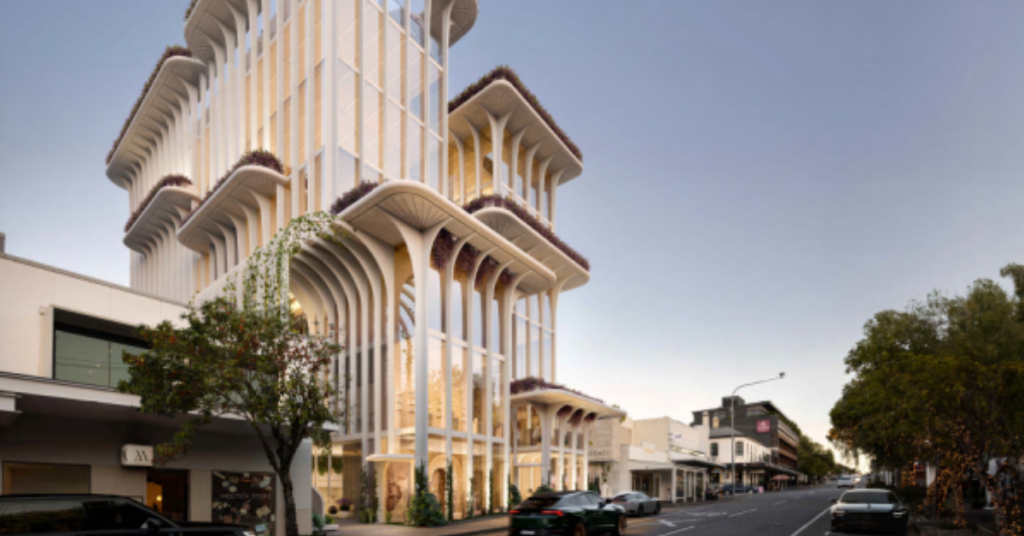
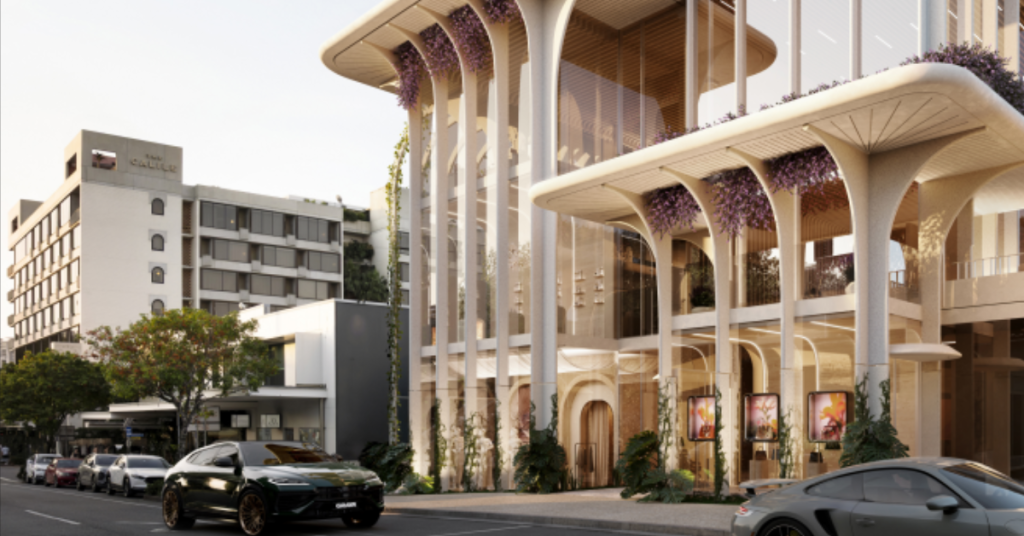
The application for the site at 54–56 James Street seeks to create a landmark building between The Calile Hotel and the upcoming James Place retail hub. Designed by Koichi Takada Architects, the plan outlines a mixed-use tower that combines office space, ground-floor shops, and a rooftop restaurant. Planners at Property Projects Australia indicated that the project aims to serve as a major lifestyle destination. 

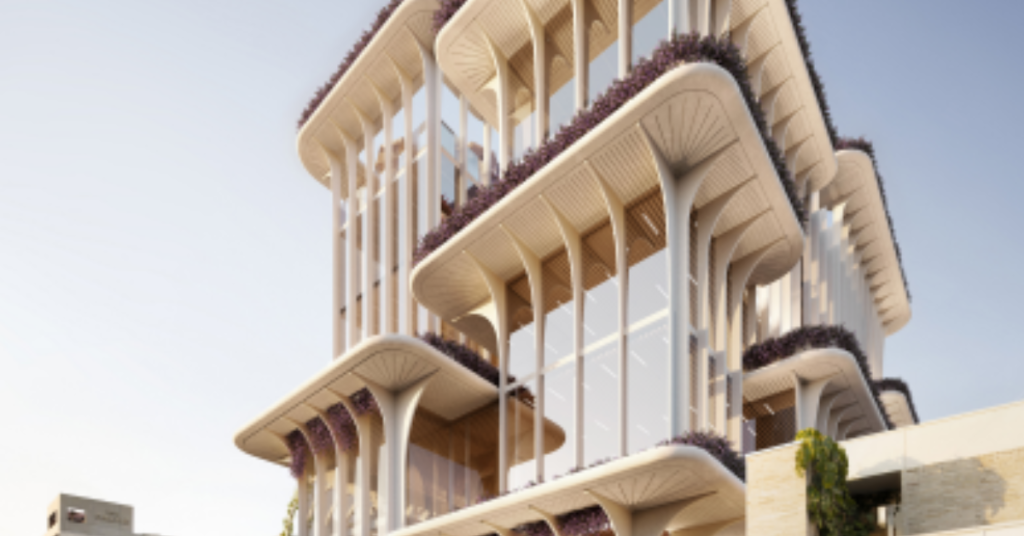
They described the architectural concept as a series of stacked volumes wrapped in fins and crowned with vegetation, intended to give the impression of greenery rising directly from the streetscape.

Focus on Nature and Design

Fortitude Valley
Photo Credit: DA A006899122

Landscaping plays a central role in the proposed design, with greenery covering nearly 35 per cent of the total site area. The plan includes lush subtropical planting that starts at the entry laneway and continues up the building’s facade. The design features terraces with shrubs and cascading plants that spill over the edges, leading up to a rooftop garden. 

This upper level is set to include a large feature tree and a dining area, offering a new social spot for the community. The goal is to draw the local subtropical environment into the built form, creating a seamless connection between nature and the urban setting.


Building Specifications and Access

Fortitude Valley
Photo Credit: DA A006899122

The development proposes a total gross floor area of 3,740 square metres on a 1,241 square metre site. To support the commercial and retail activities, the building will include two basement levels accommodating 30 car parking spaces. It also prioritises active transport with facilities for 22 bicycles, split between employee and visitor use. 

Vehicle access is planned via an easement from Arthur Street to minimise disruption on the main strip. Planners noted that the development is designed to integrate into the existing fabric of the neighbourhood, contributing to the ongoing revitalisation of the area by mixing professional, commercial, and dining experiences in one location.

Published Date 26-November-2025

Brisbane City Residents Push Back on Pavilion Overhaul

Brisbane City’s proposed riverfront redevelopment has raised alarms among traffic experts and nearby residents, who warn the project could create congestion, impact privacy, and disrupt the character of the area with oversized towers built too close to homes.


A Development Under Scrutiny

Led by Dexus Funds Management, the project (DA A006697510)  seeks to modify an already-approved development near Mary and Felix streets. Key changes include increasing the gross floor area by 580 square metres, boosting car parking to 226 spaces, and reworking access and landscaping around Naldham House and Waterfront Place.

The design introduces new dining and retail areas while expanding outdoor seating and walkways. However, residents and professionals say the proposed form may outweigh the benefits, especially given the site’s location alongside Riparian Plaza and Brisbane Riverwalk.

Traffic and Safety Questions

Traffic consultant Bryce Trevilyan reviewed the project’s traffic modelling and found it didn’t reflect real-world conditions at key intersections. He said the SIDRA modelling used by Dexus underestimated congestion, especially during peak times, and failed to account for how traffic currently exits Riparian Plaza.

Photo Credit: DA A006697510

He also noted that large service vehicles would need to cross multiple lanes to enter the site, posing safety risks for cyclists and pedestrians. Trevilyan called for access redesigns and more accurate traffic data to avoid future gridlock.

Community Concerns Over Privacy and Scale

Residents from Riparian Plaza voiced concern over tower spacing, claiming the Northern Tower sits too close to their building compared to other Dexus-owned towers. One submission criticised the use of leased riverfront land to meet site coverage rules, saying it went against the intent of city planning standards.

Privacy was another concern. Residents called for frosted glazing to start from Level 39 to protect their homes from views into new function rooms. Others flagged safety risks with proposed rooftop landscaping, warning that strong winds could turn debris into hazards.


A Call for Balanced Growth

While the community supports the idea of updating Eagle Street Pier and the surrounding area, they’ve urged Brisbane City Council to ensure the final project fits well within the existing neighbourhood. The development remains under review, with traffic and residential concerns now part of the planning conversation.

Published 2-April-2025