




QUT Eyes 2032 Role as Campuses Near Olympic Action


Queensland University of Technology (QUT) is aligning both its Gardens Point and Kelvin Grove campuses with Brisbane’s preparations for the 2032 Olympic and Paralympic Games, with a focus on campus upgrades, sport research and industry partnerships.


Campuses tied to growing Olympic precinct

QUT’s Kelvin Grove campus sits next to the planned Victoria Park Olympic stadium and National Aquatic Centre, placing it within what is expected to become a major sporting hub.

The university has indicated the wider Olympic and Paralympic precinct will link with the nearby Herston Health Precinct, forming a connected corridor for sport, health and biomedical research in Brisbane’s inner north.
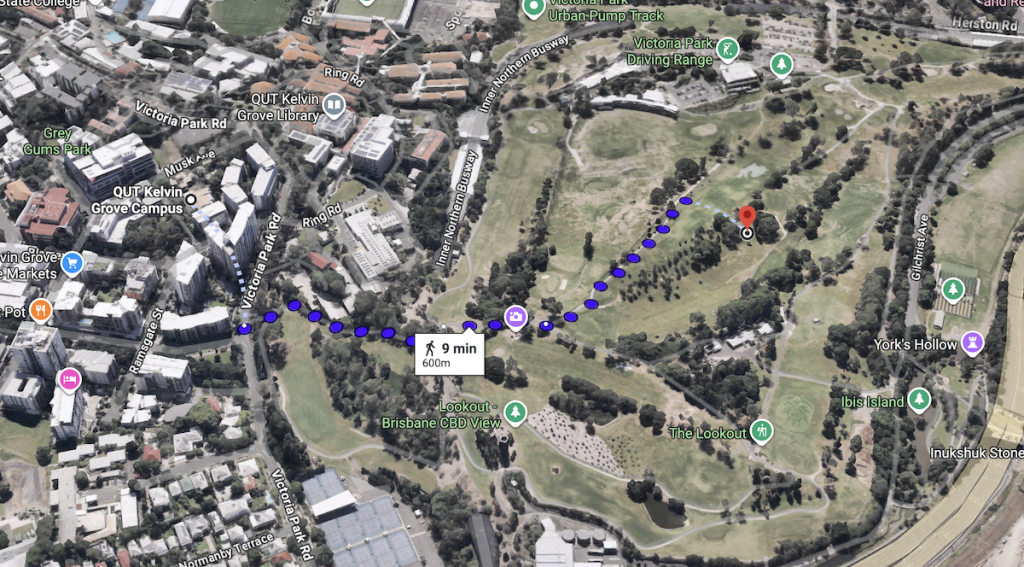
Photo Credit: Google Maps


At the same time, its Gardens Point campus near the CBD and Fortitude Valley is positioned within the broader inner-city zone expected to see increased activity as the Games approach.

Campus changes planned over next decade

QUT has outlined a long-term master plan covering both campuses, designed to respond to growth linked to Brisbane 2032 and wider city development. The plan includes improving accessibility and safety, making campuses easier to navigate, and creating more flexible teaching and learning spaces. It also focuses on making research and innovation work more visible, allowing stronger links between students, industry and the community.

These changes are being planned alongside major developments such as the Victoria Park redevelopment and the expansion of surrounding health and knowledge precincts.

Facilities support sport and health focus

QUT already has a wide range of sport and health facilities across its campuses, including gyms, aquatic centres, indoor and outdoor courts, a FIFA-accredited field with a running track, and dedicated spaces such as an esports arena and virtual sport studio.

The university also operates health clinics in areas including exercise physiology, podiatry, nutrition, optometry and psychology, which support both student learning and community services.

These facilities are expected to play a role in supporting athlete preparation, research and participation in the lead-up to 2032.

QUT Sport tech van
Photo Credit: QUT

Student programs and innovation projects underway

QUT is running several programs that link students directly to sport and event-related work. Through its Sport Innovation ProtoComp, students work with industry mentors to develop solutions for real-world challenges in sport, including digital tools and performance systems.

The university has also developed projects focused on inclusive sport, including a virtual reality sports wheelchair simulator and an adaptive handcycle trainer that allows wheelchair users to take part in virtual cycling programs.

These initiatives bring together design, engineering, health and technology, reflecting the range of skills needed for large events like the Olympics.

QUT student athletes
Photo Credit: QUT

Global sport conference brings focus to Brisbane

QUT has already brought international expertise to Brisbane through its Future of Sport Conference, held at the Gardens Point campus in March. The event brought together leaders in sport, technology and research to examine how data, innovation and partnerships are shaping the future of sport ahead of the 2032 Games.

The university has indicated the conference reflects its role in linking research with practical outcomes as Queensland prepares for a series of major sporting events. Discussions covered areas such as performance analytics, athlete wellbeing, emerging technologies and the long-term sustainability of sport.

Researchers involved highlighted how data is increasingly used to improve training, reduce injury risk and support athlete wellbeing, with these approaches expected to expand in the lead-up to 2032.


Published 13-April-2026

What QUT’s CBD Campus Could Look Like by 2050

A 25-year vision for Queensland University of Technology‘s riverside Gardens Point campus in Brisbane’s CBD proposes purpose-built science and engineering precincts, a new business and law faculty building co-located with a conference centre, hotel and student accommodation, and dramatically improved connections to the City Botanic Gardens and the Brisbane River.


Released in March, the 2026 to 2050 Campus Master Plan outlines the most ambitious redevelopment of the Gardens Point campus since QUT’s establishment as a university in 1989, positioning the site as a genuine city-shaping precinct in the lead-up to Brisbane 2032 and beyond.

Gardens Point campus sits in Brisbane’s city centre beside the river and the City Botanic Gardens. At its centre stands a heritage building dating to 1862. The masterplan leverages this riverside setting to better connect the campus with the surrounding city.

Science, Engineering and a Whole New Precinct for Business and Law

The most structurally significant proposals for Gardens Point involve the creation of dedicated, purpose-built precincts for science and engineering. These proposals consolidate and upgrade facilities currently spread across the campus, giving the university’s technical and research disciplines a more coherent physical home.

QUT's master plan
Photo Credit: QUT

The plan also delivers a new building for QUT’s business and law faculties, co-located with a conference centre, hotel and student accommodation in a mixed-use development that activates the campus beyond typical university hours. QUT’s architecture and built environment, business, engineering, information technology, law, mathematics and science students are based at Gardens Point, right in the centre of Brisbane, and the new building would serve as a landmark focal point for that community.

Getting the River Connection Right

One of the consistent themes to emerge from five years of community and staff engagement that shaped the masterplan was the sense that Gardens Point has never fully capitalised on its extraordinary location beside the Brisbane River and the City Botanic Gardens.

Photo Credit: QUT

The plan addresses this directly, proposing better pedestrian walkways to connect the campus to the gardens and the riverfront. These connections would allow students, staff and visitors to move fluidly between the academic precinct and some of Brisbane’s best public spaces, making Gardens Point feel less like an island and more like an extension of the city.

The Campus Master Plan positions the Gardens Point and Kelvin Grove campuses as vibrant, collaborative hubs that foster innovation, creativity and real-world impact, while ensuring QUT’s physical environment remains people-centred, flexible and future-focused.

A Plan Decades in the Making

QUT Vice-Chancellor Professor Margaret Sheil said the vision had been shaped by genuine consultation. “By aligning with Brisbane’s broader growth and development strategy, the Campus Master Plan ensures QUT remains accessible, future-ready and central to the city’s economic, social and cultural life,” she said.

The masterplan reflects five years of engagement with staff, students, industry partners and the broader community, highlighting recurring themes including the need for more collaborative spaces, better connections to the surrounding city and a campus environment that supports both academic excellence and student wellbeing.

The full document spans both the Gardens Point and Kelvin Grove campuses and provides a high-level framework to guide development, investment and renewal across the next decade and beyond. Expressions of interest for the first elements of the plan, focusing on student accommodation at Kelvin Grove, are already underway, signalling that the university is moving from vision to action.

The full Campus Master Plan is available to download at here. Enquiries can be directed to masterplan@qut.edu.au.


Published 13-April-2026

QUT Business School Reaccredited to Maintain Rare Triple Crown Status

QUT Business School, located at the Gardens Point Campus in Brisbane, has once again been recognised as one of the best in the world, maintaining the rare honour of Triple Crown accreditation following its latest AACSB re-accreditation.


Read: QUT’s Humanoid Robot ‘Gee’ Draws Attention at Gardens Point Campus


The renewal, combined with a recent EQUIS re-accreditation and a 2023 AMBA re-accreditation, confirms QUT’s place among a group so exclusive that fewer than one per cent of business schools globally hold all three credentials simultaneously.

Back in 2005, QUT became the first business school in Australia to achieve Triple Crown status, a distinction it has maintained ever since.

Professor Sharon Christensen, Executive Dean of the Faculty of Business and Law, said the AACSB renewal was a reflection of the school’s ongoing commitment to excellence across teaching, research, and industry engagement — not simply a periodic compliance exercise. She noted that the rigorous peer-review process examined the depth of academic capability, the quality of student experience, and the real-world impact of the school’s research and partnerships.

Photo credit: LinkedIn/QUT Business School

The AACSB, founded in 1916, is the world’s largest standard-setting body for business education, counting more than 1,900 member organisations across over 100 countries and territories. Yet membership alone is no guarantee of accreditation. Only six per cent of institutions worldwide that offer business degrees have cleared the bar. In Australia, just 24 institutions carry the credential.

For prospective students weighing up their options, that context matters. Professor Christensen noted that accreditation provides meaningful assurance that QUT’s degrees meet internationally recognised standards, that the curriculum is demanding, future-focused, and built around genuine connections to business, government, and community.

The Triple Crown itself carries weight precisely because it is hard to earn and harder still to keep. Each of the three accrediting bodies, AACSB, EQUIS, and AMBA, conducts its own independent review process, making the simultaneous achievement of all three particularly demanding. Professor Christensen noted that the school viewed Triple Crown accreditation not as a destination but as an ongoing discipline, one embedded in how QUT Business School teaches, researches, and engages on a continuing basis.


Read: QUT Researchers Help Uncover Strongest Evidence Yet of Life on Mars


For a school based in the heart of Brisbane, with campuses at Gardens Point and Kelvin Grove, the international recognition carries local significance. It signals to students and partners, locally and internationally, that QUT meets the highest global standards in business education.

With the re-accreditation secured, QUT Business School has reaffirmed its standing among the world’s leading institutions, a position it has held, and worked to maintain, for two decades.

Published 9-March-2026

Literary Magazine Meanjin Returns to Brisbane After 80 Years Under QUT Custodianship

Queensland University of Technology at Gardens Point will become the new custodian of Meanjin, bringing Australia’s second-oldest literary magazine back to Brisbane 80 years after it relocated to Melbourne.


The 85-year-old journal is heading back to the city that gave it its name. While Clem Christesen first pulled the inaugural Meanjin Papers together in suburban Greenslopes in 1940, bringing the masthead to QUT’s Gardens Point campus marks a massive symbolic return to the heart of the river city. After 80 years in Melbourne, the journal is finally back on the Turrbal and Yugara lands where its story began.

Melbourne University Press announced in September 2025 that Meanjin would close due to financial pressures, with editor Esther Anatolitis and deputy editor Eli McLean made redundant and the final issue released in December. The announcement triggered immediate backlash from Australia’s literary community, including authors Jennifer Mills, Anna Krien, Claire G Coleman and former editors Sophie Cunningham and Jonathan Green.

Gardens Point Campus to Host National Literary Icon

QUT Vice-Chancellor Professor Margaret Sheil said the university is delighted to bring Meanjin home to Meanjin/Magandjin, the Turrbal and Yugara word for the lands where Gardens Point campus now stands. Since its foundation, the literary magazine has been instrumental in shaping Australian literary and intellectual culture, providing a vital platform for critical discussion and a showcase for emerging writers.

Professor Margaret Sheil
Photo Credit: QUT

The university will appoint an editorial board to ensure the journal’s independence, values and standards are maintained, and will recruit an editor through a national competitive search. QUT will take time to thoughtfully re-establish the journal in Queensland and consider how to most effectively reinvigorate Meanjin while respecting its founding vision and literary legacy.

Complementing Creative Writing Programs

Professor of Creative Writing Kári Gíslason said QUT has a distinguished group of alumni writers who have gone on to become renowned Australian authors. The partnership affirms how creativity, literature and excellence in writing allow people to think deeply and connect ideas in imaginative ways to the world around them.

The journal will complement the focused, high-quality creative writing program within the QUT School of Creative Arts at Gardens Point. Meanjin’s move to QUT sends a message to students that this connection between creative excellence and intellectual engagement remains as true now as it ever was.

Literary magazine Meanjin
Photo Credit: QUT

Timeline for Revival Remains Open

Principal policy adviser John Byron, a published author and former executive director of the Australian Academy of the Humanities, said rehoming the journal will take considerable work and QUT will take the time to do it properly. The university is a long way off releasing the next issue, as it has no editor, production staff or editorial board yet, but will get there.

The transfer is already underway and work now begins in earnest. QUT understands the scale of the privilege it has been afforded and will take good care of Meanjin, Byron said.

Literary Community Response

Former Meanjin editor Jonathan Green said the news of the journal’s return was a delightful surprise and it is lovely to think the literary magazine will be journeying back to Brisbane where its adventure began. Academic Ben Eltham, a long-running contributor, called the return a victory for everyone who fought to save this vital masthead for the future of Australian literature.

The timing aligns with Queensland’s plans to elevate the creative economy, support local talent and showcase the state’s unique stories and culture to a global audience ahead of the Brisbane 2032 Olympic and Paralympic Games. Melbourne University Press Chair Warren Bebbington said QUT’s understanding of the journal’s legacy surpassed those of other expressions of interest received from organizations wanting to take over the publication.


Published 16-February-2026.