



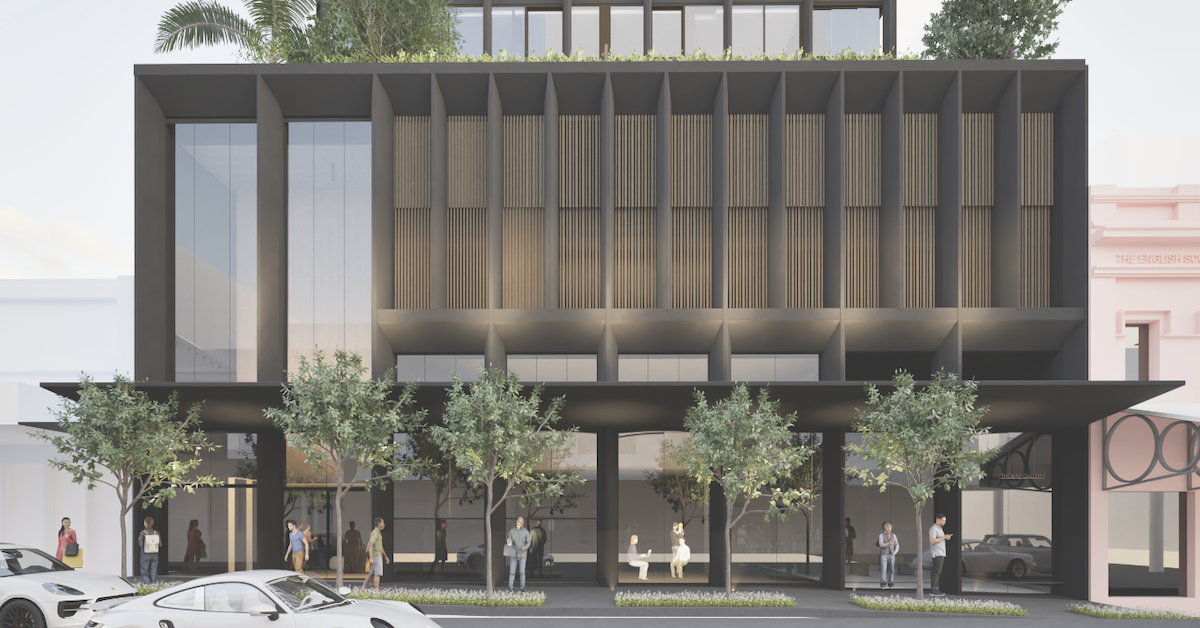
Long-Vacant Wickham Street Site Could Become 181-Home Tower

A long-vacant 2,206sqm block in central Fortitude Valley—currently used as a paid open-air car park and concert advertising venue—could soon be transformed into a 22-storey residential tower.


Developer W & R Property Pty Ltd has lodged a development application (DA A007062453) for 186 Wickham Street and 23 Ranwell Lane. Prepared by planning firm Urbis, the proposal replaces the car park with 181 apartments, ground-floor dining, podium parking, and extensive rooftop amenities.
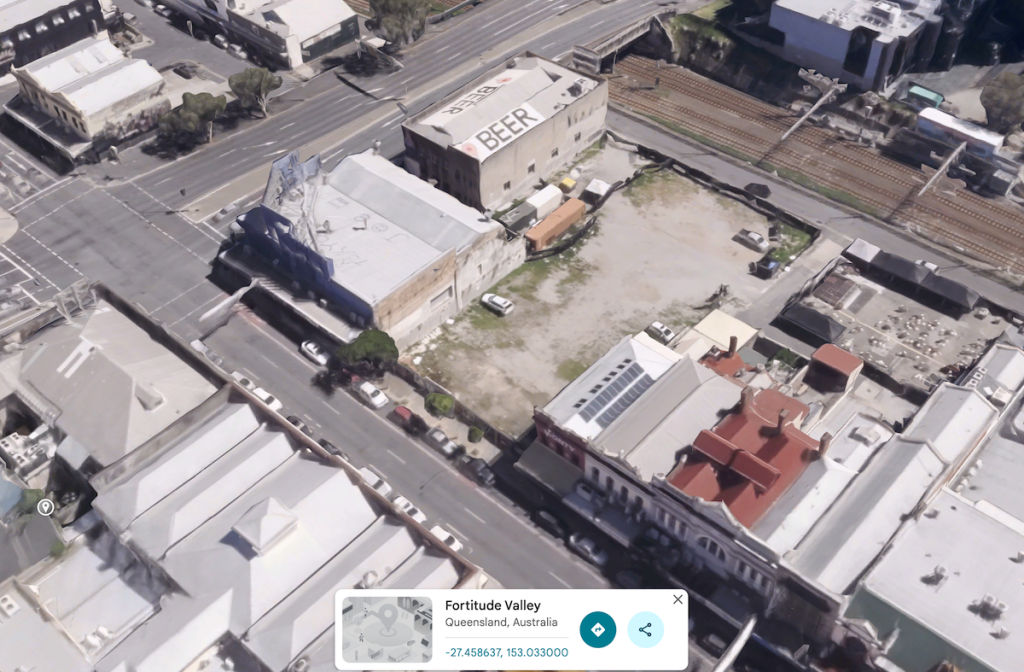
Photo Credit: Google Maps screengrab

Key Project Details

  • Residential Layout: 180 two-bedroom apartments and a single penthouse. Every unit features a private balcony or terrace ranging from 8.1sqm to 99.3sqm.
  • Street-Level Activation: A 247sqm food and drink tenancy facing Wickham Street, flanked by landscaped forecourts to boost pedestrian activity.
  • Parking & Access: 194 car spaces (186 residential, 8 visitor) housed within a screened podium, plus 228 bicycle spaces. Vehicle access is routed through Mead Lane and Ranwell Lane to avoid traffic conflicts on Wickham Street.
  • Rooftop Amenities: A 370sqm communal space featuring a swimming pool, gym, sauna, steam room, shared kitchen, outdoor lounges, and a rooftop bar.
  • Landscaping: About 458sqm of total greenery across the ground floor, podium, and rooftop to provide shade and soften the building’s visual impact.
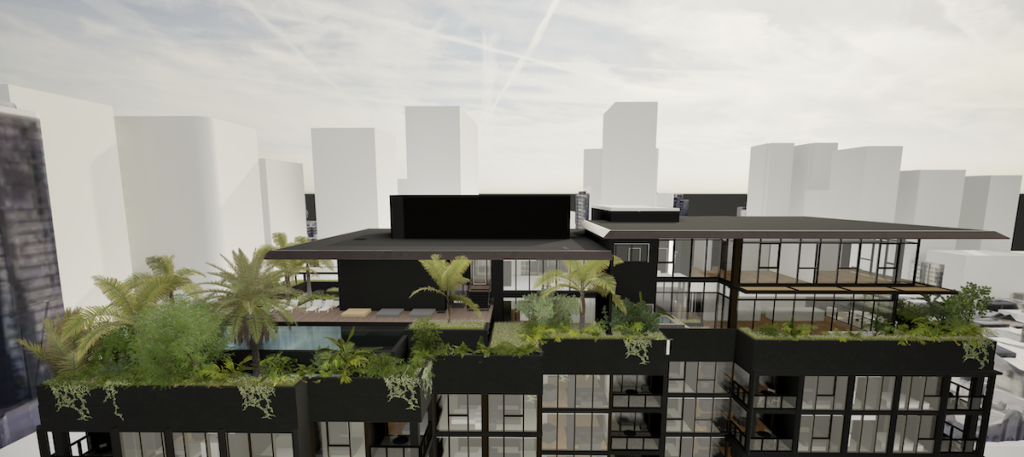
Photo Credit: DA A007062453/BCC

Site Constraints and Urban Context

Bounded by the railway corridor to the west and low-rise heritage buildings along Wickham Street, the site sits in a high-density entertainment hub near Fortitude Valley Station, Chinatown Mall, and the Soapbox Beer brewery.

The tower features site coverage of 92.8% at the podium level and 60% for the upper tower, with boundary setbacks ranging from 3m to 6.8m. Laneway access plans utilize Mead Lane via state consent (under a permanent road closure and volumetric lease with the Department of Natural Resources and Mines). While listed on Queensland’s Environmental Management Register, the site contains no significant vegetation.
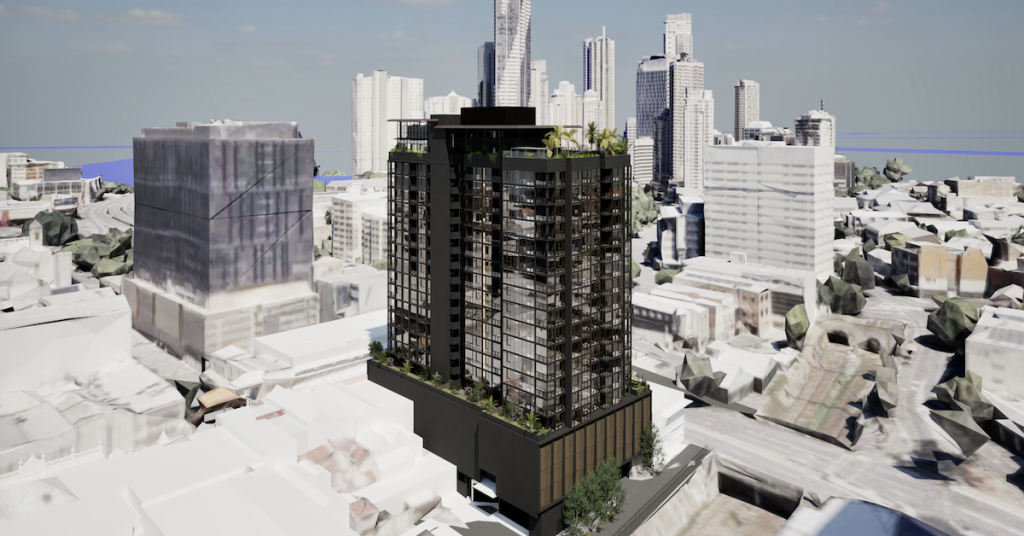
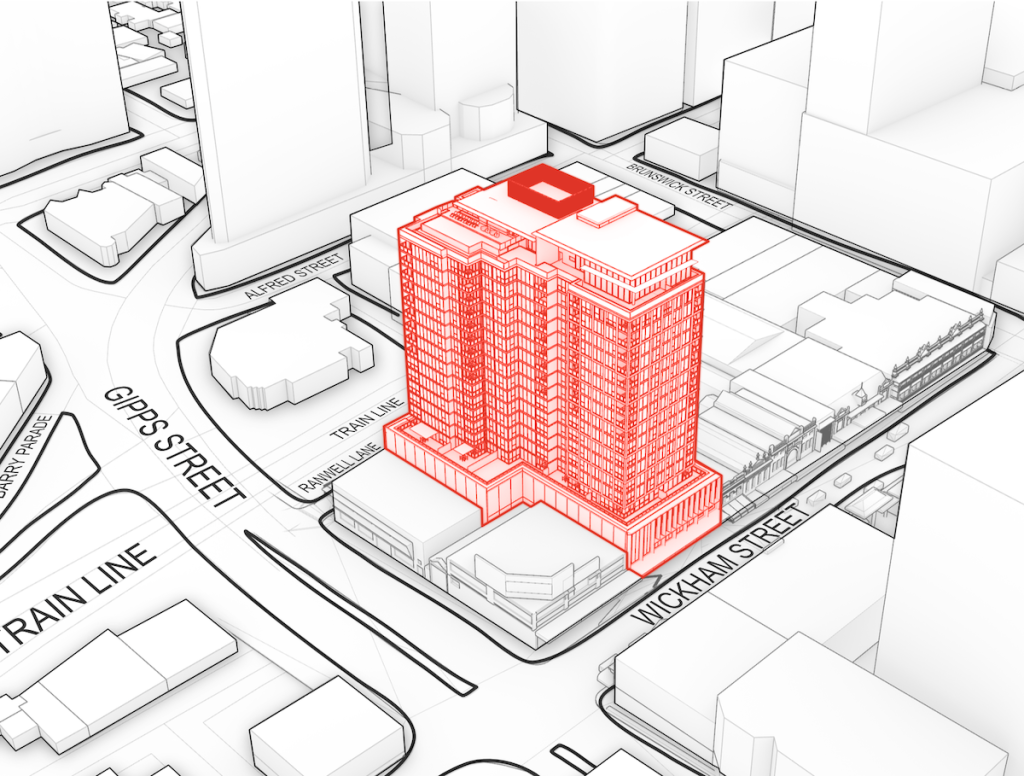
Photo Credit: DA A007062453/BCC

A traffic impact assessment estimates the project will generate 27 morning and 35 afternoon peak-hour vehicle trips, concluding it will have minimal impact on the local road network given the site’s close proximity to public transport and cycling routes.

A Second Attempt at Redevelopment

This is not the first major vision for the block. In 2023, Brisbane City Council approved plans for a 30-storey office tower and a five-storey commercial building on the site, but the project was never constructed.


The new residential proposal aligns with the Fortitude Valley Neighbourhood Plan and the suburb’s broader trend toward high-density housing. However, as the previous approval demonstrated, a council decision alone does not guarantee construction; the project must first navigate the assessment process and secure formal approval.

Published 20-July-2026

Fortitude Valley Faces Major Parking Cuts Under New Housing Rules

High-density developments in Fortitude Valley and Spring Hill will soon require significantly fewer car parks, following changes to mandatory parking requirements across key inner-city suburbs.


New Rules Aim to Cut Costs and Boost Housing

Starting in 2025, developers in 11 inner-city suburbs, including Fortitude Valley, will be required to provide only half the number of car spaces previously mandated for new apartment buildings. City officials have also flagged plans to extend similar changes to 15 additional suburbs. 

The decision, set to be finalised following state approval, is part of a broader strategy aimed at lowering construction costs to make housing more affordable.

Under the new rules, core areas like Fortitude Valley will require just one car space for every two one-bedroom units, a significant reduction from the current standard of one space per unit. Visitor parking requirements will also decrease, with only one visitor space needed per 20 dwellings, down from one per four dwellings. 

In surrounding “city frame” suburbs, parking minimums will be slightly reduced to 0.9 spaces for one-bedroom apartments, 1.1 spaces for two-bedroom units, and 1.3 spaces for larger dwellings.

Suburbs Affected by the New Parking Rules

Core Suburbs (Major Reductions)City Frame Suburbs (Slight Reductions)
Bowen HillsAlbion
Fortitude ValleyAuchenflower
Highgate HillBowen Hills
Kangaroo PointDutton Park
MiltonEast Brisbane
NewsteadHamilton
Spring HillHerston
South BrisbaneHighgate Hill
TeneriffeKangaroo Point
West EndMilton
WoolloongabbaNew Farm
Teneriffe
Toowong
West End
Woolloongabba

Fortitude Valley parking
Photo Credit: BCC

Community Concerns and Limited Consultation

While Council claims the changes will help cut housing costs, community feedback has been limited. Only 87 submissions were received during the public consultation phase, raising concerns about whether residents had sufficient opportunity to voice their opinions. 

Street parking scarcity in suburbs like Fortitude Valley and West End has already been a long-standing issue, with the reduced parking requirements expected to intensify the challenge.

Opposition figures have expressed cautious support, agreeing with efforts to reduce housing costs but questioning who will truly benefit from the savings. There are concerns that without clear mechanisms in place, cost reductions may not be passed on to homebuyers and renters but instead absorbed by developers.

Impact on Public Transport and Urban Living

The decision reflects a shift in urban planning priorities, with an assumption that car ownership in inner-city Brisbane is declining. 

According to census data, more than half of residents in affected suburbs own only one car, and many rely heavily on public transport. Urban planning experts argue that while reducing parking requirements can lower development costs, it also demands robust public transport and active transport infrastructure to accommodate changing mobility needs.


Critics highlight that the city must invest in improved public transport options to support the policy shift effectively. Without these enhancements, residents may face increased competition for already limited street parking, potentially affecting the livability of high-density areas.

Published 3-February-2025