


Brisbane CBD To Welcome The Red Dress, A Global Story Stitched By Hundreds Of Hands

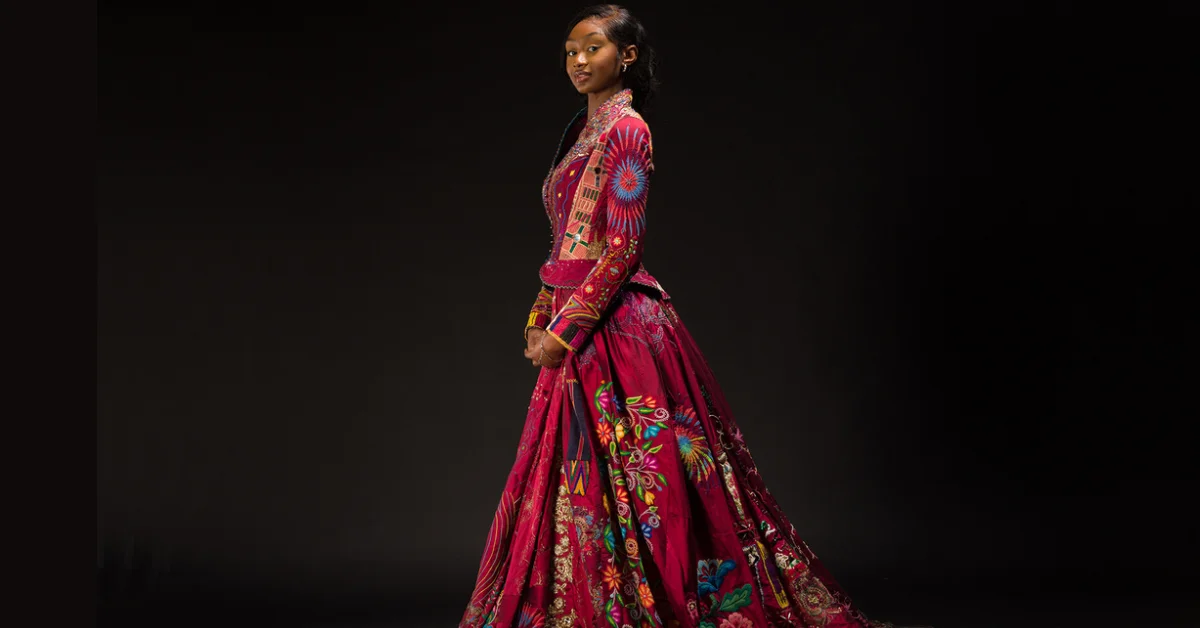
A burgundy silk dress stitched across continents will soon take its place inside Museum of Brisbane, carrying with it the work, memory and imagination of 380 embroiderers from 51 countries.


A Dress That Travelled Before It Was Complete

The Red Dress began as an idea by British artist Kirstie Macleod: a single garment that could give people, particularly women and communities facing vulnerability or poverty, a way to tell their stories through embroidery.

Over 14 years, from 2009 to 2023, pieces of the dress travelled around the world. They were passed between experienced textile artists, community groups, first-time embroiderers and people using stitch to express personal histories, cultural traditions and lived experiences.
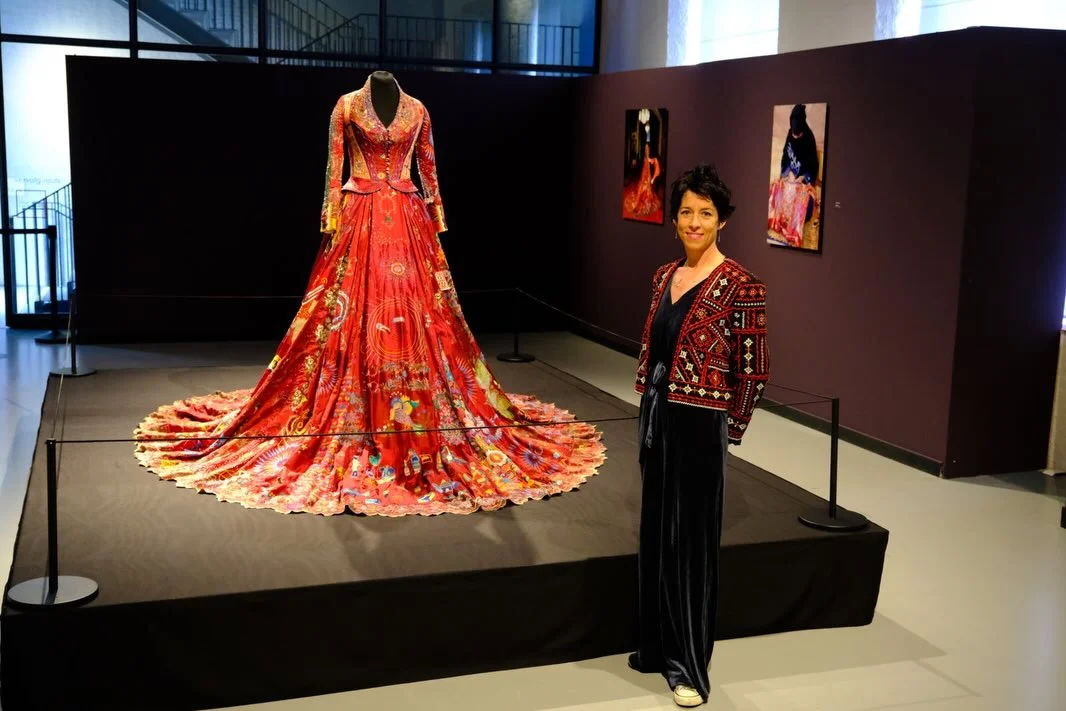
By the time the garment reached its final form, it had become far more than a dress. It had become a record of hundreds of hands working across distance, language and circumstance.

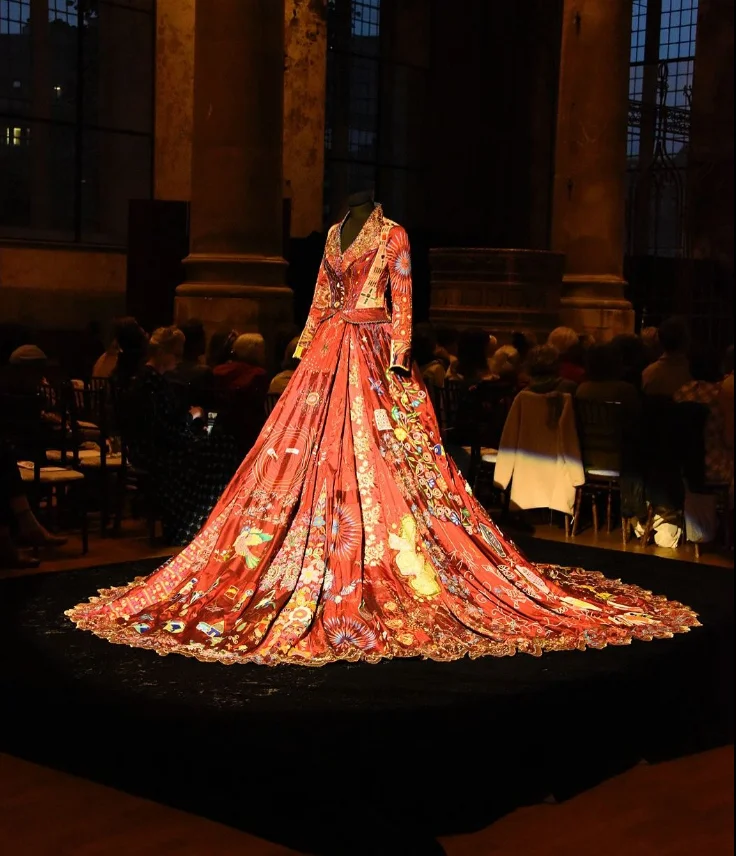
The completed work is constructed from 87 panels of burgundy silk dupion and weighs 6.8 kg. Across its surface are an estimated 1 to 1.5 billion stitches, forming a dense and intricate textile map of the people who helped create it.

The project now holds a Guinness World Record for the largest collaborative embroidery project.

The Red Dress Comes To Brisbane CBD

The Red Dress will be exhibited at Museum of Brisbane from 25 July to 13 September 2026, in the Fairfax Gallery. The exhibition will be free to enter and open daily from 10:00am to 5:00pm.

Its Brisbane CBD showing forms part of the dress’s first Australian tour, which also includes Warwick Art Gallery.

For Queensland audiences, the exhibition offers a chance to stand close to a work that is built on detail. The dress is not designed to be understood at a glance. Its meaning sits in the panels, in the threads, in the contrast between highly skilled embroidery and simple stitches used to carry difficult memories.

Its contributors include 367 women and girls, 11 men and boys, and two non-binary artists. Among them are refugees, asylum seekers, survivors of war, disadvantaged women and artisans from embroidery studios and community groups.

All 141 commissioned embroiderers were paid for their work and receive a share of ongoing exhibition fees and merchandise sales.

Brisbane’s Own Stitch In The Dress

The Australian contribution gives the global artwork a local connection. Created by 24 members of Brisbane’s Allthreads community, the panel captures elements of the Australian landscape, flora and fauna.

That Brisbane-made contribution sits alongside embroidery traditions and personal symbols from across the world, adding another layer to a garment already shaped by many places and experiences.

The dress also includes Lambani embroidery gathered by Macleod during travels in southern India in 2002. That experience of stitching alongside Lambani women, despite not sharing a common language, later helped inspire the project.
A Garment Built From Memory, Culture And Survival

The Red Dress was first intended to create dialogue around identity. Over time, it developed into a wider platform for self-expression, allowing contributors to record culture, memory, trauma, recovery and resilience through stitch.

Some embroiderers used techniques passed down through families, villages or communities. Others used simple stitches to express painful events or personal transformation. For some, embroidery was already a profession. For others, it became part of rebuilding a life, earning income or supporting a community.

Now complete, the dress continues to travel with the aim of reaching broad audiences, including people who may not usually have access to textile exhibitions.


At Museum of Brisbane, The Red Dress will bring hundreds of individual stories into one room. Its arrival in Brisbane CBD is not just an exhibition of a world record-holding artwork, but an invitation to look closely at how fabric, thread and time can hold lives from across the world.

Published 21-May-2026
Hidden Convict Secrets Found Under Brisbane CBD Streets

Did you know that people walk across the site of Brisbane’s once-feared penal colony every day — the very place where forced labour helped build the foundations of the city?


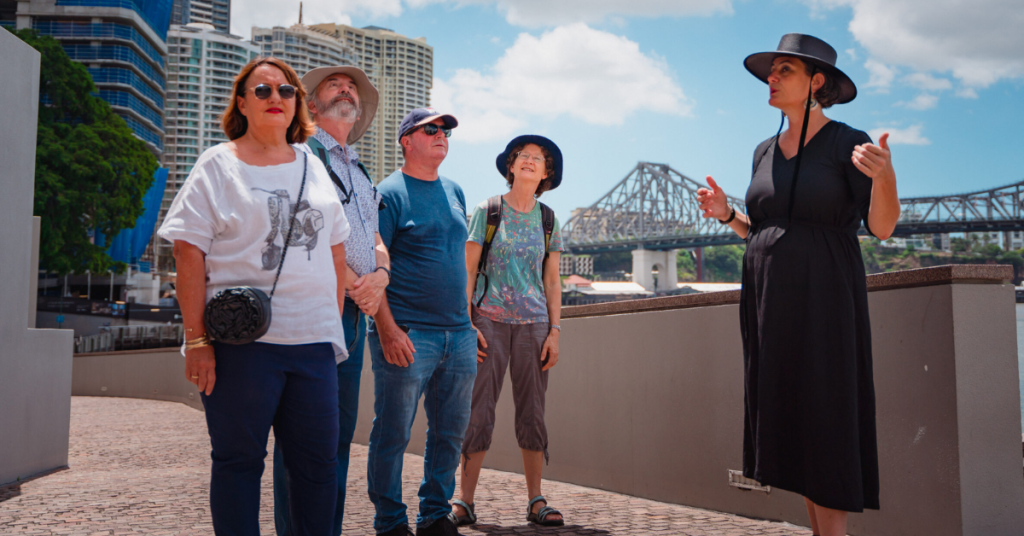
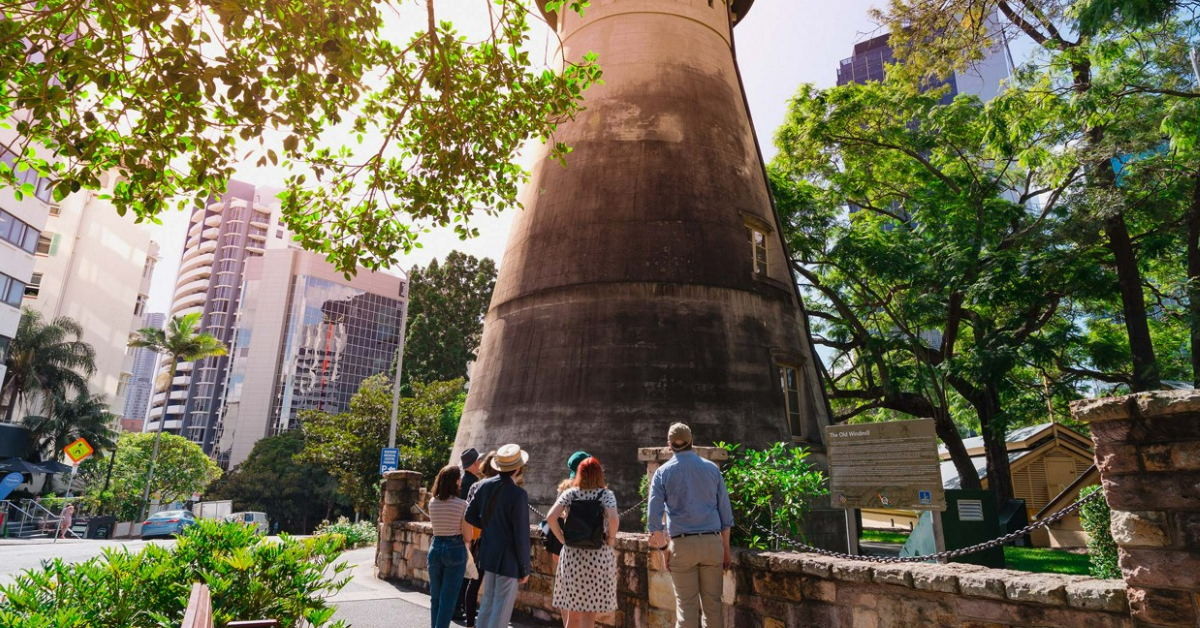
This and other interesting historical tidbits form part of a new 90-minute walking tour by the Museum of Brisbane, designed to show the public little known or hidden layers of history.

The guided experience focuses on the years between 1823 and 1842. During this time, the area changed from a remote prison camp for repeat offenders into the beginnings of a permanent town. 

The Architecture of Forced Labour

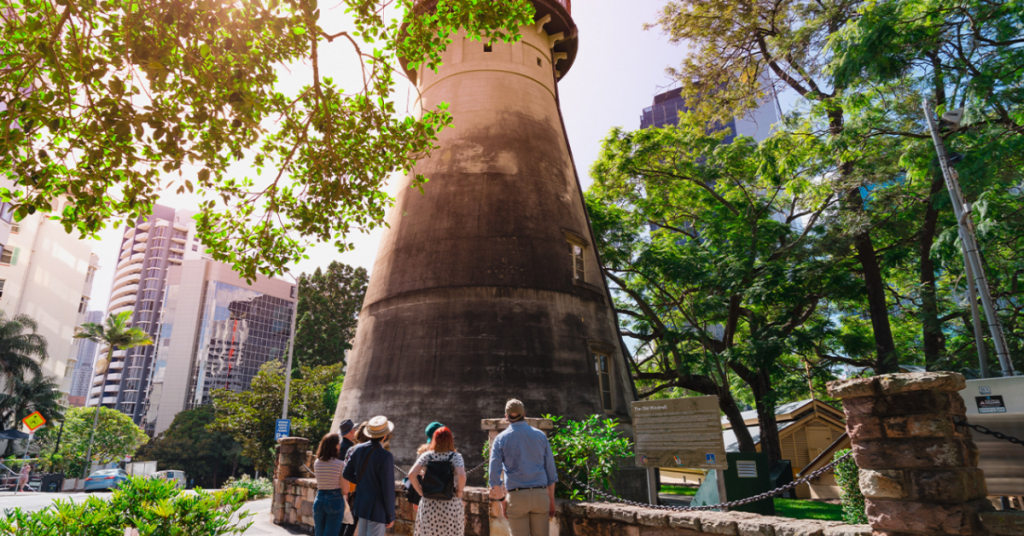
The walk is designed for people with average fitness levels who want to see the city from a different perspective. It starts at the Old Windmill Tower and travels through the city streets to finish at Queen’s Wharf.

Brisbane CBD
Photo Credit: Museum of Brisbane

The 1.75-km tour looks at how the city’s oldest buildings serve as physical reminders of the convict era. Many people walk past the Old Windmill Tower or the Commissariat Store without knowing they were built by hand using prisoner labour. 

The Commissariat Store is the second-oldest colonial building in the state, and it still stands as a reminder of how the settlement was managed. By looking at these stone structures, visitors can better understand the difficult living conditions and the heavy workload that defined daily life for those living under British authority in the early 1800s.

Intersects of Two Worlds

Brisbane CBD
Photo Credit: Museum of Brisbane

While the tour follows the physical path of the British colony, it also highlights the experiences of the First Peoples. The settlement of the Brisbane CBD did not happen in a vacuum, and the arrival of the penal colony led to the Frontier Wars. Guides explain how the local Indigenous groups responded to the sudden changes in their Country. 

By looking at these two different experiences side-by-side, the tour gives a more complete picture of the complex events that occurred as the township grew. Landmarks like Miller Park and the Petrie Tableau help tell these intersecting stories.


A New Way to See the City

Museum of Brisbane officials believe that moving at a slower pace allows residents to see small details that are usually missed in the rush of daily life.

CEO Zoe Graham noted that this walk builds on a series of themed tours that have been popular since 2020. She stated that the goal is to help people notice the deeper cultural history that exists right at street level.

Lord Mayor Adrian Schrinner also mentioned that these tours are an important way for the community to connect with the events and people that helped turn Brisbane into a major capital city.

Published Date 12-May-2026

Brisbane Artist Renee Kire Brings Colour and Movement to Museum of Brisbane Entryway

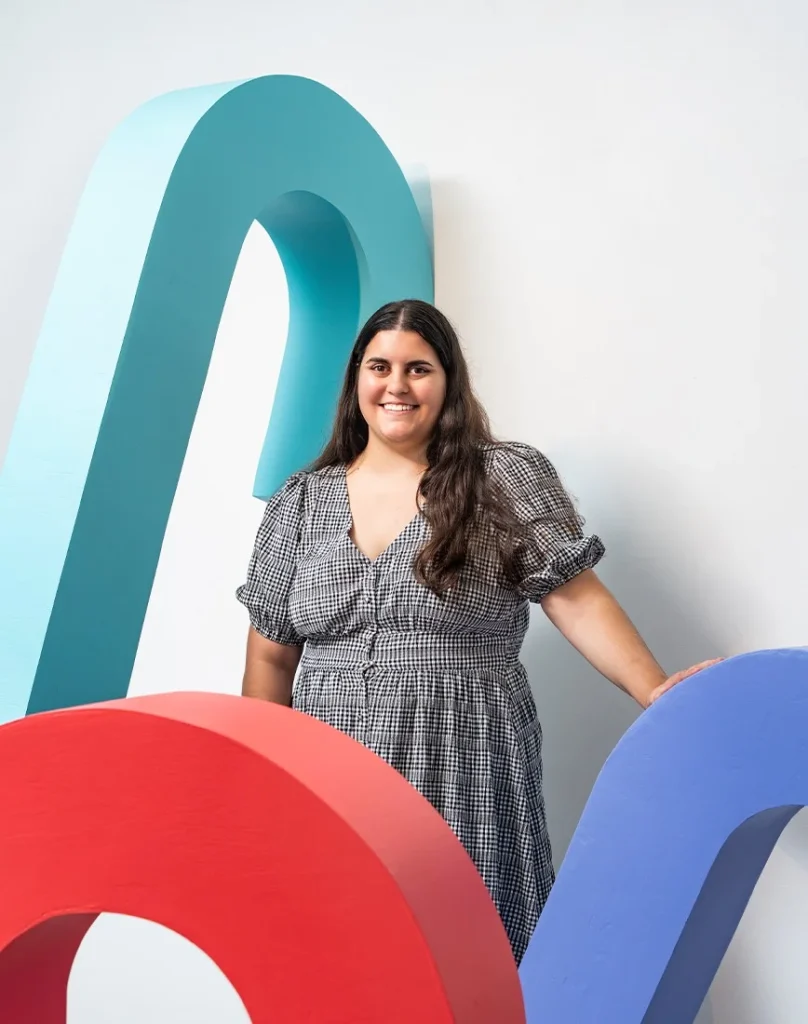
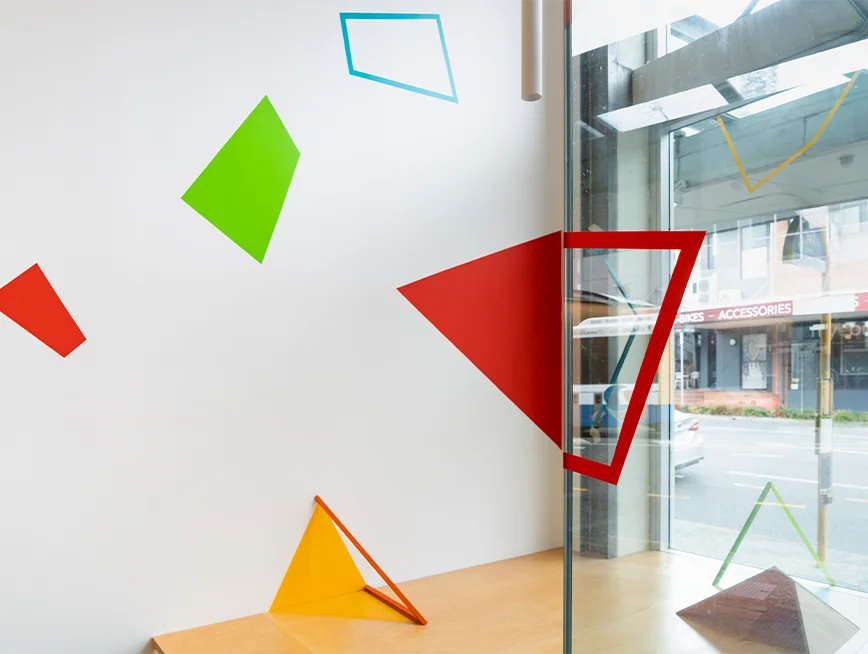
Brisbane-based artist Renee Kire is transforming the Museum of Brisbane entryway with bold vinyl graphics and sculptural timber elements as the institution’s first Artist in Residence for 2026.


From March 6, visitors entering the Level 3 City Hall space will encounter Kire’s large-scale installation splashing colour, rhythm and movement across walls and ceilings in the museum’s main thoroughfare. The project marks ten years since the artist moved from the Sunshine Coast to Brisbane to pursue her creative career.

The installation responds directly to the architecture of City Hall and the surrounding cityscape visible from the museum. Kire describes being initially overwhelmed by the amount of space available but came to appreciate the character of the historic building, noting no two walls are the same with numerous different planes and angles shaping her approach to forms, colours and interactions.

Working within a heritage-listed building presented challenges including restrictions on what could and couldn’t be done to the space. Kire notes the most difficult aspect became developing the works digitally and translating scale from screen to real life, requiring adjustments to how forms, colours and interactions would exist in the physical space.

Approach and Philosophy

Renee Kire approaches Minimalism from a contemporary feminist perspective, themes that she says remain central to why she creates. These influences shape each project she undertakes, whether explicitly stated or operating beneath the surface. For this installation, thinking through Minimalist and feminist lenses guided the forms, colours and interactions she developed, encouraging repetition and inclusivity for all visitors.

Renee Kire
Photo Credit: Louis Lim / Museum of Brisbane

The artist creates work intended to be accessible across ages and backgrounds rather than targeting specific audiences. Her two-year-old niece responds to colours while her grandmother appreciates composition and how different shapes interact. Kire hopes her work sparks curiosity for anyone who encounters it, whoever they are.

Her practice often encourages people to slow down and look closely at their surroundings. In the busy transitional space of the museum entrance, she hopes the forms and colours will catch attention and invite people to pause momentarily to notice details they might otherwise miss in a heritage building space many pass through without close observation.

Community Participation Element

Part of the installation will be co-created with the community through hands-on workshops during the residency period. Renee Kire says she looks forward to stepping back and seeing how people interpret the shapes and colours she has been immersed in over several months of development, noting the different ways people think and create when interacting with the work.

The workshops allow Brisbane residents to contribute directly to an artwork in one of the city’s most prominent cultural institutions, creating an element of shared ownership in the finished installation.

Museum of Brisbane Context

Museum of Brisbane occupies Level 3 of Brisbane City Hall at King George Square, serving as the city’s leading history and art museum. The institution presents exhibitions, events, workshops and tours exploring Brisbane’s art, culture and social history. The museum is open 10am to 5pm during weekdays and weekends with free general admission.

Museum of Brisbane
Photo Credit: Danielle Berry / Google Maps

The Artist in Residency program, supported by Tim Fairfax AC, provides opportunities for artists to create site-specific works within the museum environment. The program demonstrates the museum’s commitment to supporting contemporary Brisbane artists while enhancing the visitor experience through temporary installations in museum spaces.

City Hall itself holds significance as one of Brisbane’s most recognisable heritage buildings in the CBD. The building’s distinctive clock tower and classical architecture make it a landmark for both visitors and residents navigating central Brisbane. The museum’s location within City Hall adds layers of historical context to contemporary art installations like Kire’s project.

Previous Work and Recognition

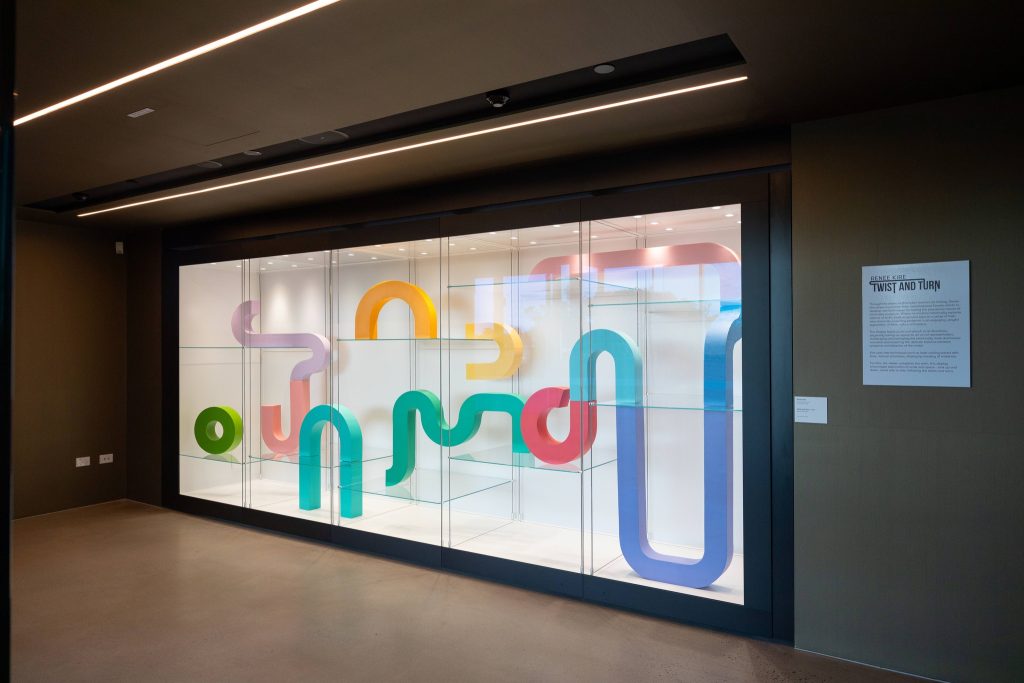
Renee Kire works from her East Brisbane studio creating sculptural forms that explore playful curves and interactions. Reviews of her previous exhibition at Rockhampton Museum of Art noted her consistent employment of large-scale aesthetics and soft pastel colour palettes.

Twist and Turns by Renee Kire
Photo Credit: Rockchampton Museum of Art / Facebook

Her work has been compared to feminist minimalist sculpture, presenting what critics describe as a positive approach to domestic spaces through curves that invite interaction.

The curved prisms in her work require higher woodworking skills to create. Apart from some computer numerical control cutting, Kire painstakingly fashions the forms herself. Her constructions feature bends singular in direction and plane, with aspects twisted across additional axes by aligning consecutive sections at right angles, creating what observers describe as squiggle-like forms that could transport viewers back to childhood memories.

Shifting Perspectives by Renee Kire
Photo Credit: Louis Lim / Museum of Brisbane

The Museum of Brisbane residency represents Kire’s largest and most public commission to date, positioning her work where thousands of visitors will encounter it as they access exhibitions and programs throughout the six-month installation period.

Repeat Visitor Experience

Because the work forms part of the museum’s everyday environment rather than a discrete exhibition, visitors may encounter it multiple times. Renee Kire hopes people experience the space the way she did while developing the work, discovering new details each visit in what might otherwise be an overlooked transitional area.

She notes that each time she spent time in the entrance during development, new details emerged including subtle shifts in light, repetitive nature of shapes, and small architectural features she had not noticed before. Repeat visits should allow people to discover these layers and notice something new each time they pass through.

The installation runs from March 6 through September 6, 2026, providing a substantial timeframe for both regular museum visitors and Brisbane CBD workers to engage with the work multiple times across changing seasons and light conditions.

Accessibility and Public Engagement

The entrance location ensures maximum visibility and accessibility for the installation. Unlike gallery-based exhibitions that require deliberate visits, Kire’s work will be encountered by everyone accessing Museum of Brisbane programs including school groups, tourists, families and regular visitors to City Hall.

This positioning aligns with broader movements in contemporary art practice toward engaging public audiences in everyday spaces rather than exclusively within traditional gallery contexts. The installation demonstrates how temporary public art can activate heritage buildings and enhance visitor experiences in cultural institutions.

For Fortitude Valley and Brisbane CBD residents who regularly visit City Hall for various civic purposes beyond museum attendance, the installation adds an element of visual interest and creative energy to a familiar heritage building. The work contributes to Brisbane’s identity as a city supporting contemporary artistic practice alongside preservation of historic architecture.

More information about the workshop is available here.


Published 07-February-2026.

Shimmer Exhibition Brings Creativity And Community To Museum Of Brisbane

A new exhibition at the Museum of Brisbane is reframing how young people see themselves, pairing art and identity through costume-based portraiture that celebrates queer creativity and self-expression.


A Celebration Of Creativity And Collaboration

Shimmer: An Artist in Residence project by Gerwyn Davies runs from 18 October 2025 to 8 March 2026 at the Museum of Brisbane’s Fairfax Gallery. The show presents vivid photographic portraits co-created with trans and gender-diverse young people from Open Doors Youth Service, marking the organisation’s 25 years of supporting queer youth in Queensland.

Photo Credit: Museum Of Brisbane

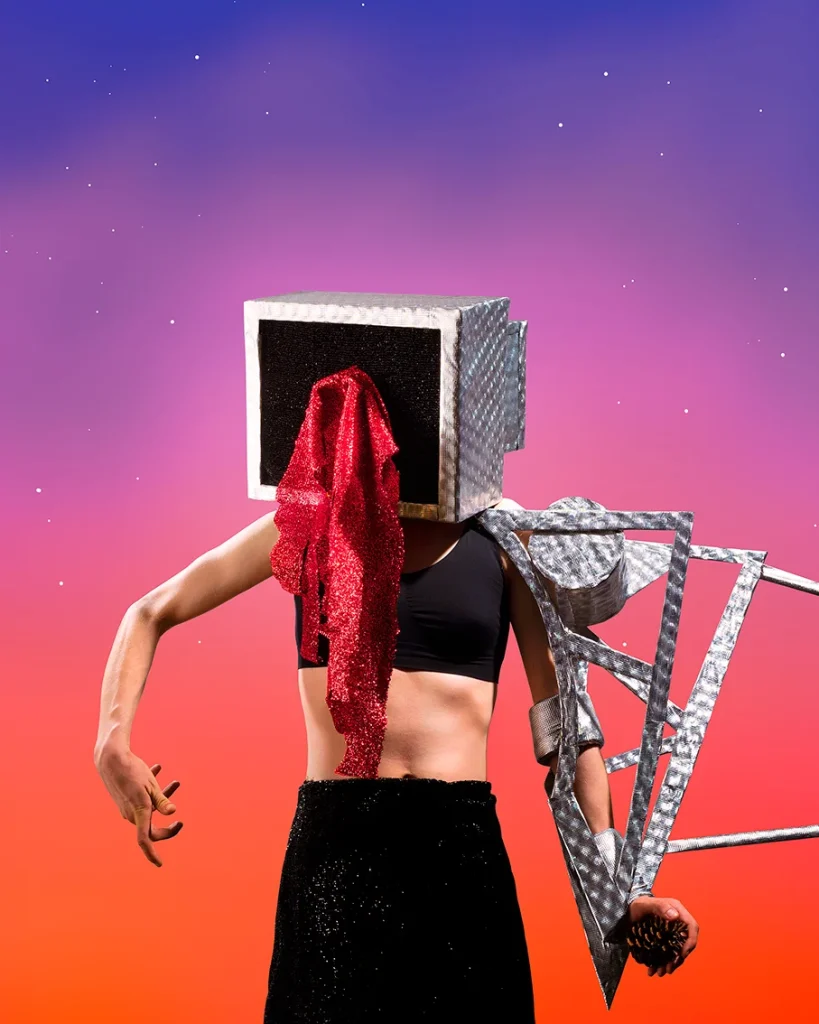
Shimmer began during Gerwyn Davies’s residency at the Museum of Brisbane, where young creators turned sequins, fabric, and household items into striking wearable art. Over a week of workshops, the space buzzed with colour, laughter, and invention. Davies photographed each participant in their creation, capturing the joy of self-expression. Rather than directing, he worked beside them, offering help while letting their ideas shine.

Reframing Visibility And Identity

At its heart, Shimmer explores the ideas of visibility, anonymity and control. Each costume conceals the wearer’s face, shifting the viewer’s focus from identity to creativity. By doing so, the portraits challenge traditional ideas of photography, which often seek to reveal rather than protect.

Photo Credit: Museum Of Brisbane

Photo Credit: Museum Of Brisbane

The use of reflective and glittering materials makes the subjects hyper-visible yet unseen, a deliberate choice by Davies to question the power dynamic between subject and viewer. He sees this act of concealment as a way for participants to decide how they are seen, creating a playful but powerful redefinition of portraiture.

The Role Of Open Doors Youth Service

The project was developed in partnership with Open Doors Youth Service, a Queensland-based organisation that has supported LGBTQIA+ young people for 25 years. Through the collaboration, participants found a safe and supportive environment to explore their identities creatively.

Photo Credit: Museum Of Brisbane

Museum of Brisbane staff worked alongside Open Doors to guide the workshops, ensuring the participants’ voices shaped the final exhibition. For many, it was their first time using a sewing machine or contributing to a gallery project. The process built confidence, friendships and new skills while highlighting the value of inclusive public art programs.

An Invitation To The Community

The Museum of Brisbane’s exhibition invites the wider community to experience a world of colour, texture and self-expression. While rooted in queer experience, Shimmer speaks broadly about how people construct identity and claim visibility in a fast-changing world.


Davies hopes the exhibition encourages empathy and conversation, allowing audiences to appreciate both the artistry and the stories behind the images. The Museum describes the project as an exercise in joy and collaboration that reflects the diversity of Brisbane’s creative community.

Published 30-October-2025

Museum of Brisbane Celebrates 60 Years of Clay-Making at Brisbane Art Design 2023

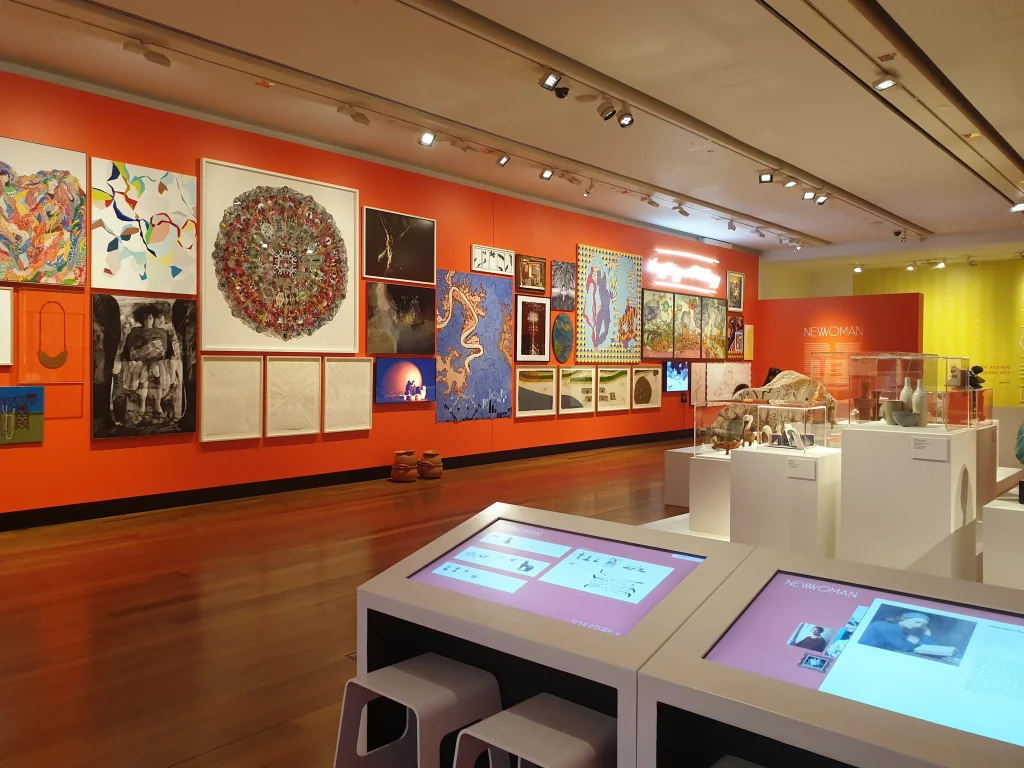
In a vibrant celebration of Brisbane’s thriving art and design scene, the Museum of Brisbane marked a significant milestone with “60 Years of Clay-Making,” an exhibition for Brisbane Art Design 2023.


In its third biennial program, Brisbane Art Design (BAD) 2023 showcased the city’s finest visual, craft and design work — encouraging creativity and displaying Brisbane’s unique artistic voice.

Curated under the guidance of Cathy de Silva, BAD’s Executive Producer and Acting CEO of the Museum of Brisbane, the exhibition brought together a select collection of contemporary ceramics.

Unveiling the evolution of clay-making over six decades, this extraordinary showcase mirrored Brisbane’s arts sector’s growth and innovation.

“Our former CEO, Renai Grace, identified a need to celebrate the design and art sector in Brisbane and felt that MoB could bring together an event that would demonstrate Brisbane’s unique voice,” de Silva said.


Throughout the exhibition, audiences were captivated by the transformative power of clay and its ability to shape and redefine the artistic landscape. Brisbane Art Design 2023 was the culmination of 60 years of clay making, an achievement that stands as a testament to the city’s artistic heritage and promising future.

About the Museum of Brisbane

Museum of Brisbane Celebrates 60 Years of Clay-Making at Brisbane Art Design 2023
View of the copper dome from the Museum of Brisbane.
Photo Credit: John Robert McPherson / Wikimedia Commons

The Museum of Brisbane, located within Brisbane City Hall, is a renowned history and art museum that serves as a hub for exploring the dynamic life, histories, and contemporary cultures of Brisbane. With a mission to “deepen the understanding of place,” the museum showcases the diverse people, passions, and ever-evolving cultural landscape of the city. 

Situated on the top floor of City Hall in a purpose-built gallery, visitors can enjoy stunning views of the iconic Clock Tower and copper dome while immersing themselves in engaging exhibitions and immersive experiences. As a leading institution, the Museum of Brisbane invites individuals to discover and appreciate the vibrant culture and rich stories that shape the city’s identity.

For more information about the Museum of Brisbane, visit the website here.

Published 17 June 2023