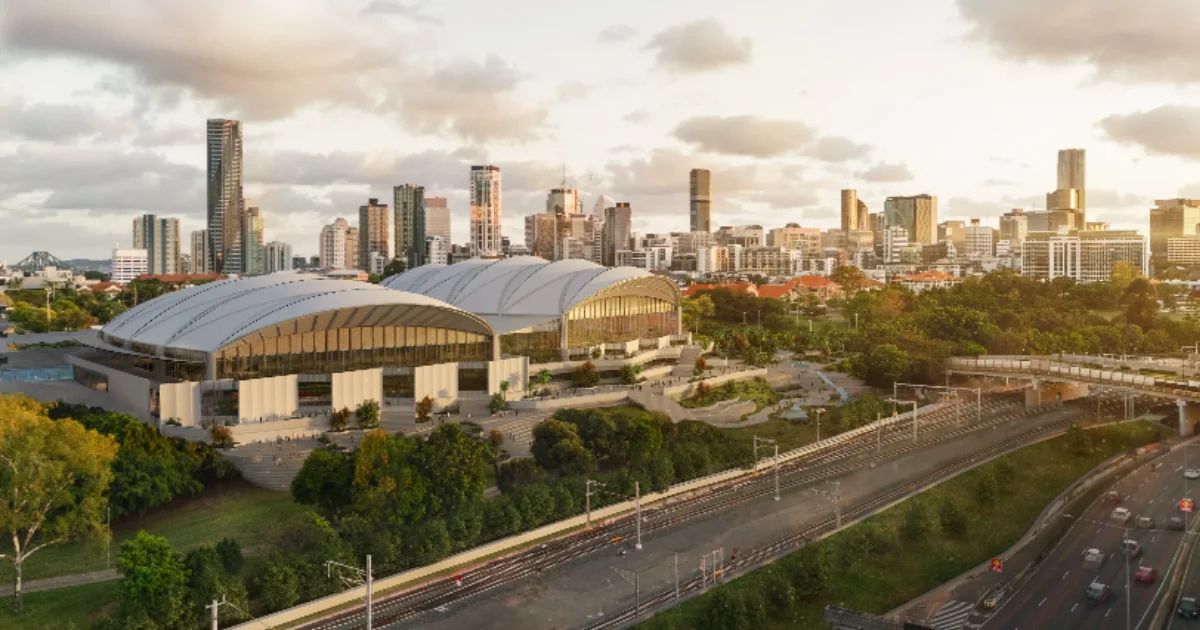



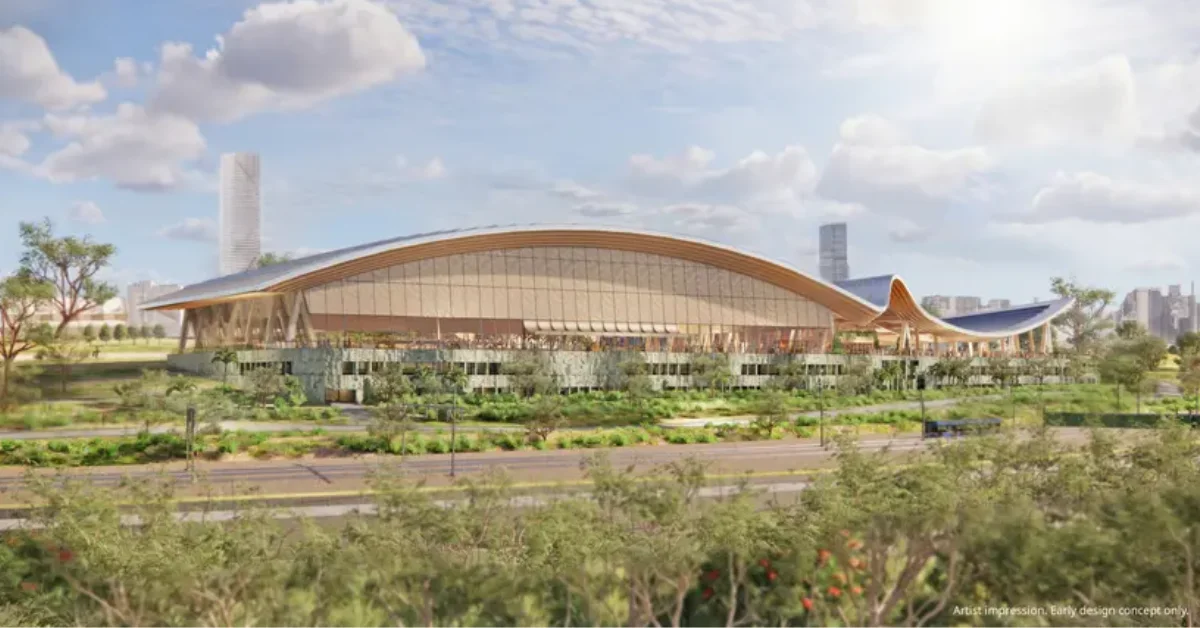
Design concepts for the new National Aquatic Centre have been released, offering the first detailed look at the venue that will become the centrepiece of aquatic competition at the Brisbane 2032 Olympic and Paralympic Games.
Read: Brisbane CBD Set to Become a Massive Transport Hub for New Sports Venues
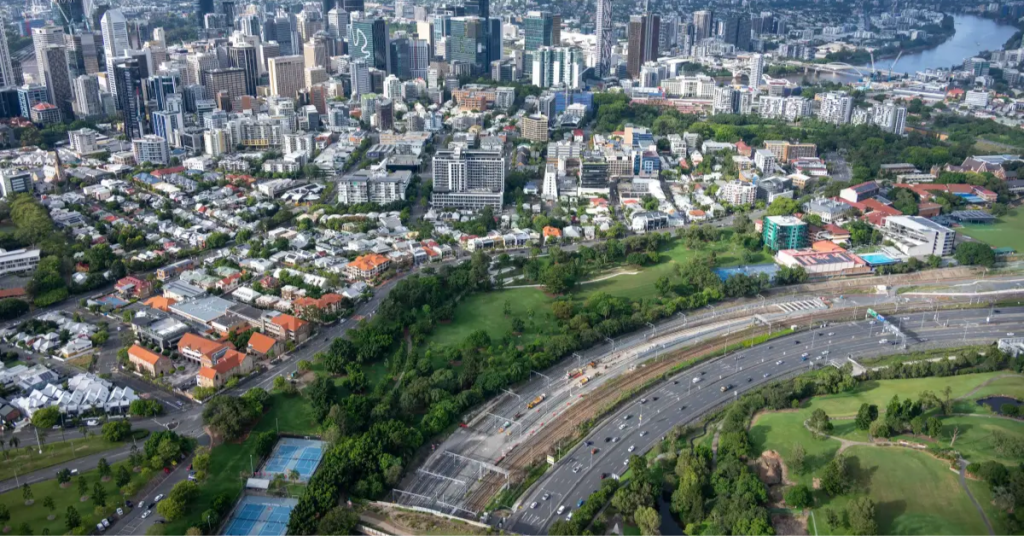
Leading national firms ARM Architecture and NH Architecture, in partnership with Queensland-based Arkhefield, have been selected to design the facility at the heritage-listed Centenary Pool site in Spring Hill. Planned as a high-performance aquatic hub with year-round community access, the venue will combine new sporting infrastructure with the heritage-listed Centenary Pool.
Blending Heritage with Modern Design
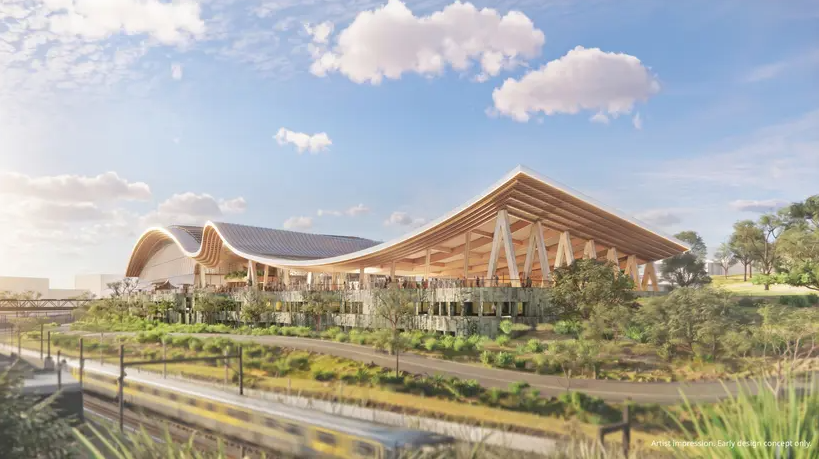
The concept retains and incorporates the heritage-listed Centenary Pool while introducing facilities designed for elite competition and training. Plans include a main competition arena and a secondary arena, each featuring large pools for major events and high-performance programs, alongside new pools, a gym, office accommodation and dedicated high-performance spaces that complement the existing outdoor pools and amenities.
The architectural partnership draws on experience from some of Australia’s most recognisable sporting and civic projects. ARM Architecture is behind Perth’s RAC Arena and the redevelopment of the Sydney Opera House Concert Hall, while NH Architecture led the transformation of Melbourne Park. Brisbane practice Arkhefield has delivered projects including South Bank’s River Quay precinct and the Waterfront Brisbane redevelopment. Aquatic specialist Liquid Blu also forms part of the team, bringing experience from projects including Yeppoon Lagoon and Pavilion, Palm Beach Aquatic and Community Centre, and the Gympie Aquatic Recreation Centre.
ARM Architecture Director Andrew Hayne said the design was shaped by Queensland’s close relationship with water.
“Queenslanders have a real connection to the water. The rippling plinth and floating roof reflect the movement of water, but the design is ultimately about place and is shaped by Brisbane’s landscape, subtropical climate and natural environment,” Mr Hayne said.
NH Architecture Director Emily Kilvington said the venue balances contemporary design with respect for the site’s history.
“New state-of-the-art facilities shows real respect for the site’s history while positioning Queensland at the forefront of aquatic sport infrastructure,” Ms Kilvington said.
Built for Beyond 2032
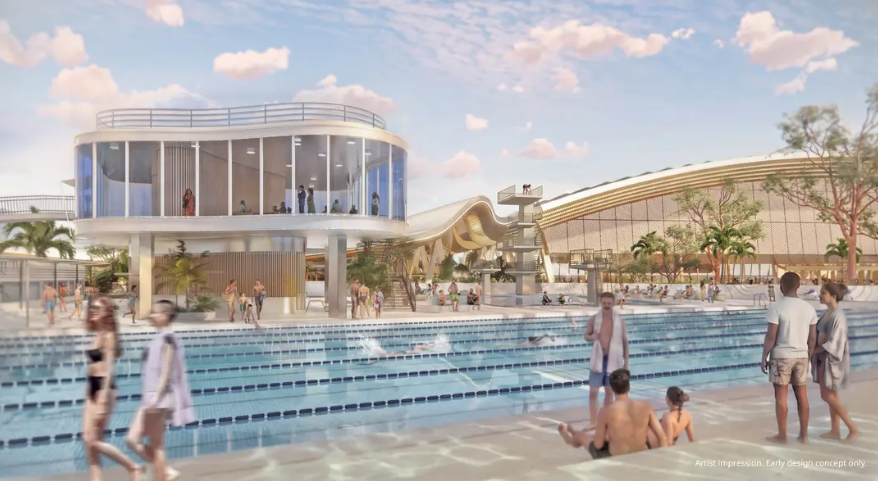
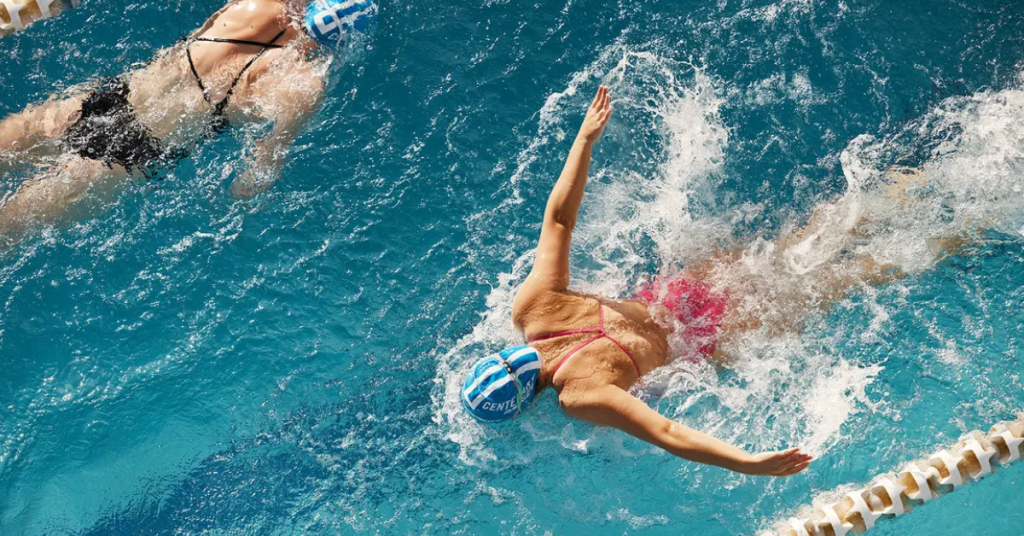
While the National Aquatic Centre will host swimming and other aquatic events during the Brisbane 2032 Olympic and Paralympic Games, it has also been planned as a long-term venue for high-performance sport and year-round community use.
Swimming Australia Chief Executive Officer Rob Woodhouse described the appointment of the design team as an important milestone, saying the venue would deliver long-term benefits for aquatic sports and the wider community by supporting major events, high-performance training and year-round public access.
For Arkhefield Founding Director Andrew Gutteridge, the project also has a personal connection, having grown up swimming at Centenary Pool.
“Hosting the Olympics and Paralympics gives us the chance to build something truly extraordinary, a place where Queenslanders can swim, train and connect with each other for decades to come,” Mr Gutteridge said.
Next Steps
The Games Independent Infrastructure Construction Authority (GIICA) is continuing the procurement process, with four construction companies shortlisted to submit proposals. The field will be reduced to two before a final builder is selected in early 2027.
GIICA will take possession of the Centenary Pool site on 1 September, allowing early works to begin ahead of construction.
Read: George Street UniLodge Redevelopment Offers Blueprint For Brisbane’s 2032 Housing Challenge
Once complete, the National Aquatic Centre is expected to serve as the main venue for aquatic competition during the Brisbane 2032 Olympic and Paralympic Games before transitioning into a world-class facility for high-performance training and year-round community use. By retaining the character of Centenary Pool while introducing contemporary facilities, the project aims to create a venue that will continue to benefit Queenslanders well beyond the Games.
Published 28-July-2026