
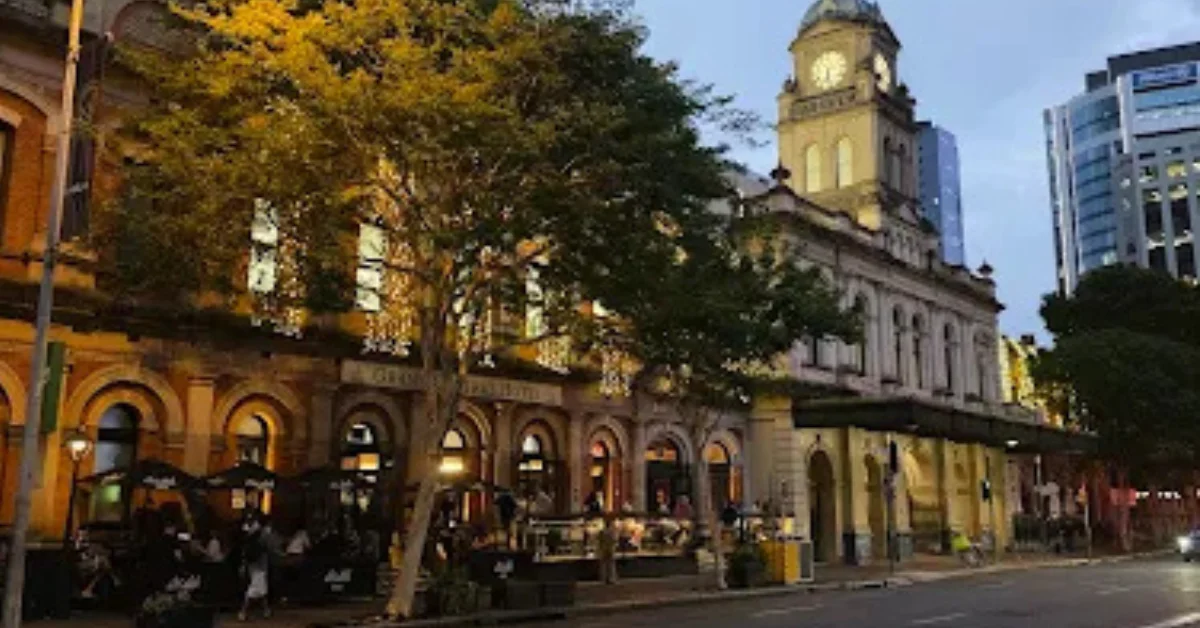
Brisbane Central Station Overhaul Proposed as Olympic Legacy Project

A London-based architecture firm with a strong global portfolio has released a bold concept to overhaul the Brisbane Central Station, stripping back its ageing metal canopy to create a light-filled, open-air gateway to the city, with the aim of completing a first stage before the 2032 Olympic Games.


Read: 2032 Olympics: Brisbane’s National Aquatic Centre Budget Jumps to $1.2B


John McAslan + Partners, the practice behind the transformation of King’s Cross and Bond Street stations in London, Belfast Central Station in Ireland, and the redevelopment of New York’s Penn Station, has put forward a vision to transform Brisbane’s Central Station ahead of the 2032 Games.

Concept image for Brisbane Central Station (Photo credit: John McAslan + Partners)

Concept imagery shows a sweeping open concourse crowned by a soaring transparent canopy supported by curved timber-look beams, flanked by lush greenery and opening up views toward Anzac Square. It is a far cry from the current station, which the firm’s founder and executive chairman John McAslan described publicly as drab, dated and ill-suited to a city on the verge of hosting the world.

Mr McAslan visited Brisbane to inspect the station in person and attend a roundtable with representatives from state and local officials alongside private developers, all gathered to discuss how the proposal might be advanced within the Olympic timeframe.

The firm’s position is that the work required is less about wholesale demolition and more about stripping away decades of accumulated clutter. The existing concourse structure would largely remain, with the current metal roof removed and replaced with a far more appealing atrium-style covering. The goal, as McAslan has outlined it, is to create a space where people actually want to spend time rather than rush through.
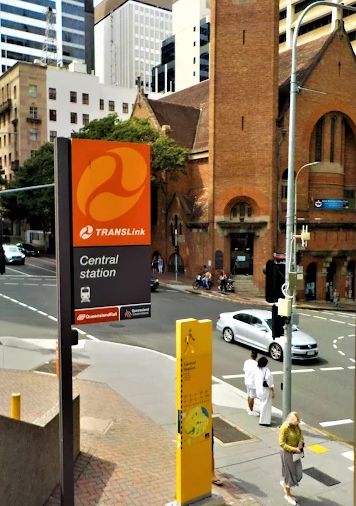
Photo credit: Google Maps/Vlady Peters

The firm has flagged a staged approach. The first phase, which it believes is achievable before the 2032 Games, would focus on that decluttering and re-roofing of the concourse, with the firm noting that around a million visitors are expected to come through Central Station during the Games. A second stage would then look at breathing new life into the station’s heritage fabric.

The proposal arrives at a busy moment in Brisbane’s infrastructure conversation. Roma Street has been widely promoted as the city’s future grand central station once Cross River Rail comes online, and Albert Street Station will add another CBD stop to the network once Cross River Rail is completed. But John McAslan + Partners director Troy Uleman argued that Central Station cannot be left behind in all of this, given it will remain the primary city stop for the Airport train link.

Mr Uleman suggested Brisbane has an opportunity to use the Olympic moment to catalyse lasting change to its urban fabric, and described the level of interest from government and private sector representatives at the roundtable as encouraging.


Read: Brisbane’s Own Greg Norman Takes on a New Challenge—Shaping the 2032 Olympics


The proposal remains at concept stage, with no formal commitments from Queensland or Brisbane officials reported at this stage.

For commuters who have long navigated the station’s concourse, the prospect of sunlight, greenery and open views toward Anzac Square, as the firm’s concept envisions, may be reason enough to pay attention.

Published 13-May-2026
QUT Eyes 2032 Role as Campuses Near Olympic Action


Queensland University of Technology (QUT) is aligning both its Gardens Point and Kelvin Grove campuses with Brisbane’s preparations for the 2032 Olympic and Paralympic Games, with a focus on campus upgrades, sport research and industry partnerships.


Campuses tied to growing Olympic precinct

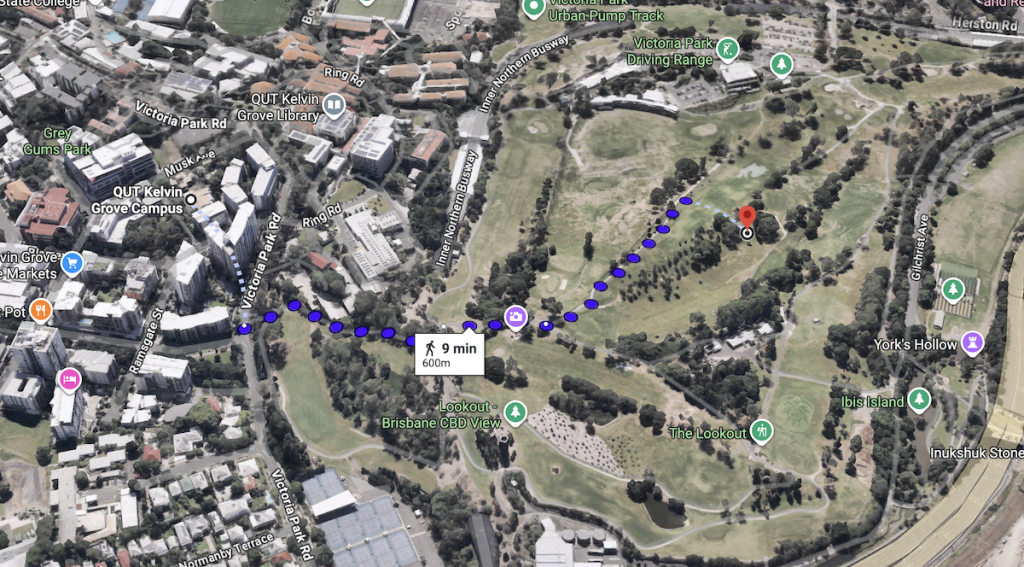
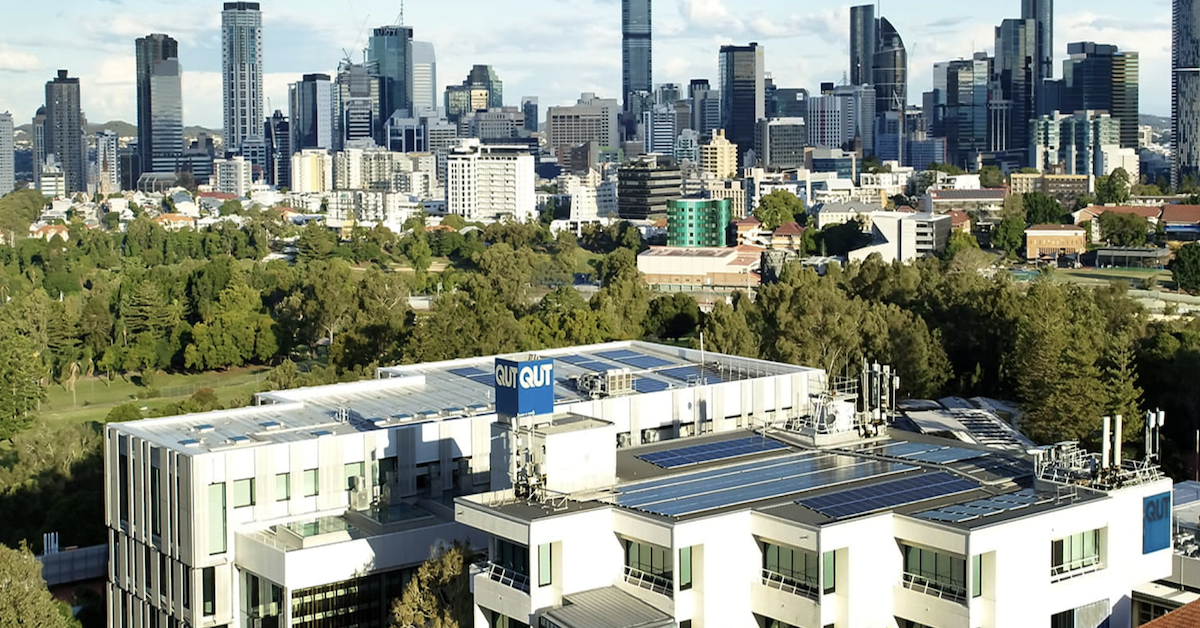
QUT’s Kelvin Grove campus sits next to the planned Victoria Park Olympic stadium and National Aquatic Centre, placing it within what is expected to become a major sporting hub.

The university has indicated the wider Olympic and Paralympic precinct will link with the nearby Herston Health Precinct, forming a connected corridor for sport, health and biomedical research in Brisbane’s inner north.

Photo Credit: Google Maps


At the same time, its Gardens Point campus near the CBD and Fortitude Valley is positioned within the broader inner-city zone expected to see increased activity as the Games approach.

Campus changes planned over next decade

QUT has outlined a long-term master plan covering both campuses, designed to respond to growth linked to Brisbane 2032 and wider city development. The plan includes improving accessibility and safety, making campuses easier to navigate, and creating more flexible teaching and learning spaces. It also focuses on making research and innovation work more visible, allowing stronger links between students, industry and the community.

These changes are being planned alongside major developments such as the Victoria Park redevelopment and the expansion of surrounding health and knowledge precincts.

Facilities support sport and health focus

QUT already has a wide range of sport and health facilities across its campuses, including gyms, aquatic centres, indoor and outdoor courts, a FIFA-accredited field with a running track, and dedicated spaces such as an esports arena and virtual sport studio.

The university also operates health clinics in areas including exercise physiology, podiatry, nutrition, optometry and psychology, which support both student learning and community services.

These facilities are expected to play a role in supporting athlete preparation, research and participation in the lead-up to 2032.

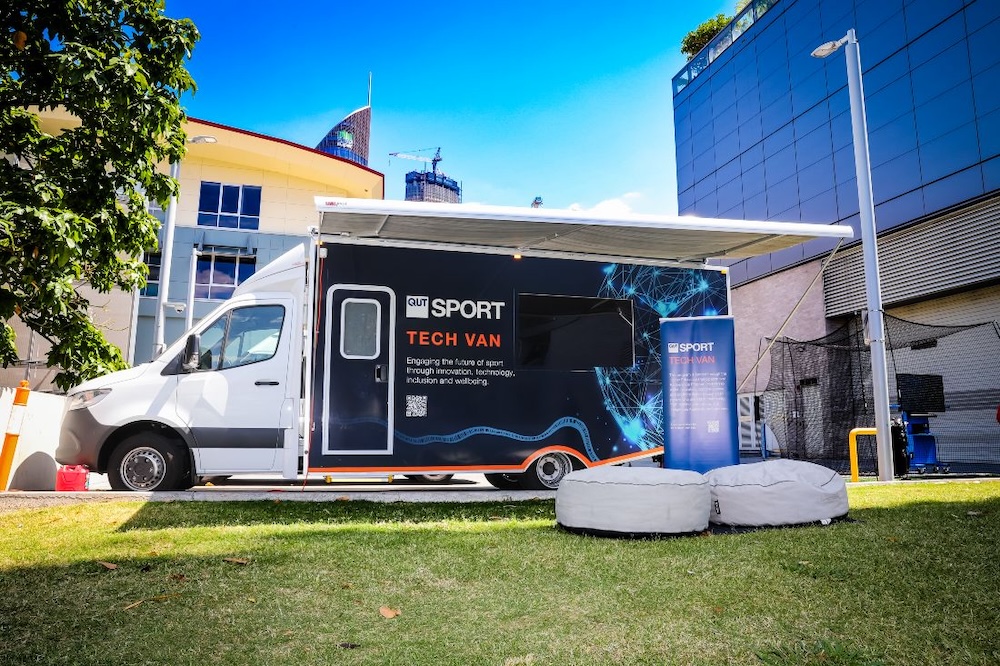
QUT Sport tech van
Photo Credit: QUT

Student programs and innovation projects underway

QUT is running several programs that link students directly to sport and event-related work. Through its Sport Innovation ProtoComp, students work with industry mentors to develop solutions for real-world challenges in sport, including digital tools and performance systems.

The university has also developed projects focused on inclusive sport, including a virtual reality sports wheelchair simulator and an adaptive handcycle trainer that allows wheelchair users to take part in virtual cycling programs.

These initiatives bring together design, engineering, health and technology, reflecting the range of skills needed for large events like the Olympics.

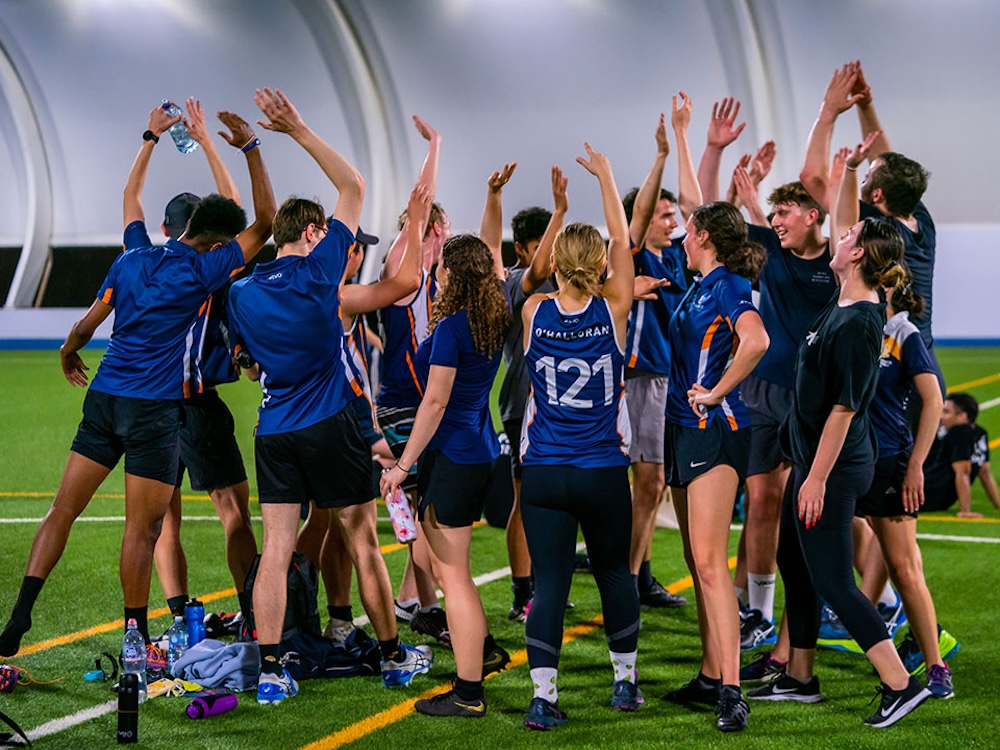
QUT student athletes
Photo Credit: QUT

Global sport conference brings focus to Brisbane

QUT has already brought international expertise to Brisbane through its Future of Sport Conference, held at the Gardens Point campus in March. The event brought together leaders in sport, technology and research to examine how data, innovation and partnerships are shaping the future of sport ahead of the 2032 Games.

The university has indicated the conference reflects its role in linking research with practical outcomes as Queensland prepares for a series of major sporting events. Discussions covered areas such as performance analytics, athlete wellbeing, emerging technologies and the long-term sustainability of sport.

Researchers involved highlighted how data is increasingly used to improve training, reduce injury risk and support athlete wellbeing, with these approaches expected to expand in the lead-up to 2032.


Published 13-April-2026

2032 Olympics: Brisbane’s National Aquatic Centre Budget Jumps to $1.2B

The cost of building Brisbane’s National Aquatic Centre (NAC) for the 2032 Olympic and Paralympic Games has nearly doubled, now projected at $1.2 billion. 


Read: Spring Hill to Become Home of Australia’s Largest Aquatic Venue for 2032 Games


The revised figure, confirmed by the Games Independent Infrastructure Authority (GIICA), is significantly higher than the $650 million originally estimated by Swimming Australia earlier this year.

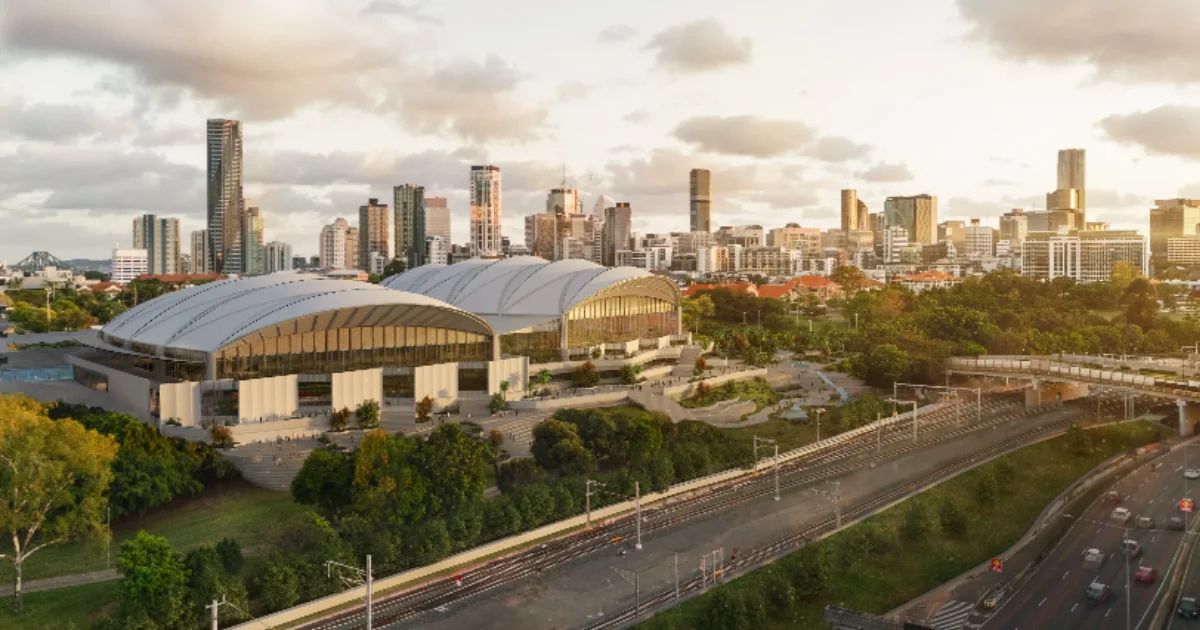
Photo credit: Archipelago

Despite the price increase, officials say the scope of the project in Spring Hill remains largely unchanged. GIICA chair Stephen Conry said the updated figure reflects a more realistic assessment of the project’s cost and emphasised that the aquatic centre will be a long-term investment for Queensland. He described the NAC as a world-class facility that will serve as a national hub for aquatic sports and provide lasting benefits for future generations.

Once complete, the aquatic centre will be the second most expensive Olympic venue after the $3.8 billion main stadium at Victoria Park, located less than a kilometre away. The NAC is expected to be funded through a partnership with the federal government.

Photo credit: Archipelago

The higher price tag does not come as a surprise to many involved in the planning process, who had questioned the earlier cost estimate. Planning for the centre had been constrained by the tight time frame of GIICA’s 100-day review earlier this year, which did not allow for detailed cost analysis.

Shifting the $2.5 billion Brisbane Arena project to private sector funding has freed up public funds, allowing the NAC and other venues—such as a proposed rowing course in Rockhampton—to move forward.

Photo credit: Archipelago

Work is already underway to assess whether the Fitzroy River in Rockhampton can be adapted to meet Olympic requirements. While initial assessments suggested limitations, GIICA is now conducting further studies to explore its feasibility.


Read: Fortitude Valley Builders Join $7.1b Olympic Push


Construction of the National Aquatic Centre is expected to begin in late 2026 or early 2027. Conry said planning is progressing well, though he acknowledged that unexpected challenges are common in large infrastructure projects. He expressed confidence that the delivery timeline remains on track and suggested public support for the Games continues to grow.

Published 23-July-2025

Brisbane’s Own Greg Norman Takes on a New Challenge—Shaping the 2032 Olympics

Brisbane’s Olympic preparations are gaining a homegrown boost, with Greg Norman joining the Games’ organising team. The committee, operating out of Brisbane City, is at the centre of the city’s Olympic vision.


Read: Roar vs Wellington Phoenix: Brisbane Look to End Losing Streak, Reignite Title Push


Local Connection Runs Deep for Former World No.1

For Brisbane residents, Norman’s ties to the city run deeper than many realise. Before becoming the “Great White Shark” who dominated world golf for 331 weeks as World No. 1, he honed his skills in Brisbane’s northern suburbs. He worked at the Royal Queensland Golf Club, which fittingly will serve as the venue for the Olympic golf events in 2032.

Greg Norman
Photo Credit: CC-BY 2.0 / Ted Van Pelt / Flickr

Reflecting on the appointment, Norman said, “In my youth in the ’70s, I worked in the golf shop at Royal Queensland. Now that course will be the home of golf at Brisbane 2032.”

Greg Norman, a Strategic Appointment for Brisbane’s Global Ambitions

Minister for Sport Anika Wells highlighted Norman’s ability to contribute to Brisbane’s Olympic ambitions, citing his four decades of global sporting experience and business acumen. The appointment comes as Norman transitions from his role as CEO of LIV Golf, bringing fresh strategic insight to the organising committee.

Greg Norman
Photo Credit: CC-BY 2.0 / Ted Van Pelt / Flickr

OCOG President Andrew Liveris reinforced the significance of his involvement, stating, “What better Queensland sports brand than Greg Norman? He will help elevate our state and our city on the global stage over the next seven years.”

Business Expertise Meets Sporting Legacy

Beyond his sporting achievements, Norman brings substantial business expertise to the role. As chairman and CEO of the Greg Norman Company, he has overseen successful ventures in apparel, interior design, real estate, and golf course design – experience that could prove invaluable in Brisbane’s Olympic development.

Norman replaces retiring politician Graham Perrett MP on the 24-person organizing board, with his first OCOG meeting scheduled for 5 April. The appointment represents a significant boost for Brisbane’s Olympic preparations, bringing together local knowledge and global expertise.


Read: New Vision for Waterfront Pavilion, A Key Element of Waterfront Brisbane


For Brisbane, Norman’s appointment bridges the city’s sporting heritage with its Olympic future. As preparations for the 2032 Games continue to transform the city, having a local figure of Norman’s calibre on board offers both practical expertise and symbolic significance.

Speaking to the aspirations of his hometown, he affirmed, “We will prove our credentials as world leaders in events, sport, and hospitality at Brisbane 2032 and create an incredible legacy for this state.”

Published 31-January-2025