

Literary Magazine Meanjin Returns to Brisbane After 80 Years Under QUT Custodianship

Queensland University of Technology at Gardens Point will become the new custodian of Meanjin, bringing Australia’s second-oldest literary magazine back to Brisbane 80 years after it relocated to Melbourne.


The 85-year-old journal is heading back to the city that gave it its name. While Clem Christesen first pulled the inaugural Meanjin Papers together in suburban Greenslopes in 1940, bringing the masthead to QUT’s Gardens Point campus marks a massive symbolic return to the heart of the river city. After 80 years in Melbourne, the journal is finally back on the Turrbal and Yugara lands where its story began.

Melbourne University Press announced in September 2025 that Meanjin would close due to financial pressures, with editor Esther Anatolitis and deputy editor Eli McLean made redundant and the final issue released in December. The announcement triggered immediate backlash from Australia’s literary community, including authors Jennifer Mills, Anna Krien, Claire G Coleman and former editors Sophie Cunningham and Jonathan Green.

Gardens Point Campus to Host National Literary Icon

QUT Vice-Chancellor Professor Margaret Sheil said the university is delighted to bring Meanjin home to Meanjin/Magandjin, the Turrbal and Yugara word for the lands where Gardens Point campus now stands. Since its foundation, the literary magazine has been instrumental in shaping Australian literary and intellectual culture, providing a vital platform for critical discussion and a showcase for emerging writers.

Professor Margaret Sheil
Photo Credit: QUT

The university will appoint an editorial board to ensure the journal’s independence, values and standards are maintained, and will recruit an editor through a national competitive search. QUT will take time to thoughtfully re-establish the journal in Queensland and consider how to most effectively reinvigorate Meanjin while respecting its founding vision and literary legacy.

Complementing Creative Writing Programs

Professor of Creative Writing Kári Gíslason said QUT has a distinguished group of alumni writers who have gone on to become renowned Australian authors. The partnership affirms how creativity, literature and excellence in writing allow people to think deeply and connect ideas in imaginative ways to the world around them.

The journal will complement the focused, high-quality creative writing program within the QUT School of Creative Arts at Gardens Point. Meanjin’s move to QUT sends a message to students that this connection between creative excellence and intellectual engagement remains as true now as it ever was.

Literary magazine Meanjin
Photo Credit: QUT

Timeline for Revival Remains Open

Principal policy adviser John Byron, a published author and former executive director of the Australian Academy of the Humanities, said rehoming the journal will take considerable work and QUT will take the time to do it properly. The university is a long way off releasing the next issue, as it has no editor, production staff or editorial board yet, but will get there.

The transfer is already underway and work now begins in earnest. QUT understands the scale of the privilege it has been afforded and will take good care of Meanjin, Byron said.

Literary Community Response

Former Meanjin editor Jonathan Green said the news of the journal’s return was a delightful surprise and it is lovely to think the literary magazine will be journeying back to Brisbane where its adventure began. Academic Ben Eltham, a long-running contributor, called the return a victory for everyone who fought to save this vital masthead for the future of Australian literature.

The timing aligns with Queensland’s plans to elevate the creative economy, support local talent and showcase the state’s unique stories and culture to a global audience ahead of the Brisbane 2032 Olympic and Paralympic Games. Melbourne University Press Chair Warren Bebbington said QUT’s understanding of the journal’s legacy surpassed those of other expressions of interest received from organizations wanting to take over the publication.


Published 16-February-2026.

QUT’s Humanoid Robot ‘Gee’ Draws Attention at Gardens Point Campus

A humanoid robot at Queensland University of Technology’s (QUT) Gardens Point campus has drawn significant attention. Nicknamed Gee, the 140-centimetre tall Unitree G1 robot has attracted reactions ranging from fascination to apprehension as it strolls around the grounds near the Brisbane CBD.


Read: QUT Robotics Director Honoured for Global Mentoring Impact


Gee represents a new addition to QUT’s robotics research program. Acquired by the Centre for Robotics for around AUD 45,000, the Unitree G1 is one of the most affordable humanoid robots currently available. With 24 joint motors, it can walk, run, wave, pick up objects, and engage in basic interaction through a built-in microphone. Its compact size and movement patterns attract attention both in classrooms and while moving around campus.

Humanoid robot
Photo credit: LinkedIn/Jonathan Roberts

Professor Jonathan Roberts of QUT has emphasised that the robot offers opportunities to explore how humanoid machines interact with people and environments. In a post on LinkedIn, he explained:

“One of the motivations for humanoid robots is that they could allow us to finally have useful robots that do not need us to modify our world for them in a major way. And this could mean that their use becomes affordable one day (soon hopefully). 

“Humanoid robots also offer a nice opportunity to explore how machines can interact with people and environments in more natural, intuitive ways. Our research is focused on understanding the capabilities and limitations of these platforms and how they can help address real-world challenges in the care, education, manufacturing and service industries.”

Professor Jonathan Roberts

That vision extends beyond the novelty of watching a robot move across campus. For students and researchers at QUT, Gee provides a real-world testbed for studying how machines can operate in human-designed spaces. Roberts has also noted that real-time balance and uncertainty remain significant challenges for humanoid robots, underlining the complexity of this work.

Unlike industrial robots, which typically function in controlled environments, humanoids are intended to operate in the world as it already exists, without major modifications.

The first weeks of Gee’s presence on campus have been marked by curiosity. Some students quickly take out their phones to capture the moment, sharing their encounters online. Others keep their distance, unsure of how to respond to a machine that looks and moves more like a person than a tool. Such diverse responses illustrate the social side of robotics that researchers are paying close attention to.

While the G1’s current battery life limits its outings to just a couple of hours at a time, its potential applications are wide-ranging. Humanoid robots are being explored as tools to help address challenges in care, education, manufacturing, and service industries.


Read: QUT Researchers Help Uncover Strongest Evidence Yet of Life on Mars


Gee’s outings around Brisbane’s city-centre campus highlight both the progress in robotics research and the questions these technologies raise. For now, Gee has sparked conversations on campus and beyond—conversations that are likely to grow louder in the coming years.

Published 24-September-2025

QUT Researchers Help Uncover Strongest Evidence Yet of Life on Mars

Queensland University of Technology (QUT) researchers are part of an international team behind what could be the most compelling evidence of life beyond Earth, after NASA’s Perseverance rover identified promising signs in a rock sample from Mars.


Read: QUT Robotics Director Honoured for Global Mentoring Impact


The rover, exploring Jezero Crater, collected a specimen that showed minuscule “leopard spot” markings containing two iron-rich minerals: vivianite and greigite. On Earth, both of these are typically linked to microbial activity, making the discovery one of the clearest bio-signatures yet reported on the red planet.

Photo credit: research.qut.edu.au

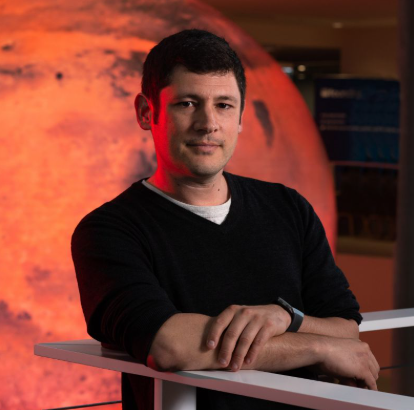
Associate Professor David Flannery, an astrobiologist from QUT, was among the 89 co-authors of the peer-reviewed paper published in Nature. He explained that the rock held exactly the kind of features scientists had long hoped to find on Mars. According to Flannery, these characteristics could point to signs of microbial life in the planet’s subsurface — a breakthrough many researchers have been waiting for.

Mars
Associate Professor David Flannery (Photo credit: qut.edu.au)

The findings raise exciting questions about whether life may have evolved independently on Mars or whether it might have been transported between planets in the distant past. Another possibility is that Mars has its own distinct carbon cycle unrelated to life, something only closer study of the samples on Earth can reveal.

Bringing those samples back, however, remains a challenge. The Mars Sample Return program faces uncertainty following major cuts to NASA’s budget, and the timing of the mission is unclear. Until then, researchers can only analyse the data remotely.

Despite the obstacles, the discovery has reinvigorated discussion about the potential for life still existing beneath Mars’ surface. While the surface is now too cold and dry to support living organisms, Flannery noted that subsurface aquifers could provide a more hospitable environment, similar to how microbes survive deep underground on Earth.

QUT has played a vital role in this mission beyond supplying scientists. The university helped design and build the Planetary Instrument for X-ray Lithochemistry (PIXL), one of the seven instruments on the Perseverance rover. QUT experts also created PIXLISE, the software used by NASA scientists to interpret the rover’s findings.


Read: QUT Scientist Dr Brett Lewis Develops New Coral Restoration Tech


For now, the Martian rock provides tantalising evidence — not a final answer — in humanity’s quest to know whether we are alone in the universe. But thanks to contributions from Queensland researchers, the possibility of life on Mars feels closer than ever.

Published 17-September-2025

QUT Sees Mixed Results in Global Rankings for 2024

Queensland University of Technology (QUT), located in Brisbane City, experienced mixed performance in two major global rankings. It fell between 201 and 250 in the Times Higher Education World University Rankings while improving to 213th in the QS World University Rankings.


These 2024 rankings show a slight decline in the Times Higher Education ranking, where QUT dropped from 199th in 2023, but a marginal improvement in the QS ranking, which rose from 222nd last year. 

Sources indicate that QUT’s performance aligns with a broader downward trend among Australian universities, with factors like reduced funding and diminishing international research partnerships cited as major concerns. Despite these challenges, QUT remains well-regarded for its strong programs, particularly in communication and media studies, which ranked 19th globally in the QS subject rankings for 2023.

QUT
Photo Credit: Alex Kung/Google Maps

Academic Strengths and International Outlook

QUT continues to perform well in various disciplines, such as engineering and nursing, but the drop in global rankings signals growing issues that extend beyond individual program success. 

Like many Australian universities, QUT has faced difficulties maintaining its international presence, which is particularly concerning given its focus on attracting international students and fostering global research collaborations. Recent reports suggest that the aftermath of the COVID-19 pandemic and financial constraints have impacted its ability to remain competitive on the world stage.

QUT’s decline in rankings reflects larger concerns across Australia’s higher education sector. A global higher education expert, Phil Baty, has pointed out that many Australian universities are losing ground internationally due to reduced funding and weaker international collaborations. Additionally, proposed caps on international student enrolments from 2025 may further affect QUT’s income and global standing. Baty suggests that such caps could diminish Australia’s reputation as a destination for higher education.

Community and Industry Engagement

QUT has built its reputation on practical, hands-on education, connecting students with industry through internships and real-world projects. This approach remains a key part of QUT’s strategy, and the university continues to nurture strong ties with the business community. 


However, broader sector-wide issues are affecting its global reputation, which could undermine its ability to maintain these important industry links. Whilst QUT remains a significant player in Australian education, its recent performance in global rankings highlights the challenges it faces in an increasingly competitive and financially constrained higher education environment.

Published 13-Oct-2024

QUT Alum Luke Willian Gears Up for Paris 2024 Olympic Debut

Former Queensland University of Technology (QUT) student Luke Willian is set to make his Olympic debut at the Paris 2024 Games in the triathlon event, making him Australia’s 14th Male Olympic Triathlete.


Read: From Spring Hill to Paris: Bronte Campbell Seeks Olympic Comeback


Willian’s introduction to triathlon came through an unexpected turn of events. When neighbourhood playmates moved away, his mother encouraged him and his brother to take up a summer sport. As fate would have it, his brother’s choice of triathlon set Luke on a path that would eventually lead him to the world’s biggest sporting stage.

His competitive triathlon career began over a decade ago, with his first taste of international competition coming at the 2012 Devonport OTU Triathlon Oceania Championships, followed by his World Cup debut in 2015 where he finished a respectable 31st, laying the foundation for his eventual rise to Olympic qualification.

Luke Willian
Photo credit: Luke Willian/Facebook

During his time at QUT, Willian pursued a Bachelor of Finance and Accounting. The journey from his finance and accounting studies to Olympic athlete showcases his versatility and determination. This period likely honed his ability to manage time effectively and maintain focus under pressure – skills that would prove invaluable in his athletic career.

Photo credit: Luke Willian/Facebook

Willian’s recent performances have shown he’s ready for the Olympic challenge. In 2024, he claimed first place at the World Triathlon Cup in Wollongong, with an impressive time of 52:51. This victory, along with consistent performances, has propelled him to 21st in the World Triathlon Individual Olympic Qualification Ranking for Paris 2024.

The road to Paris hasn’t been without its hurdles. After missing out on the Tokyo 2020 Olympics (held in 2021 due to the pandemic), Willian redoubled his efforts. “Especially after missing out in 2021, that’s been the goal of the last three years. To get back and try and put myself in contention for that (Olympic) spot, and today doing it on home soil puts me in good stead,” he shared after a pivotal performance.

Luke Willian
Photo credit: Luke Willian/Facebook

Willian’s Olympic journey is supported by a strong team. He trains under Coach Warwick Dalziel, who also guides fellow Olympian Matt Hauser. In Paris, Willian will join Hauser and two other Olympic debutants, Natalie van Coevorden and Sophie Linn, representing Australia in triathlon.

Luke Willian
Photo credit: Australian Olympic Team/Facebook


Read: Queensland Researchers Pioneer Breakthrough Sports Tech to Prevent Devastating Injuries


As Luke Willian prepares to dive into the Seine River, cycle through the streets of Paris, and run towards his Olympic dream, he carries with him the spirit of perseverance, the support of his team and nation, and the unique perspective of someone who has successfully bridged the worlds of academia and elite sport.

Published 2-July-2024