



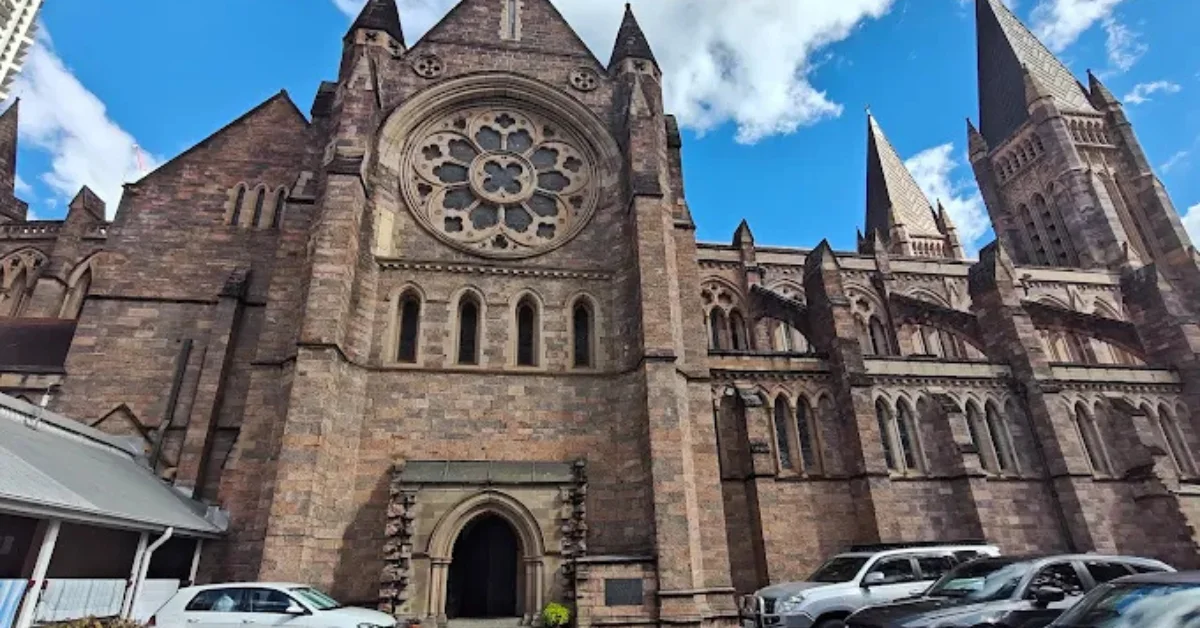
Did you know that St John’s Cathedral on Ann Street was built over three separate stages spanning two centuries? From the laying of its foundation stone in 1901 to the completion of its western towers and spires in 2009, the city’s Anglican cathedral took 108 years to realise its original vision and is one of the few Gothic cathedrals in the world completed using traditional hand-cut stone.
Read: Brisbane to Welcome New Archbishop Following Historic Vatican Appointment
Standing at 405 Ann Street in Brisbane City, on the edge of Fortitude Valley, the cathedral tells a story that extends well beyond its architecture. It reflects more than a century of public support and the commitment of generations of architects, stonemasons, clergy and supporters who worked to complete a design first conceived during the Victorian era.

A Vision That Spanned Generations
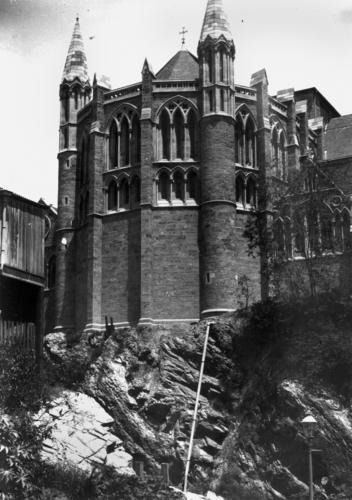
The cathedral project began in the 1880s when William Webber, Brisbane’s third Anglican bishop, commissioned English architect John Loughborough Pearson to prepare plans for a new cathedral. The proposal formed part of celebrations marking Queen Victoria’s Golden Jubilee in 1887 and was intended to be funded through public subscriptions.
Financial constraints meant the cathedral could not be completed in a single campaign. Instead, construction unfolded across three major stages over more than a century.

The foundation stone was laid in 1901 by the Duke of Cornwall and York, who later became King George V. The first stage of construction began in 1906 and was completed in 1910, delivering the sanctuary, transepts, choir, Lady Chapel and the first section of the nave.

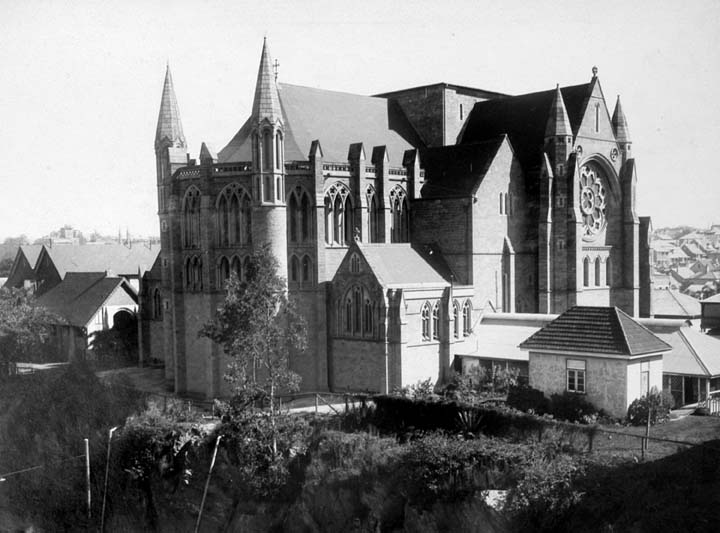
Following the Second World War, efforts resumed to complete the cathedral as a war memorial. A new foundation stone was laid in 1947 by Field Marshal Viscount Montgomery of Alamein, although construction did not recommence until 1965. The second stage continued until 1969, extending the nave and laying the groundwork for the final phase.
The third and final stage began in 1989. Supported by public donations, bequests and funding from the Australian, Queensland and Brisbane governments, work continued for two decades before the western towers and copper-clad spires were completed in 2009, bringing Pearson’s original vision to completion 108 years after the foundation stone was laid.



Built Using Traditional Craftsmanship
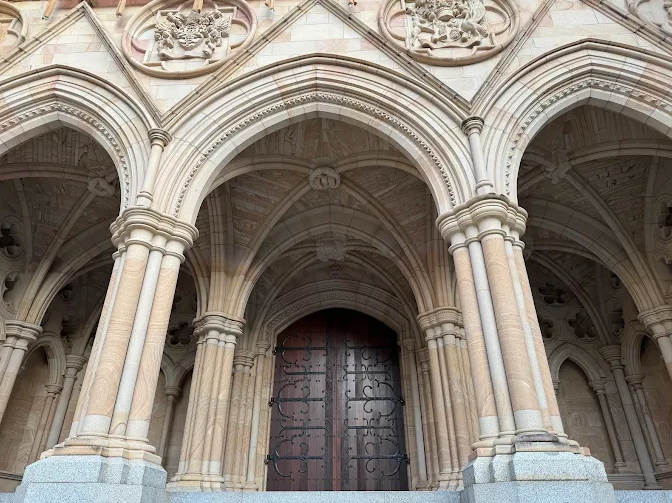
What makes St John’s Cathedral distinctive is not only how long it took to build, but also the methods used during its construction.
The cathedral was built using traditional medieval construction techniques with load-bearing stone throughout the structure. Skilled stonemasons shaped and laid much of the stone by hand, preserving the original design and construction methods throughout each stage of the project.
The exterior walls feature Brisbane tuff quarried from the former O’Connelltown quarry at Windsor, giving the cathedral its distinctive brown, pink and mauve appearance. Inside, visitors can find columns carved from Frosterley limestone imported from England, a stone estimated to be around 350 million years old and known for its visible fossilised coral.
The building is also home to the only fully stone-vaulted ceiling in the Southern Hemisphere. Its acoustics produce an echo of around five seconds, complementing the cathedral’s pipe organ, recognised as the largest cathedral organ in Australia.
A Landmark For Brisbane
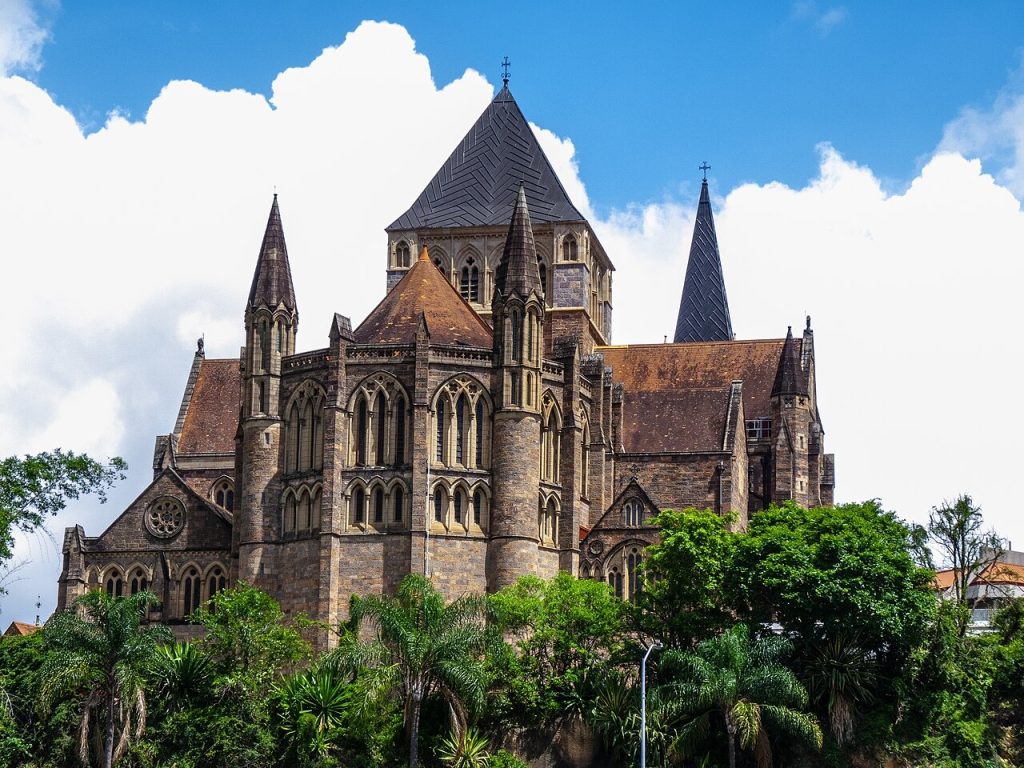

Beyond its role as a place of worship, St John’s Cathedral is recognised as one of Brisbane’s important heritage landmarks. Its stained-glass windows incorporate Australian wildlife, while carvings throughout the building include details such as whales and a rainbow serpent woven into the Gothic stonework.
The cathedral continues to host regular services, concerts, guided tours and bell tower tours, welcoming visitors throughout the year.
Read: Archbishop Shane Mackinlay Installed in Fortitude Valley
Its completion in 2009 coincided with Queensland’s Q150 celebrations, during which St John’s Cathedral was recognised as one of the state’s Q150 Icons for its role as a structure and engineering feat.
More than a century after construction first began, the cathedral stands as a lasting example of the vision and persistence behind one of Brisbane’s most distinctive historic buildings.
Published 16-July-2026