

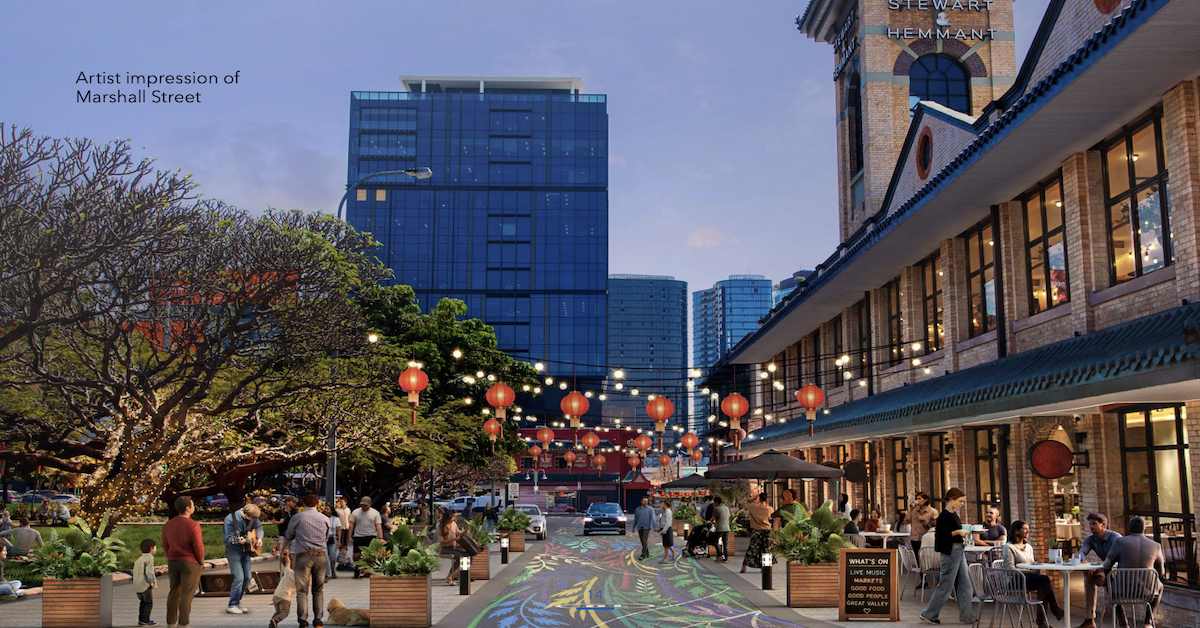
Thousands of new homes could transform Fortitude Valley under a proposed planning overhaul that would allow towers to reach up to 40 storeys in Brisbane’s primary entertainment district.
The draft Fortitude Valley Sustainable Growth Precinct Plan, released on 10 November 2026, increases building heights in selected areas while introducing protections for live music venues, historic streetscapes, and public spaces. Public consultation runs from 13 November until 18 December.

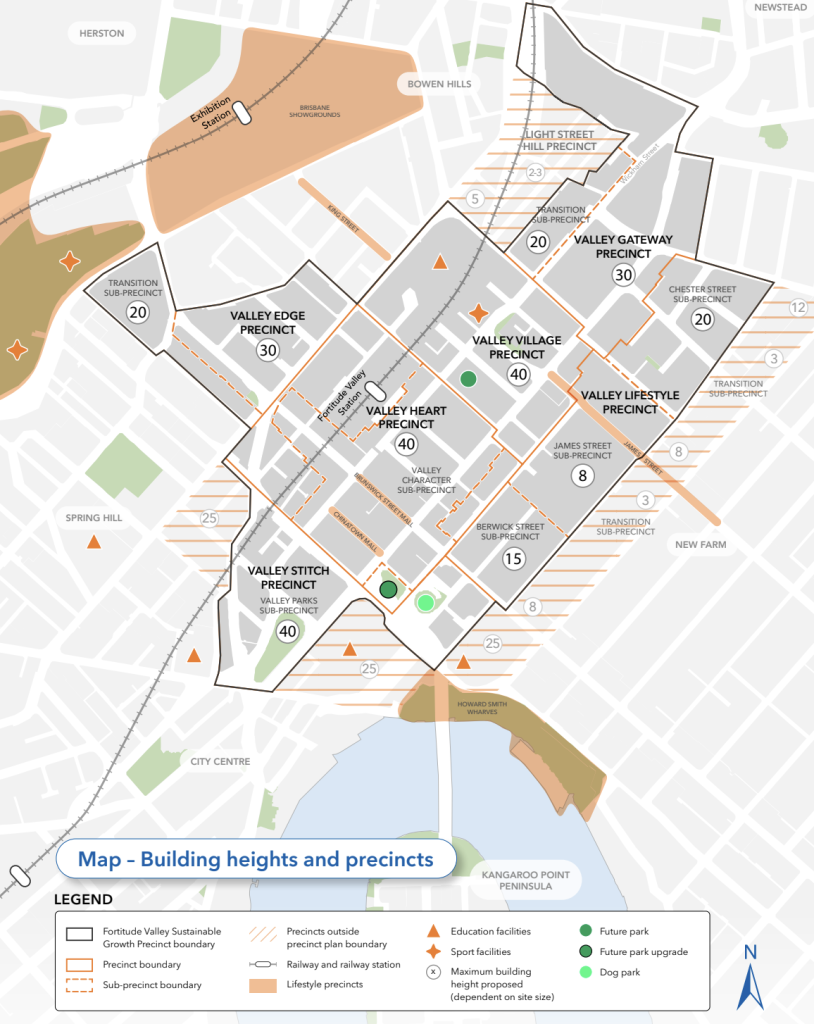
The tallest towers would be restricted to eligible sites in the Valley Heart—between St Pauls Terrace and Brookes Street, along Ann Street, and around Cathedral Place. Maximum heights generally scale down to 30 storeys or lower towards the precinct’s outer boundaries.
With an existing population of 11,500 residents and nearly 28,000 workers, the plan aims to reshape how traffic and pedestrians move through the Valley, where new developments can rise, and how late-night entertainment operates alongside expanding residential communities.

Why Not Every Valley Property Could Reach 40 Storeys
The proposed 40-storey limit applies only to qualifying development sites, rather than giving every property owner blanket permission to build to that height.

Under the draft planning provisions and height maps, qualifying sites must meet strict baseline criteria:
- Minimum site area: 3,000 square metres
- Street frontage: 20 metres or wider
- Design obligations: Delivery of public realm improvements
Smaller sites face lower height limits, with different maximums applied across the Valley’s residential, commercial, and entertainment zones.
Mandatory Public Infrastructure
To build at maximum height, developers must contribute public infrastructure upgrades, including:


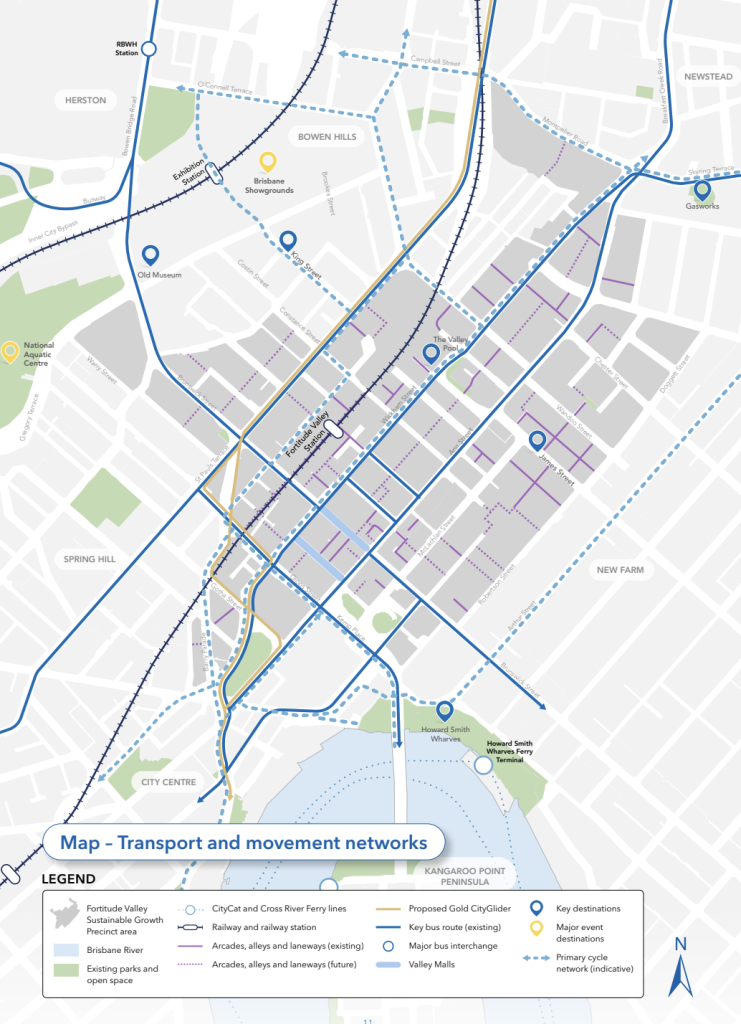
- Pedestrian networks: New walking links between Amelia Street, Water Street, and Brunswick Street.
- Public realm elements: New laneways, public art, creative lighting, and open spaces.
- Design standards: Strict rules governing privacy, natural light exposure, and street integration.
Brisbane City Council identified the Valley for higher-density housing due to its proximity to jobs, retail, and public transport—notably the new Exhibition station delivered via Cross River Rail.
Lord Mayor Adrian Schrinner argued that density in established inner-city hubs reduces sprawl into outer suburbs, saving council infrastructure costs. The Valley Chamber of Commerce director, Andrew Craig, also welcomed the proposal, citing increased foot traffic for local businesses.
New Apartments Would Face Stronger Noise Rules
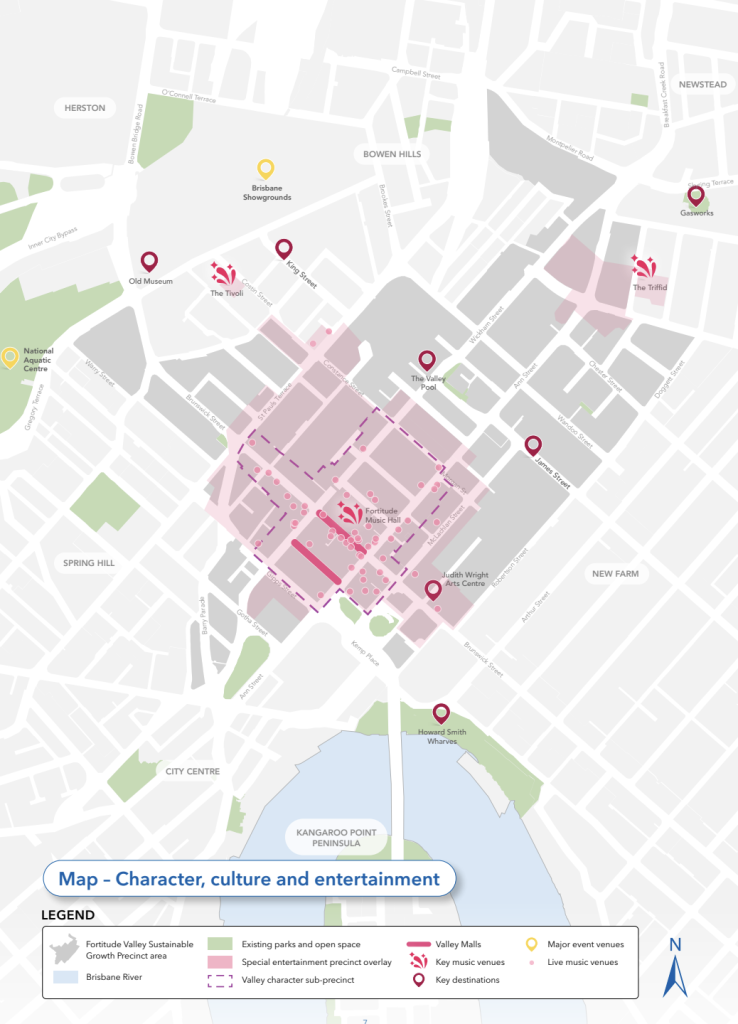
The draft plan strengthens the Valley’s Special Entertainment Precinct provisions and updates acoustic standards for new residential builds to protect venues from noise complaints.
Developers will be legally required to insulate new residential buildings against ambient venue noise, shifting the burden off existing entertainment businesses.
Queensland Nightlife Economy Commissioner John Collins supported the density increase, but emphasized that incoming residents must accept the neighbourhood’s established late-night culture.
Affordable Housing Targets Missing From Tower Proposal
Despite creating capacity for thousands of new homes, the plan includes no guarantees that new units will be affordable or contain social housing components.
Council Opposition Leader Jared Cassidy criticised the omission, arguing that taller towers alone will not address housing stress for essential workers. This mirrors broader market trends across Brisbane, where rising construction costs have heavily skewed new supply toward luxury developments.
The final mix of apartments will depend entirely on private development proposals and prevailing market conditions.
Planning Experts Question the Scale of New Towers
The proposal has drawn pushback from planning specialists and resident advocates:
- Urban Planning: Emeritus Professor Brian Roberts (Fellow of the Planning Institute of Australia) questioned whether 40-storey towers fit Brisbane’s character, warning against fragmented high-rise development.
- Liveability & Heritage: Brisbane Residents United spokeswoman Elizabeth Handley raised concerns over lost neighbourhood identity and missing affordable housing targets.
To preserve local identity, council proposes updates to the Commercial Character Buildings overlay to encourage adaptive reuse of older warehouses and shopfronts. However, adaptive reuse incentives do not confer formal heritage protection on every historic property.
The population influx will also increase demand for public parks and utilities. While council planning documents identify joint responsibilities across local government, Urban Utilities, and Queensland State agencies, specific infrastructure upgrades will be assessed on a project-by-project basis.
How Fortitude Valley Residents Can Respond
Public feedback is open from 13 November 2026 until 11:59 p.m. on 18 December 2026. Formal submissions must state the specific changes supported or opposed, provide clear reasons, and include the submitter’s full contact details.
Planner Consultation Sessions
Free 15-minute appointments with council planners will take place at Loyal Hope of the Valley (50 Morgan Street) on:
- Saturday, 28 November 2026
- Tuesday, 1 December 2026
Submissions can be submitted online via City Plan online, emailed to urban.renewal@brisbane.qld.gov.au, or sent via post.
The final precinct plan is expected in 2027 following council and Queensland Government reviews.
Published 11-Nov-2026